

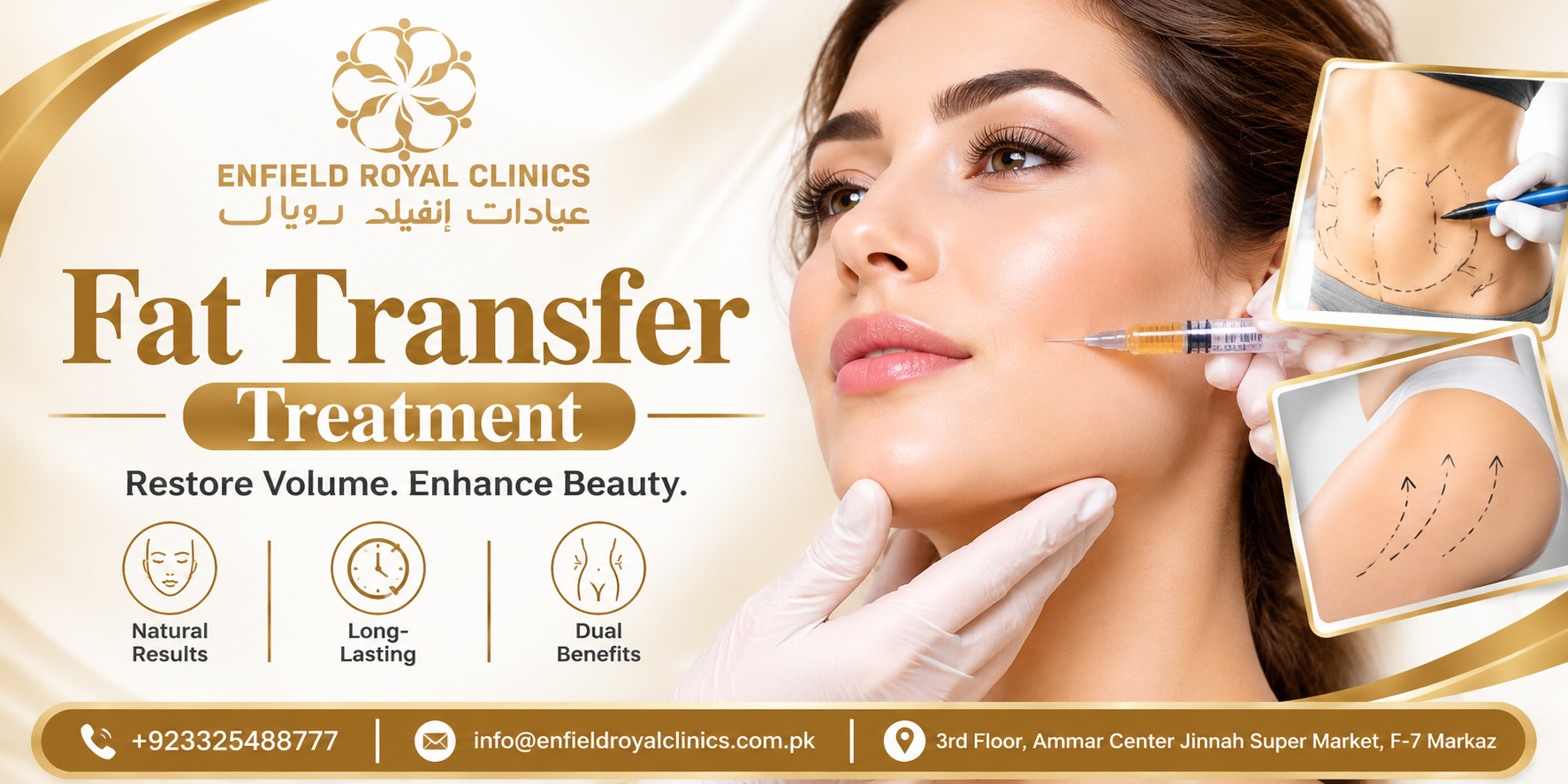

Fat Transfer Treatment is a cosmetic procedure that uses a patient's own body fat to restore volume, improve contours, and enhance selected areas of the face or body. It is also known as fat grafting or autologous fat transfer. Unlike treatments that use synthetic fillers or implants, this procedure involves collecting fat from one part of the body and transferring it to another area where additional volume is desired.
People considering Fat Transfer Treatment in Islamabad often want to understand how the procedure works, what happens during each stage, and what results they can realistically expect. Knowing the process can help patients prepare for treatment and make informed decisions about their cosmetic goals.
The procedure generally involves three main stages: fat harvesting, fat processing, and fat injection. However, proper consultation, preparation, and aftercare are equally important for achieving a safe and satisfactory outcome.
1. What Happens During the Initial Consultation?
The first step is a detailed consultation and assessment. During this appointment, the treatment provider evaluates the patient's health, body structure, skin condition, and cosmetic concerns. This helps determine whether fat transfer is an appropriate option.
Patients may want to restore facial volume, improve cheek definition, enhance the appearance of the lips, or create fuller contours in selected body areas. The treatment plan depends on the intended result and the amount of suitable donor fat available.
During the consultation, several important factors are considered:
-
Medical history: Existing health conditions, previous surgeries, allergies, and medications are reviewed.
-
Donor fat availability: Areas such as the abdomen, thighs, or flanks may be assessed for suitable fat.
-
Treatment area: The recipient area is examined to determine how much volume may be needed.
-
Skin condition: Skin elasticity and tissue quality can influence the overall result.
-
Patient expectations: The desired outcome is discussed to ensure realistic goals.
The consultation also provides an opportunity to discuss potential complications, recovery requirements, and alternative treatments. Not everyone is suitable for fat transfer, so an individualized assessment is essential.
2. How Is the Fat Collected From the Donor Area?
Once the treatment plan is finalized, the next stage involves collecting fat from a suitable donor area. Common donor areas include the abdomen, thighs, hips, and flanks.
Fat is usually collected through a specialized liposuction technique. The treatment area is cleaned and prepared, and anesthesia is administered according to the procedure and patient's needs.
Small incisions are made in the selected area. A thin cannula is then inserted beneath the skin to gently loosen and collect fat tissue. The process is carefully performed to preserve the quality of the harvested fat.
The amount of fat collected depends on the treatment area and the patient's anatomy. The procedure is not intended to produce significant weight loss. Instead, it uses available fat to improve volume and contour in another part of the body.
After harvesting, the donor area may experience temporary swelling, bruising, or tenderness. These effects are common after liposuction and generally improve during recovery.
3. How Is the Harvested Fat Processed?
After collection, the harvested fat cannot usually be injected directly into the recipient area. It must first be processed to separate suitable fat tissue from unwanted materials.
The collected material may contain blood, fluid, damaged fat cells, and other tissue components. Processing helps remove these unwanted elements and prepare the fat for transfer.
Depending on the technique used, the collected fat may be processed through:
-
Centrifugation: The material is spun at controlled speeds to separate its components.
-
Filtration: Specialized equipment helps remove unwanted fluids and impurities.
-
Washing: The fat may be cleaned to prepare it for reinjection.
The goal is to obtain suitable fat tissue for careful placement into the treatment area. Proper handling is important because the quality of the transferred fat can influence how much of it survives after the procedure.
Not all transferred fat cells remain permanently. A portion is naturally absorbed by the body during the healing process, which is why the final result may differ from the initial appearance.
4. How Is the Processed Fat Injected Into the Treatment Area?
The next stage involves transferring the prepared fat into the selected recipient area. This is the part of Fat Transfer Treatment in Islamabad that creates the desired volume enhancement.
The treatment area is cleaned and prepared, and anesthesia is used as appropriate. A fine cannula or specialized injection instrument is used to place small amounts of fat into carefully selected tissue layers.
The fat is generally deposited in multiple small amounts rather than one large injection. This technique helps distribute the tissue more evenly and supports contact between the transferred fat and the surrounding tissue.
Fat transfer may be used for different cosmetic purposes, including:
-
Restoring volume in the cheeks and temples.
-
Improving selected facial hollows.
-
Enhancing certain lip contours.
-
Improving hip and buttock shape.
-
Adding volume to selected areas of the breasts.
-
Correcting some contour irregularities.
The exact technique depends on the treatment area and the patient's anatomy. Certain procedures, particularly buttock fat grafting, require strict safety precautions. For buttock augmentation, fat must be placed only in the subcutaneous tissue above the gluteal muscle, never inside or beneath the muscle. Real-time ultrasound guidance is an important safety measure to confirm the injection location and reduce the risk of a potentially fatal fat embolism.
5. What Happens Immediately After Fat Transfer Treatment?
After the fat has been transferred, the patient is monitored according to the type and extent of the procedure. Once the treatment provider considers it appropriate, the patient receives instructions for recovery at home.
Some temporary effects are expected during the early healing period. These may include:
-
Swelling around the donor and recipient areas.
-
Bruising or mild discoloration.
-
Tenderness and discomfort.
-
Temporary changes in skin sensitivity.
-
A fuller appearance in the treated area.
The treated area may initially look more voluminous than the expected final result because of swelling and the amount of fat transferred. Some fat cells are also naturally absorbed during the first few months.
Patients should follow the recommended aftercare instructions carefully. These may include avoiding strenuous activities for a specified period, protecting the treated area from unnecessary pressure, and attending follow-up appointments.
Recovery requirements can vary depending on the treatment location and the extent of fat harvesting.
6. How Long Does It Take to See the Final Results?
Fat transfer results develop gradually rather than appearing immediately. During the first few weeks, swelling and bruising can affect the appearance of the treated area.
As healing progresses, some of the transferred fat is absorbed by the body. The remaining fat cells that establish a blood supply may survive and contribute to longer-lasting volume enhancement.
A clearer assessment of the results often becomes possible after approximately three to six months, although the timeline varies between patients and treatment areas.
Several factors can influence the final outcome:
-
The quality and handling of harvested fat.
-
The amount of fat that survives after transfer.
-
The patient's healing response.
-
The injection technique and treatment area.
-
Changes in body weight.
-
Following appropriate recovery instructions.
Surviving transferred fat can remain for years, but results are not guaranteed to be permanent or identical for every patient. Weight gain may increase the size of surviving fat cells, while weight loss may reduce their volume. Maintaining a relatively stable weight can help preserve the outcome.
In some cases, an additional session may be considered after the transferred fat has stabilized.
7. What Are the Possible Risks and Recovery Precautions?
Although fat transfer uses the patient's own tissue, it is still a medical procedure with potential risks. Using natural fat does not make the treatment risk-free.
Possible complications include infection, bleeding, swelling, bruising, fluid collection, fat necrosis, lumps, asymmetry, contour irregularities, and changes in sensation.
Some treatment areas have additional risks. Facial fat injections can rarely cause blood vessel blockage, which may lead to tissue damage or even vision loss. Breast fat grafting may result in fat necrosis, oil cysts, or calcifications that can appear on breast imaging. Patients should inform imaging professionals about any previous fat grafting.
Patients should seek prompt medical assessment if they experience fever, spreading redness, worsening pain, or unusual swelling. Chest pain, shortness of breath, fainting, or sudden changes in vision require emergency medical attention.
Careful patient selection, appropriate technique, and proper follow-up are important parts of reducing complications.
For more information visit Enfield royal clinic in islamabad
Frequently Asked Questions (FAQs)
1. How long does Fat Transfer Treatment take?
The duration depends on the amount of fat being harvested, the recipient area, and the complexity of the procedure. The treatment provider can give a more accurate estimate after assessing the patient's needs.
2. Is Fat Transfer Treatment painful?
Anesthesia is used to manage discomfort during the procedure. Some soreness, tenderness, and swelling may occur afterward, particularly in the donor and recipient areas.
3. Which body areas can provide fat for transfer?
Common donor areas include the abdomen, thighs, hips, and flanks. The most suitable area depends on the patient's anatomy and the amount of available fat.
4. Are Fat Transfer Treatment results permanent?
Some transferred fat cells may survive for years, but a portion is naturally absorbed during healing. Long-term results vary depending on fat retention, healing, and changes in body weight.
5. How long is the recovery period after fat transfer?
Recovery varies according to the treatment area and the extent of the procedure. Swelling and bruising may take several weeks to improve, while final results can take three to six months to assess.
6. Is Fat Transfer Treatment suitable for everyone?
No. Suitable candidates generally need enough donor fat, good overall health, and realistic expectations. A professional assessment is necessary to identify potential risks and determine whether the procedure is appropriate.


