

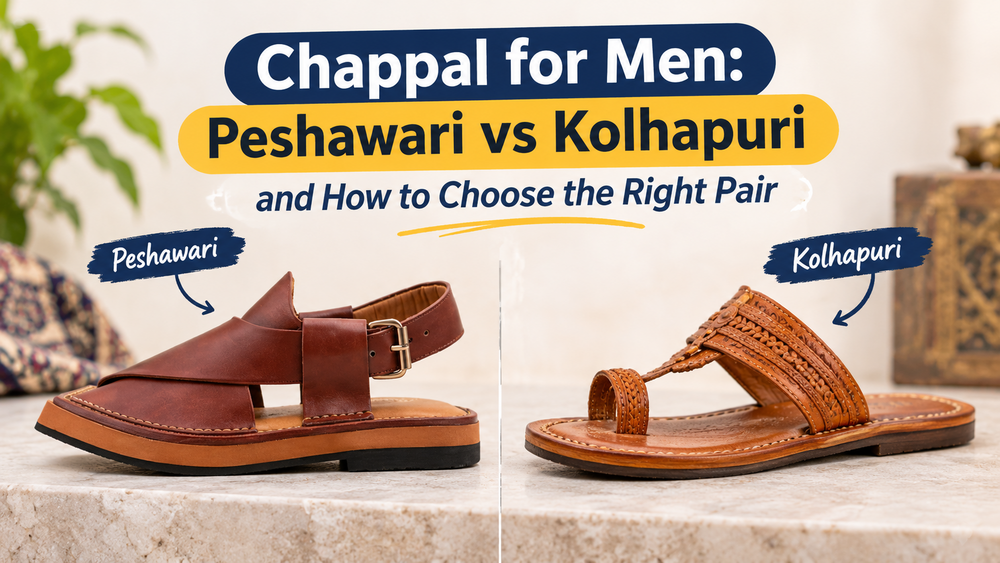

Few pieces of footwear carry as much cultural weight in South Asia as the chappal. It is worn at Friday prayers, family weddings, Eid mornings and ordinary weekday errands. Yet when a man sits down to buy a new pair, the choices can feel confusing. Peshawari, Kolhapuri, flat slipper, open-toe, closed-heels: each looks similar at first glance but wears very differently.
This guide explains what separates the two most popular traditional styles, how to judge quality, and how to match a chappal for men to your outfit and daily routine.
What Is a Chappal for Men?
A chappal for men is an open, flat or low-heeled sandal-style footwear, traditionally made of leather and worn across South Asia with both eastern and western clothing. The two best-known traditional types are the Peshawari chappal, associated with Peshawar and the Pashtun region, and the Kolhapuri chappal, which originates from Kolhapur in Maharashtra, India. Both suit casual and semi-formal wear, but they differ in strap design, sole construction and overall look.
What Makes a Chappal Different From Other Footwear?
Compared with closed shoes, a chappal offers:
-
Breathability: The open design keeps feet cool in warm weather.
-
Easy on and off: Useful for entering homes, mosques and offices where shoes are removed.
-
Cultural fit: It pairs naturally with shalwar kameez, kurta and traditional dress.
-
Low maintenance: Many pairs need little more than regular brushing or wiping.
The trade-off is protection. A chappal is not ideal for rain, rough terrain or long hours of heavy walking unless the sole is sturdy and the fit is secure.
Peshawari Chappal for Men: Features and Best Uses
The Peshawari chappal is known for its sturdy build and understated look. It is closely associated with the Khyber Pakhtunkhwa region and has long been a favourite for men who want something durable.
Typical features:
-
A thick sole, traditionally leather, though many modern versions use rubber for grip and durability.
-
A broad strap over the front of the foot and a toe loop or similar anchoring.
-
A back strap on some designs, which keeps the chappal secure while walking.
-
A plain, minimal design with little decoration.
Best for:
-
Daily wear and long days on your feet.
-
Pairing with shalwar kameez, especially in darker or neutral shades.
-
Men who prefer a firm, structured fit over a soft, flexible one.
Things to know: A new Peshawari chappal often feels stiff. It typically softens with wear, so expect a short break-in period.
Kolhapuri Chappal for Men: Features and Best Uses
The Kolhapuri chappal is a handcrafted leather style that takes its name from Kolhapur in Maharashtra. It is recognisable by its braided or woven straps and a flat, flexible profile. Kolhapuri-style chappals are also widely worn and sold in Pakistan.
Typical features:
-
Braided or woven leather straps across the front.
-
A flat leather sole, often with a slight tan tone.
-
A more decorative look than a Peshawari, with visible stitching and patterned straps.
-
A lighter, more flexible feel.
Best for:
-
Casual and festive occasions.
-
Pairing with kurta, linen shirts or even jeans for a relaxed blend of eastern and western styles.
-
Men who like some detail in their footwear.
Things to know: Leather soles can be slippery on wet or polished floors, so take care in rain and on tiles.
Peshawari vs Kolhapuri: A Side-by-Side Comparison
|
Feature |
Peshawari chappal |
Kolhapuri chappal |
|
Origin |
Peshawar and surrounding region |
Kolhapur, Maharashtra |
|
Look |
Plain, structured |
Braided straps, decorative |
|
Feel |
Firm, sturdy |
Flexible, lighter |
|
Sole |
Thick, leather or rubber |
Typically flat leather |
|
Best for |
Daily and long-wear use |
Casual and festive wear |
|
Common pairing |
Shalwar kameez |
Kurta, shirts, jeans |
Neither style is better overall. Your choice depends on how you plan to wear them and how much structure you want underfoot.
How to Choose the Right Chappal for Men
1. Check the Material
Look for genuine leather or a good-quality alternative, with even colour and no rough edges. Run a finger along the inside of the straps. If it feels scratchy, it may cause blisters.
2. Test the Sole
A good sole should bend slightly at the ball of the foot but not fold in half. A very thin sole wears out quickly, while one that is too rigid makes walking tiring.
3. Get the Size Right
-
Measure your foot in the evening, when it is slightly larger.
-
Leave a small gap behind the heel but avoid a loose fit that slides forward.
-
Remember that leather stretches a little with use, so a slightly snug fit is usually better than a loose one.
4. Examine the Stitching
Even stitching without loose threads indicates good workmanship. Check where straps meet the sole, since this is where chappals tend to fail first.
5. Consider Grip
If you walk on tiles, wet floors or uneven roads often, choose a sole with texture or rubber backing.
Matching Your Chappal to the Outfit
-
Shalwar kameez, everyday: A plain Peshawari chappal in brown or black.
-
Shalwar kameez, Eid and weddings: A clean, polished pair in a matching or contrasting tone.
-
Kurta with trousers: A Kolhapuri-style chappal adds character.
-
Casual shirt with jeans: A flat, simple chappal can work for relaxed outings.
-
Formal events: Choose a smooth, well-finished pair and keep it clean.
Colour tip: Brown and tan are the most versatile, going with most earth tones, whites and light shades. Black suits darker outfits and more formal occasions.
Using a Chappal in Cooler Weather
Chappals are open by design, so they work best in mild and warm conditions. In winter, some men wear them with thin socks indoors or on mild days, but they offer little protection from cold, rain or wet roads. For colder or wet days, closed shoes are usually the more practical choice, and a chappal is better kept for indoor use or milder afternoons.
How to Break In New Leather
-
Wear them indoors for short periods first.
-
Increase the duration gradually over several days.
-
Apply a small amount of leather conditioner if the straps feel stiff.
-
Avoid wearing a brand-new pair for a long walk or an important event.
Care Tips to Make a Pair Last
-
Wipe off dust with a dry or slightly damp cloth.
-
Keep leather away from prolonged moisture and direct, intense heat.
-
Use a suitable leather conditioner occasionally.
-
Rotate between two pairs so each can air out.
-
Store them in a dry, ventilated spot, not in a sealed plastic bag.
-
Have worn soles repaired by a cobbler before they wear through.
Where to Compare Options
If you want to see different styles, colours and sizes side by side, browsing a dedicated collection helps you compare quickly. For example, you can look through men’s slippers and chappals and compare strap designs, sole types and size ranges against the points above. Whichever store you use, read the product details, check the size chart and look at the exchange policy before ordering.
Frequently Asked Questions
What is the difference between a Peshawari and a Kolhapuri chappal?
A Peshawari chappal has a sturdier, plainer build and is associated with Peshawar. A Kolhapuri chappal has braided or woven straps and comes from Kolhapur in India. The Peshawari generally feels firmer, while the Kolhapuri is more flexible and decorative.
Is a chappal suitable for daily wear?
Yes, particularly a well-made Peshawari chappal with a sturdy sole. Choose a pair that fits securely and offers enough grip for the surfaces you walk on.
Can I wear a chappal with jeans?
Yes. A simple flat chappal, especially a Kolhapuri style, can pair well with jeans for casual outings.
How should a chappal for men fit?
Snug but comfortable, with the foot sitting fully on the sole and a small gap behind the heel. Leather will loosen slightly with wear.
Are leather chappals worth buying?
Genuine or good-quality leather generally lasts longer and moulds to the foot, but it needs basic care. Quality varies by maker, so check stitching and material before buying.
Which colour chappal is the most versatile?
Brown or tan matches most traditional outfits and earth tones. Black is better suited to darker clothing and formal occasions.
Final Thoughts
A chappal for men is one of the most practical and culturally rooted footwear choices available. Decide whether you want the sturdier, plainer character of a Peshawari chappal or the lighter, more decorative feel of a Kolhapuri chappal, then check material, sole, size and stitching before paying. A well-chosen pair that suits your outfits and routine will earn its place in your wardrobe for years.


