


Sustainable Perfume Packaging: Eco-Friendly Options for Brands
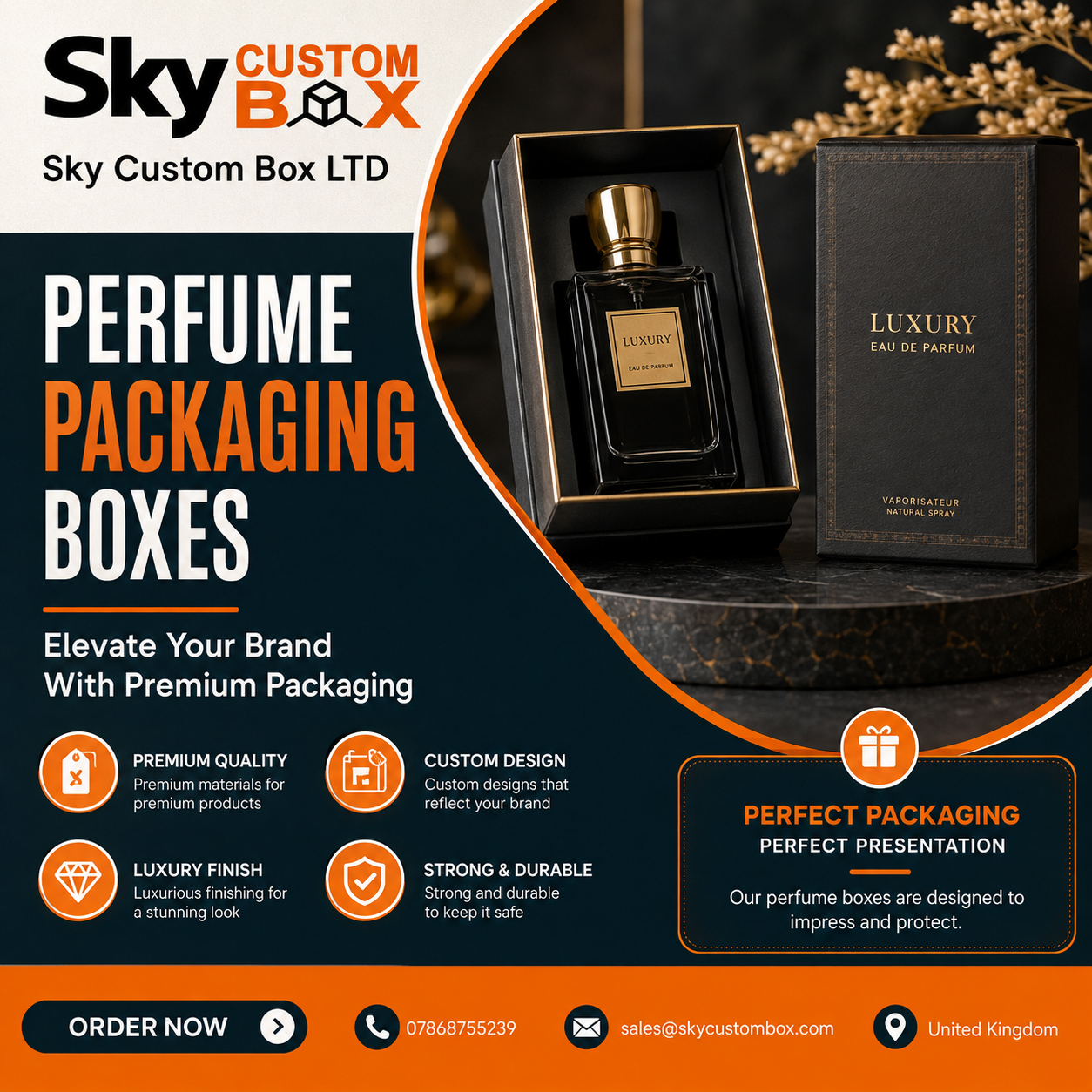
The fragrance industry is closely connected to presentation. A perfume bottle may contain the product itself, but the outer packaging often creates the first physical impression for customers. As consumers and retailers become increasingly conscious of environmental impact, brands are exploring ways to reduce unnecessary materials without compromising protection, appearance, or functionality.
This shift has made sustainable perfume packaging an increasingly important consideration for fragrance businesses. From recyclable paperboard to responsibly sourced materials and minimalist structural designs, modern packaging can support both brand presentation and environmental goals.
For businesses developing new fragrance products, choosing suitable perfume boxes involves more than selecting an attractive design. Material sourcing, recyclability, durability, printing methods, transportation, and end-of-life disposal can all influence the overall environmental footprint of a packaging solution.
Why Sustainable Perfume Packaging Is Becoming More Important
Traditional fragrance packaging can involve several components, including glass bottles, cardboard cartons, plastic inserts, protective films, decorative foils, and additional shipping materials. While each component can serve a practical purpose, excessive packaging may increase material consumption and waste.
Sustainability does not necessarily mean removing every packaging element. Instead, the objective is often to use materials and structures more efficiently while maintaining adequate protection for the product.
Several factors are contributing to the growing interest in environmentally responsible packaging:
- Increased consumer awareness of packaging waste
- Greater demand for recyclable and renewable materials
- Retailers introducing sustainability requirements
- Growth in environmentally conscious beauty and fragrance brands
- Improvements in recyclable paper and board manufacturing
- Interest in reducing packaging weight and transportation impacts
For fragrance companies operating in the UK, these considerations are particularly relevant as packaging expectations continue to evolve across retail and e-commerce environments.
Eco-Friendly Materials for Perfume Packaging Boxes
Material selection is one of the most important stages when developing an environmentally conscious packaging solution. Different materials offer different combinations of strength, appearance, recyclability, and production requirements.
Recycled Paperboard
Recycled paperboard can be used to manufacture a variety of perfume packaging boxes. It can provide sufficient rigidity for many fragrance products while making use of recovered paper fibres.
The percentage of recycled content can vary, so brands should obtain clear information from packaging suppliers about material composition and relevant certifications where applicable.
FSC-Certified Paper and Board
Responsibly sourced paperboard is another option for brands concerned about forestry practices. FSC certification can provide information about responsible forest management and supply-chain controls.
Using certified materials can be particularly relevant for brands that want to communicate responsible sourcing through their packaging documentation and sustainability policies.
Kraft Board
Kraft board is commonly associated with natural-looking packaging because of its brown or understated appearance. It can also be printed and finished in different ways depending on the desired presentation.
For certain fragrance collections, kraft perfume box packaging can create a simple aesthetic while avoiding the need for excessive decorative layers.
Corrugated Materials for Shipping
Retail perfume packaging and transport packaging have different requirements. A delicate glass fragrance bottle may require additional protection during distribution even when the retail carton itself is lightweight.
Corrugated board can provide cushioning and structural strength for shipping applications. Combining appropriately sized shipping cartons with protective inserts can help reduce product damage without relying entirely on plastic-based protective materials.
Designing a More Sustainable Packaging Box for Perfume
Sustainable packaging is not only about material choice. Structural design can have a significant influence on material consumption and transportation efficiency.
A well-designed packaging box for perfume should balance several practical requirements:
- Product protection: The box should hold the bottle securely and reduce movement during handling.
- Material efficiency: Avoid unnecessary layers, oversized cartons, or decorative components that provide little functional value.
- Dimensional efficiency: Packaging that closely matches the product dimensions can reduce unused space.
- Recyclability: Where practical, choose materials and finishes that are compatible with established recycling systems.
- Ease of separation: Avoid combining materials that are difficult for consumers or recyclers to separate.
- Shelf presentation: Sustainability should not require a compromise in legibility, branding, or product information.
This approach can make perfume box packaging UK brands use more efficient throughout its lifecycle.
Trends Shaping Sustainable Perfume Boxes in the UK
The UK fragrance and beauty market has seen growing interest in packaging designs that communicate environmental responsibility without appearing unfinished or low quality.
One important trend is minimalist packaging. Instead of adding multiple decorative components, brands can use carefully considered typography, high-quality printing, structural details, and restrained finishes to create a premium appearance.
Another trend is the use of paper-based inserts. Traditional plastic trays can sometimes be replaced with moulded paper pulp or folded-board structures, depending on the bottle's shape and protection requirements.
Refillable fragrance products are also influencing packaging development. When a perfume bottle is designed for repeated use, the secondary packaging can be developed around refill units or replacement products rather than treating every purchase as an entirely new packaging system.
Other developments include:
- Water-based or lower-impact printing approaches
- Reduced use of plastic laminates
- Paper-based protective inserts
- Recycled-content board
- Reusable presentation boxes
- Lightweight structural designs
- Clearer recycling information
These approaches demonstrate that sustainability can involve incremental improvements rather than one universal packaging solution.
Common Challenges and Practical Solutions
Moving toward sustainable perfume boxes packaging can introduce practical challenges. Fragrance bottles are often made from glass, making protection a major consideration throughout storage and transportation.
Challenge: Protecting Fragile Glass Bottles
A lightweight box may reduce material usage but fail to provide adequate protection.
Solution: Test the structural design with the actual bottle, including drop, compression, vibration, and handling considerations where appropriate. A correctly engineered paperboard insert can sometimes provide sufficient support without adding unnecessary plastic components.
Challenge: Maintaining a Premium Appearance
Some brands associate sustainability with plain or inexpensive-looking packaging.
Solution: Premium presentation can come from typography, paper texture, embossing, restrained colour palettes, and structural design rather than excessive materials. The objective should be intentional design rather than simply adding decorative elements.
Challenge: Recycling Complexity
A box containing paper, plastic film, metallic layers, adhesive components, and other materials may be more difficult to process after use.
Solution: Consider material compatibility at the design stage. Ask packaging manufacturers about the recyclability of the complete finished structure rather than assessing individual materials in isolation.
Challenge: Packaging Too Large for the Product
Oversized cartons can require additional board and create more empty space during transportation.
Solution: Review the bottle dimensions and internal fit before finalising the carton. Efficient sizing can help reduce material consumption while also improving storage and shipping efficiency.
How Brands Can Evaluate a Sustainable Perfume Box
There is no single packaging format that is sustainable for every fragrance product. A useful evaluation should consider the entire packaging system.
Brands can ask suppliers questions such as:
- What materials are used?
- What percentage of recycled content is included?
- Is the paper or board responsibly sourced?
- Can the finished box enter commonly available recycling streams?
- Are plastic coatings or laminations necessary?
- Can the structure protect the product without additional inserts?
- How much packaging is required per unit?
- Can the packaging be produced in appropriate dimensions?
- What happens to the packaging after consumer use?
Suppliers such as Sky Custom Box can be considered when businesses are exploring custom packaging structures and material options, but the appropriate specification should always be determined by the product, distribution requirements, brand identity, and sustainability objectives.
The Role of Packaging Suppliers in Sustainable Development
A packaging supplier can contribute valuable technical knowledge during the design process. Rather than choosing materials based solely on appearance, brands can discuss board thickness, structural engineering, printing methods, finishing requirements, and production quantities before finalising a design.
For businesses developing perfume packaging box concepts, early consultation can also identify potential problems with bottle fit, transport durability, or material combinations.
This collaborative approach is particularly useful for new fragrance launches. Packaging prototypes can be evaluated before large-scale production, allowing brands to make structural improvements while changes are still relatively straightforward.
Conclusion
Sustainable fragrance packaging is ultimately about making informed choices. The objective is not simply to use the word “eco-friendly” on a package, but to consider materials, design, manufacturing, transportation, consumer use, and disposal as interconnected parts of the packaging lifecycle.
Recycled paperboard, responsibly sourced materials, kraft board, paper-based inserts, efficient dimensions, and reduced material complexity are among the options brands can investigate. At the same time, product protection must remain a priority, particularly when packaging fragile glass perfume bottles.
As consumer expectations continue to develop, thoughtful perfume box packaging can help brands reduce unnecessary material use while maintaining a professional and distinctive presentation. The strongest approach is one based on measurable material choices, practical testing, responsible sourcing, and packaging designs that perform effectively from production through to end-of-life.

 Arabic
 French
 Spanish
 Portuguese
 Deutsch
 Turkish
 Dutch
Dutch
 Italiano
 Russian
 Romaian
 Portuguese (Brazil)
 Greek
Greek