


Custom Clearance Procedure in Saudi Arabia: From Entry to Release
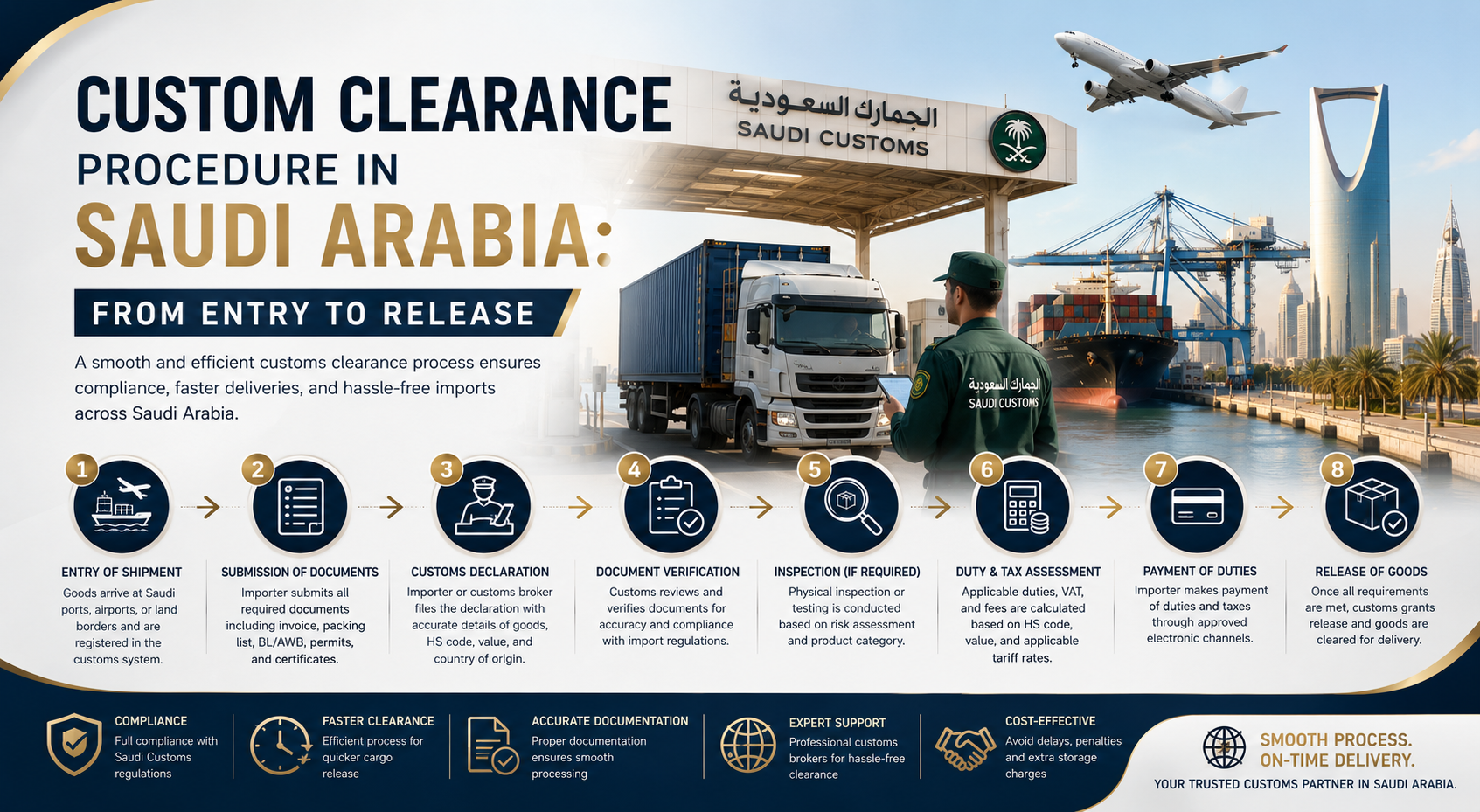
Understanding the customs clearance process in Saudi Arabia is essential for businesses importing goods into the Kingdom. Whether you're shipping commercial products, industrial equipment, or consumer goods, a clear understanding of Saudi customs regulations can help ensure smooth import operations and prevent unnecessary delays. The process involves several stages, including customs documentation, cargo inspection, customs declaration, duty payment, and final shipment release. By following the correct procedures and meeting all compliance requirements, importers can streamline their supply chain and avoid costly penalties.
Understanding Customs Clearance in Saudi Arabia
Customs clearance is the official procedure through which imported goods are approved by Saudi Customs before entering the local market. The process ensures that all shipments comply with Saudi import regulations, safety standards, and taxation requirements.
Saudi Arabia has modernized its customs system through digital platforms, making import procedures faster, more transparent, and efficient. However, importers must still provide accurate documentation and comply with all legal requirements before their cargo is released.
Why Customs Clearance is Important
Every shipment entering Saudi Arabia must pass through customs. Proper customs clearance benefits businesses by:
-
Ensuring compliance with Saudi import laws
-
Preventing shipment delays
-
Reducing storage and demurrage costs
-
Protecting consumers from unsafe products
-
Facilitating smooth international trade
-
Improving supply chain efficiency
Failure to complete the customs clearance process correctly may result in shipment holds, fines, or even rejection of goods.
Step-by-Step Customs Clearance Procedure in Saudi Arabia
Step 1: Shipment Arrival at the Port of Entry
The customs clearance process begins when goods arrive at one of Saudi Arabia's approved entry points, such as:
-
Seaports
-
International airports
-
Land border crossings
Once the shipment reaches the port, customs authorities register it in the electronic customs system for processing.
Step 2: Preparation and Submission of Import Documents
Before customs can process the shipment, the importer or licensed customs broker must submit the required documents electronically.
Common documents include:
-
Commercial Invoice
-
Packing List
-
Bill of Lading or Air Waybill
-
Certificate of Origin
-
Import License (if applicable)
-
Insurance Certificate
-
Product Certificates
-
Saber Certificate (for regulated products)
-
HS Code Classification
-
Customs Declaration
Providing complete and accurate documentation is one of the most important factors in avoiding customs delays.
Step 3: Customs Declaration
The importer files a customs declaration containing detailed information about the shipment, including:
-
Product description
-
Quantity
-
Value
-
Country of origin
-
Tariff classification
-
Manufacturer details
This declaration enables customs officials to verify the shipment and calculate applicable duties and taxes.
Incorrect declarations can lead to inspections, penalties, or shipment delays.
Step 4: Document Verification
Saudi Customs carefully reviews the submitted documentation to ensure compliance with applicable regulations.
Officials verify:
-
Invoice values
-
HS Codes
-
Product descriptions
-
Certificates of origin
-
Product conformity documents
-
Import permits
-
Commercial registration details
If any discrepancies are identified, customs may request additional information before processing the shipment further.
Step 5: Risk Assessment
Saudi Customs uses an advanced risk management system to evaluate imported cargo.
The assessment considers factors such as:
-
Product category
-
Country of origin
-
Importer's compliance history
-
Shipment value
-
Previous customs records
Low-risk shipments often receive faster processing, while high-risk cargo may undergo additional inspections.
Step 6: Physical Inspection (If Required)
Some shipments are selected for physical examination.
Customs officers inspect:
-
Packaging
-
Product labels
-
Quantity
-
Product condition
-
Serial numbers
-
Safety markings
The inspection ensures that the shipment matches the submitted customs declaration.
In some cases, laboratory testing may also be required for regulated products.
Step 7: Product Compliance Verification
Many products imported into Saudi Arabia must comply with technical regulations before customs release.
Depending on the product category, customs may verify:
-
Saber certification
-
SASO requirements
-
Product conformity certificates
-
Technical documentation
-
Safety standards
-
Labeling requirements
Products failing to meet compliance standards may be rejected or held until corrective action is taken.
Step 8: Customs Duty and Tax Assessment
After completing document verification and inspection, customs calculates the applicable charges.
These may include:
-
Customs Duty
-
Value Added Tax (VAT)
-
Customs service fees
-
Other regulatory charges
The amount payable depends on:
-
HS Code
-
Customs tariff
-
Product value
-
Country of origin
-
Applicable trade agreements
Accurate product classification helps ensure the correct duty calculation.
Step 9: Payment of Duties and Taxes
The importer pays the assessed customs duties and taxes through approved electronic payment systems.
Timely payment is essential to prevent:
-
Additional storage charges
-
Port demurrage
-
Delays in shipment release
Electronic payment has significantly accelerated the customs clearance process in Saudi Arabia.
Step 10: Customs Release
After all customs requirements have been satisfied, Saudi Customs issues the cargo release order.
The shipment is then cleared for collection and transportation to the importer's warehouse or final destination.
This marks the completion of the customs clearance process.
Documents Required for Customs Clearance
Proper documentation is critical for efficient customs clearance.
Typical documents include:
-
Commercial Invoice
-
Packing List
-
Bill of Lading
-
Air Waybill
-
Certificate of Origin
-
Customs Declaration
-
Import Permit
-
Insurance Certificate
-
Product Compliance Certificates
-
Saber Certificate (where applicable)
-
HS Code Details
-
Delivery Order
Depending on the nature of the products, additional approvals may be required.
Products Requiring Additional Regulatory Approval
Certain categories of goods require approval from Saudi regulatory authorities before customs clearance.
These include:
-
Medical devices
-
Pharmaceuticals
-
Food products
-
Cosmetics
-
Electrical appliances
-
Automotive components
-
Telecommunications equipment
-
Chemicals
-
Children's toys
-
Industrial machinery
Obtaining the necessary certifications before shipment arrival helps prevent customs delays.
Common Customs Clearance Challenges
Many importers encounter delays because of avoidable mistakes.
Incorrect HS Codes
Using an incorrect tariff classification can lead to reassessment and additional inspections.
Incomplete Documentation
Missing documents remain one of the leading causes of shipment delays.
Incorrect Product Valuation
Under-declaring shipment value may result in customs penalties and further investigation.
Missing Compliance Certificates
Products requiring Saber certification or other conformity documents cannot be cleared without the necessary approvals.
Labeling Issues
Products must meet Saudi labeling requirements, including Arabic labeling where applicable.
Restricted or Prohibited Goods
Importing restricted items without proper authorization can result in shipment seizure.
Tips for Faster Customs Clearance
To simplify the customs process:
-
Prepare all documents before shipment arrival.
-
Verify product classifications and HS Codes.
-
Ensure invoices accurately reflect shipment value.
-
Obtain all required product certifications in advance.
-
Use an experienced customs clearance broker.
-
Confirm compliance with Saudi labeling regulations.
-
Submit customs declarations promptly.
-
Monitor shipment status throughout the clearance process.
These best practices can significantly reduce processing time.
Benefits of Hiring a Customs Clearance Company
Many businesses rely on professional customs clearance providers to handle complex import procedures.
A customs clearance company can assist with:
-
Document preparation
-
Customs declarations
-
Duty calculations
-
Regulatory compliance
-
Shipment tracking
-
Product certification guidance
-
Cargo inspection coordination
-
Customs release procedures
Experienced customs professionals help businesses minimize delays and maintain compliance with Saudi regulations.
Frequently Asked Questions
How long does customs clearance take in Saudi Arabia?
Most shipments are cleared within one to three working days if all documents are complete and no additional inspections are required.
Is a customs broker required?
Although not mandatory for every importer, working with a licensed customs broker can simplify the process and reduce the likelihood of errors.
What documents are essential for customs clearance?
The most commonly required documents include the commercial invoice, packing list, bill of lading or air waybill, certificate of origin, customs declaration, import permit (if applicable), and any required product conformity certificates.
What happens if customs identifies discrepancies?
Saudi Customs may request additional documentation, conduct further inspections, recalculate duties, or temporarily hold the shipment until the issues are resolved.
Can shipments be tracked during customs clearance?
Yes. Digital customs systems allow importers and customs brokers to monitor the status of shipments throughout the clearance process.
Conclusion
The customs clearance process in Saudi Arabia involves several important stages, from shipment arrival and document submission to customs inspection, duty payment, and final cargo release. By understanding each step and ensuring compliance with Saudi customs regulations, businesses can reduce delays, lower import costs, and improve overall supply chain efficiency. Preparing accurate documentation, obtaining required certifications, and partnering with an experienced customs clearance provider are key factors in ensuring a smooth and successful import experience. Whether you are a first-time importer or manage regular international shipments, mastering the customs clearance procedure will help your business operate efficiently within the Saudi market.

 English
 Arabic
 French
 Spanish
 Portuguese
 Turkish
 Dutch
Dutch
 Italiano
 Russian
 Romaian
 Portuguese (Brazil)
 Greek
Greek