
Self Pierce Riveting: Advanced Joining Solutions for Modern Manufacturing

Self pierce riveting is an advanced mechanical joining technology widely used in modern manufacturing industries. It provides an efficient and reliable method of joining two or more material layers without requiring pre-drilled holes. This innovative joining process is particularly valuable in automotive manufacturing, metal fabrication, electrical equipment production, and industrial assembly.
As manufacturers increasingly work with lightweight materials, mixed-material structures, and advanced metals, self pierce riveting has become an important joining solution. It helps manufacturers achieve strong connections, improve production efficiency, and maintain consistent product quality. Heron Welder supports modern industrial joining requirements with advanced manufacturing technologies and professional joining equipment solutions.
What Is Self Pierce Riveting?
Self pierce riveting is a mechanical fastening process that uses a specially designed semi-tubular rivet and a powerful riveting system to connect multiple material layers. During the process, the rivet penetrates the upper material layers and expands within the lower layer without passing completely through it.
A specially designed die supports the material from underneath while the riveting tool applies controlled force. The rivet creates a mechanical interlock between the layers, forming a secure and durable joint.
Unlike conventional fastening methods that require holes to be drilled beforehand, self pierce riveting completes the joining operation in a single controlled process. This makes it an attractive choice for manufacturers seeking reliable and repeatable assembly performance.
How Does the Self Pierce Riveting Process Work?
The self pierce riveting process involves several carefully controlled steps that help produce consistent joints.
Material Positioning: The materials are placed together between the riveting punch and the supporting die. Accurate positioning helps maintain proper alignment throughout the operation.
Rivet Placement: A specially designed rivet is positioned above the material layers. Its shape and dimensions are selected according to the materials and required joint specifications.
Rivet Penetration: The riveting punch applies controlled pressure, driving the rivet through the upper layers of material.
Mechanical Interlocking: As the rivet enters the lower material layer, its legs expand outward within the material. This creates a strong mechanical connection without completely penetrating the bottom surface.
Joint Completion: The punch releases after the required joining depth is achieved. The finished joint can then be inspected to verify its dimensions, appearance, and mechanical performance.
Major Advantages of Self Pierce Riveting
Self pierce riveting offers several important advantages for industrial manufacturers. Its ability to join different materials while maintaining efficient production makes it an increasingly popular choice across multiple sectors.
1. No Pre-Drilled Holes Required
One of the most important benefits is that manufacturers do not need to create holes before joining materials. The riveting system performs penetration and fastening in one operation, helping simplify production workflows and reduce additional processing steps.
2. Strong and Reliable Joints
The mechanical interlocking structure provides dependable fastening strength. When the correct rivet, material combination, and process parameters are selected, manufacturers can achieve consistent joints suitable for demanding applications.
3. Suitable for Different Materials
Self pierce riveting is particularly useful for joining aluminum, steel, and certain combinations of dissimilar materials. This flexibility supports modern product designs that combine different metals to achieve specific performance and weight requirements.
4. Improved Production Efficiency
The process can be integrated into automated manufacturing lines and robotic assembly systems. Its single-operation joining approach helps manufacturers improve production flow, maintain consistent assembly cycles, and support higher manufacturing productivity.
5. Clean and Consistent Appearance
Because the rivet does not completely penetrate the bottom material, the opposite surface can remain intact. This feature is especially useful for products where appearance, surface quality, and component protection are important.
Applications of Self Pierce Riveting Across Industries
Self pierce riveting is used in a wide range of industrial applications because of its flexibility and dependable mechanical joining performance.
Automotive Manufacturing: Automotive manufacturers use this technology to assemble body panels, structural components, doors, battery enclosures, and lightweight vehicle structures. It is particularly valuable when joining aluminum and steel components in modern vehicle designs.
Electric Vehicle Production: Electric vehicle manufacturing increasingly requires lightweight structures and reliable battery enclosure assemblies. Self pierce riveting offers a practical mechanical joining option for suitable multi-layer material combinations.
Household Appliances: Manufacturers of washing machines, refrigerators, air-conditioning systems, and other household appliances can use riveting technology to assemble metal housings and internal structural components.
Metal Fabrication: Industrial fabrication companies benefit from the process when assembling sheet-metal structures, panels, brackets, and other precision components.
Aerospace and Transportation: Selected aerospace and transportation applications use specialized mechanical fastening methods to create dependable assemblies while supporting lightweight structural designs.
Self Pierce Riveting and Modern Automation
Automation has become an important part of advanced manufacturing. Integrating self pierce riveting equipment into automated production systems allows manufacturers to achieve better process consistency and improved operational efficiency.
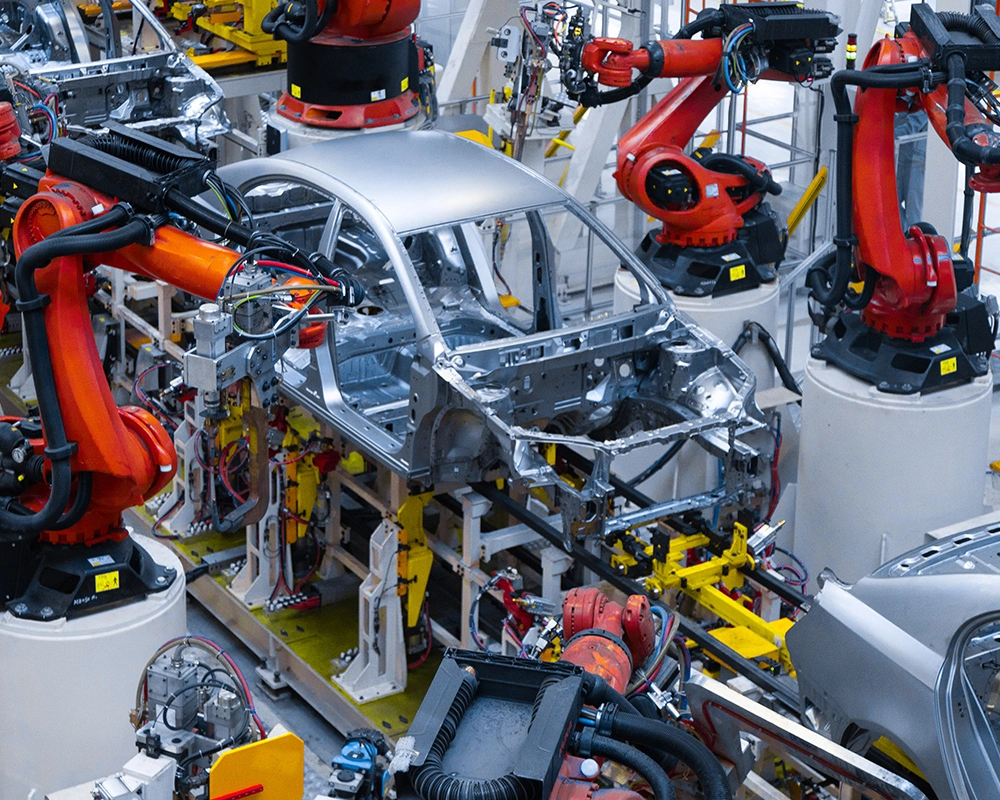
Robotic riveting systems can perform joining operations at accurately programmed positions. Automated material handling, controlled riveting pressure, and monitoring systems help maintain repeatable production quality.
Manufacturers can also integrate riveting equipment into customized assembly lines according to their production requirements. These solutions support efficient workflows, reduce repetitive manual operations, and help businesses meet increasing manufacturing demands.
Why Choose Heron Welder for Industrial Joining Solutions?
Heron Welder is a brand associated with industrial welding and joining equipment solutions. As manufacturing requirements continue to evolve, selecting appropriate joining technologies and reliable equipment is essential for achieving high-quality production results.
Heron Welder focuses on industrial joining applications and manufacturing efficiency. Businesses exploring modern assembly technologies can consider the importance of equipment performance, process control, automation compatibility, and application-specific engineering when developing their production systems.
For manufacturers evaluating self pierce riveting alongside resistance welding and other mechanical joining methods, selecting the right process according to material characteristics and product requirements is an important step toward achieving dependable results.
Important Factors When Selecting a Self Pierce Riveting System
Choosing the right self pierce riveting system requires careful consideration of several production factors.
Material Thickness: The thickness of each material layer influences rivet selection, tooling configuration, and the required joining force.
Material Compatibility: Aluminum, steel, and mixed-material assemblies require suitable rivet designs and process settings to achieve reliable mechanical interlocking.
Rivet Specifications: Rivet diameter, length, material, and geometry should match the intended application and joint requirements.
Tooling and Die Design: Proper punch and die configurations help ensure consistent rivet penetration and joint formation.
Production Requirements: Manufacturers should consider operating speed, automation needs, production volume, and integration with existing equipment.
Quality Inspection: Regular joint evaluation helps maintain consistent production standards and confirms that finished assemblies meet the required specifications.
Benefits of Self Pierce Riveting for Future Manufacturing
The growing demand for lightweight products, efficient assembly methods, and advanced material combinations continues to create opportunities for self pierce riveting technology.
Manufacturers can benefit from its hole-free joining process, dependable mechanical connections, and compatibility with automated production environments. Its ability to support mixed-material assemblies makes it particularly relevant to industries developing modern vehicles, electrical equipment, and precision metal products.
As industrial production becomes increasingly automated, self pierce riveting will remain an important option for manufacturers looking to improve assembly quality and streamline their joining operations.
Final Thoughts
Self pierce riveting is a valuable joining technology that combines mechanical strength, production efficiency, and material flexibility. Its ability to connect multiple material layers without pre-drilled holes makes it suitable for many modern manufacturing applications.
From automotive structures and electric vehicle components to household appliances and metal fabrication, this technology provides manufacturers with an effective approach to creating reliable assemblies. By selecting appropriate rivets, tooling, equipment, and process parameters, businesses can achieve consistent joining results and improve their overall production performance.
Heron Welder represents a brand focused on industrial welding and joining solutions. Exploring advanced joining technologies such as self pierce riveting alongside modern welding equipment can help manufacturers develop efficient production processes and meet the changing requirements of today's industrial market.


