


Brushing Twice a Day Isn't Enough: The Everyday Habits That Actually Protect Your Teeth
Ask most people how to look after their teeth and you'll get the same answer: brush twice a day. It's the one piece of dental advice everyone absorbs in childhood, and it's genuinely important. It's also nowhere near the full picture.
Plenty of people brush faithfully, morning and night, and still end up with cavities, gum problems and surprise dental bills. Not because they're doing it wrong exactly, but because brushing alone leaves gaps, literally and figuratively, that the rest of a good routine is meant to cover. The habits that separate people with easy dental visits from people with expensive ones are mostly the quiet ones nobody talks about.
Here's what actually protects your teeth day to day, beyond the obvious.
A Brush Only Reaches Three of Five Surfaces
Each tooth has five surfaces. The front, the back, the chewing top, and the two sides that press against neighbouring teeth. A toothbrush does a good job on three of them and physically cannot reach the two sides where teeth touch.
That's not a minor gap. The contact points between teeth are one of the most common places decay starts, precisely because they're sheltered from the brush and hard to see. This is the entire reason flossing or interdental cleaning exists, and it's why dentists keep pushing it despite everyone's reluctance.
Daily cleaning between teeth, whether with floss, interdental brushes or a water flosser, covers the surfaces your brush never touches. If you do one new thing for your teeth this year, make it this. It matters more than upgrading your toothbrush or switching toothpaste.
Timing Matters as Much as Technique
When you brush turns out to be almost as important as how.
The instinct to brush immediately after eating feels hygienic, but after anything acidic, citrus, soft drink, wine, sparkling water, it works against you. Acid temporarily softens enamel, and brushing straight away scrubs that softened layer. Waiting about thirty minutes lets saliva neutralise the acid and re-harden the enamel first. Rinsing with plain water in the meantime helps.
At night, brushing should be the last thing you do before bed. Saliva flow drops during sleep, and saliva is your mouth's natural defence, so anything left on the teeth overnight has a longer, less protected window to cause harm. Eating after brushing undoes the point of brushing.
It's Frequency, Not Quantity, that Damages Teeth
This one genuinely surprises people. When it comes to sugar and acid, how often you consume them matters more than how much.
Every time you eat or drink something sugary or acidic, your mouth spends the next twenty to thirty minutes in an acidic state that softens enamel. Down a fizzy drink in one sitting and you get one acid episode. Sip that same drink slowly across two hours and you keep your teeth under acid attack the entire time. The sipper does far more damage despite consuming exactly the same amount.
The practical takeaway: if you're going to have something sugary or acidic, have it with a meal and be done with it, rather than grazing or sipping through the day. And make water your default between meals, since it's the one drink that gives your teeth a break.
The Signs Worth Catching Early
Good daily habits prevent most problems, but not all, which is why noticing early warning signs matters. A few worth knowing:
Gums that bleed when you brush aren't normal. That's early gum inflammation, and at that stage it's reversible with better cleaning. Ignored, it can progress to something that damages the bone holding your teeth in place.
Sensitivity to cold that lingers, throbs, or wakes you at night is different from a quick harmless twinge, and it's worth getting looked at.
Pain when you bite down, especially as you release, can signal a cracked tooth, which is far cheaper to deal with early than late.
I wrote about this cost-of-waiting pattern in more detail in an earlier piece on why the check-up you keep rescheduling is the cheapest appointment you'll ever have, and the short version is that dental problems get more expensive the longer they sit, so catching them early is where the real saving is.
Things People Get Wrong with Good Intentions
Some well-meaning habits actually cause harm.
Brushing harder doesn't clean better. It wears down enamel and pushes gums back, exposing sensitive root surfaces. A soft brush and a gentle hand outperform a hard scrub every time.
Mouthwash isn't a substitute for cleaning. Used after brushing and flossing it can help, but swished around in place of them it just freshens breath over a mouth that's still dirty.
Rinsing with water straight after brushing washes away the concentrated fluoride you just applied. Spit, don't rinse, is the counterintuitive rule that lets the fluoride keep working.
And a hard-bristled brush is almost never the right choice, despite feeling like it cleans more thoroughly. Soft is what dentists recommend for nearly everyone.
Habits Are Only Half the Equation
Even an excellent daily routine misses things. Decay between teeth, early gum pockets, and cracks don't announce themselves, and no amount of home care lets you see the surfaces a dentist checks with X-rays and instruments. That's why the every-six-months check-up exists, to catch the small percentage that slips past good habits while it's still small and cheap to fix.
For reliable, non-commercial guidance on daily oral care and how often to have a check-up, the Australian Dental Association's oral health resources are a trustworthy place to start.
If you're overdue for a visit or looking for a regular practice, somewhere like Bradbury Dental Surgery in Campbelltown covers routine check-ups and cleans through to more involved treatment, and having a practice you'll actually return to is one of the better predictors of keeping your teeth trouble-free long term.
The Real Routine
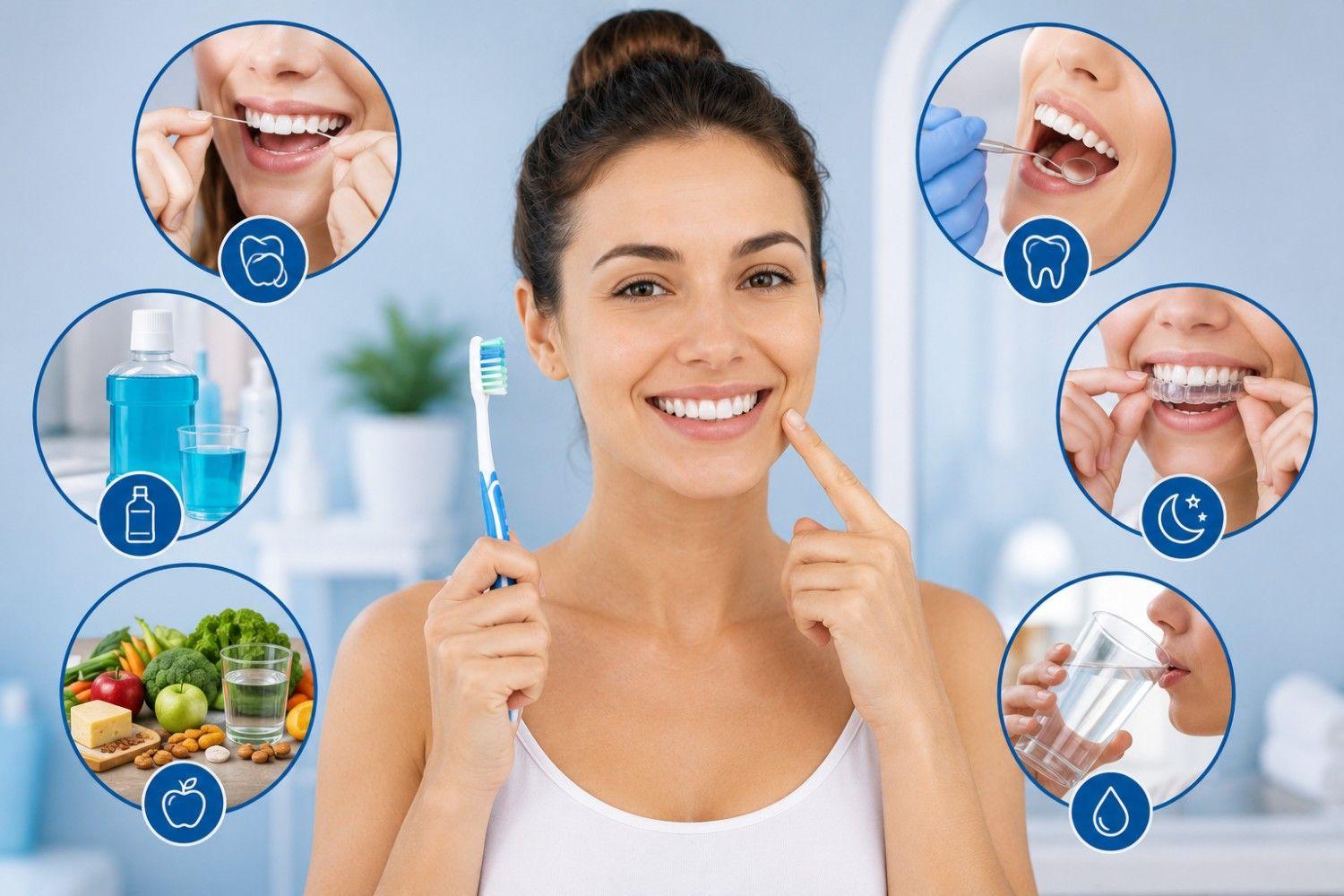
A genuinely protective dental routine looks like this: brush twice a day with a soft brush and fluoride toothpaste, spit rather than rinse, clean between your teeth once a day, keep sugary and acidic things to mealtimes rather than sipping them all day, drink water as your default, and see a dentist regularly even when nothing hurts.
None of it is difficult. It's just broader than the single habit most of us were taught. Brushing twice a day is the headline. The rest of the routine is what actually keeps you out of the dental chair for anything more serious than a check-up.

 English
 Arabic
 French
 Spanish
 Portuguese
 Deutsch
 Turkish
 Dutch
Dutch
 Italiano
 Russian
 Romaian
 Greek
Greek