

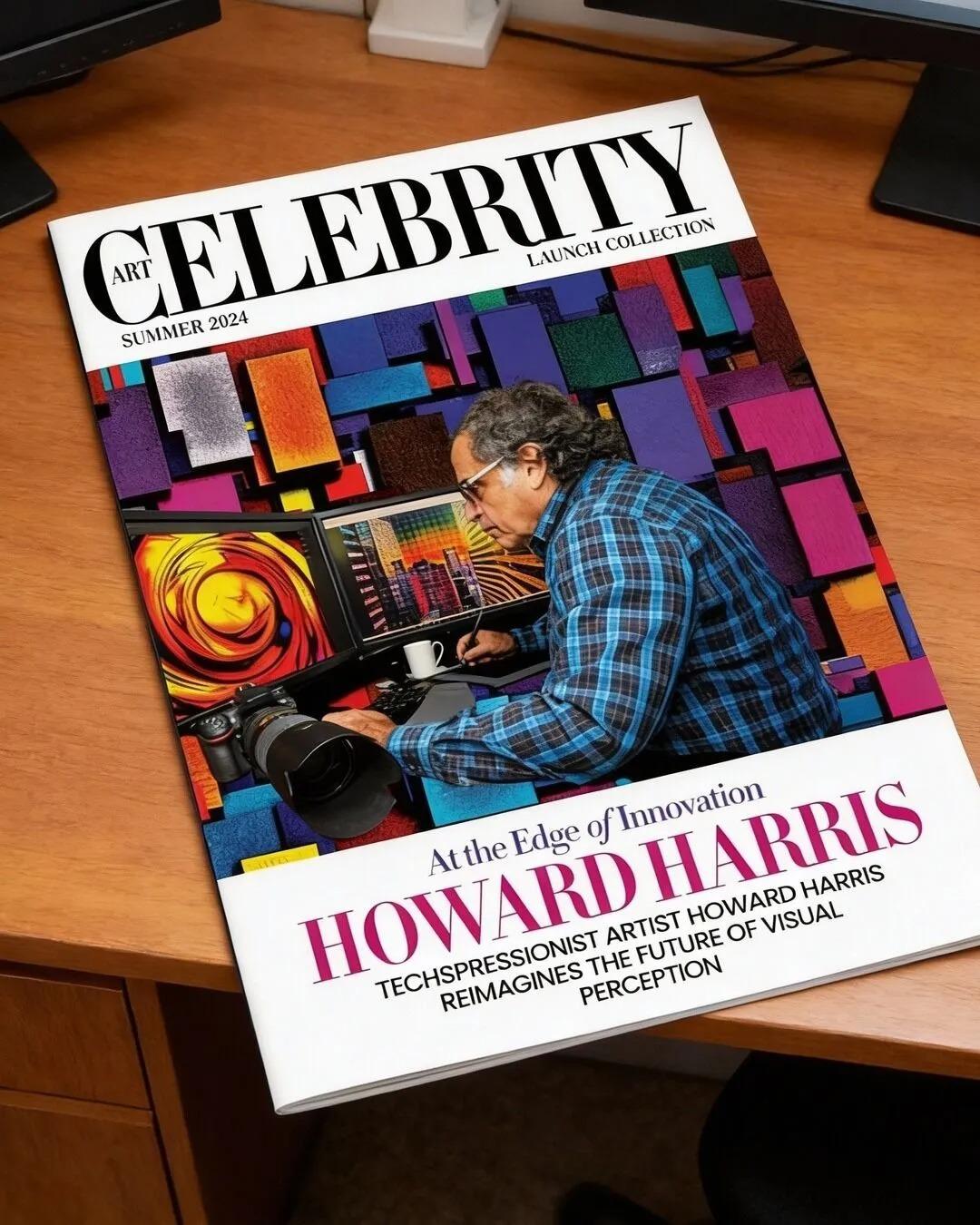
How Did Pratt Institute Shape Howard Harris's Approach to Fine-Art Photography?
Howard Harris's fine-art photography brings together artistic expression, design, and technology. His Master of Industrial Design from Pratt Institute in New York added a new dimension to his creative background. Today, his work reflects the perspective of a Pratt Institute fine art photographer, combining an understanding of visual composition with a personal approach to photographic art.
Howard Harris: From Fine Arts to Industrial Design
Harris began his education at Kansas City Art Institute, where he earned a Bachelor of Fine Arts. He later earned a Master of Industrial Design from Pratt Institute in New York.
He also studied:
● Economics and computer science at the University of Missouri.
● Sublimation color research at Rochester Institute of Technology.
● Design, technology, and visual expression.
Each subject added to his creative knowledge. Fine arts shaped his artistic vision. Industrial design developed his interest in form, structure, and balance.
What His Pratt Institute Education Brought to Photography
At Pratt Institute, Harris studied with design theorist Rowena Reed Kostellow. This experience deepened his understanding of shapes, forms, and space. He uses these ideas when creating photographic art.
He considers how each part of an image fits with the rest. His work brings photography and design together. This blend is an important part of his identity as a Pratt Institute fine art photographer.
How Design Principles Influence His Artistic Vision
Harris pays close attention to the visual details of an image. He uses several elements to shape the viewer's experience:
● Light creates mood and changes how an image appears.
● Color adds depth and visual interest.
● Lines and shapes guide the viewer's eye.
● Space gives the composition balance.
● Movement creates a sense of flow.
Together, these elements shape the look and feel of his artwork.
Turning Photographic Images into Techspressionist Art
Techspressionism uses technology as a way to express artistic ideas. Harris brings this approach into his fine-art photography.
Some of his works feature abstract shapes, lines, patterns, and grids. These details change how viewers see the subject. They also draw attention to parts of the image that might otherwise go unnoticed.
His work connects photography with design and creative expression.
The Patented Process Behind His Dimensional Photography
In 2017, Harris received U.S. Patent No. 9,753,295 for Apparatus and Method of Manufacture for a Layered Artwork.
His dimensional artwork brings four main parts together:
- Aluminum base: The photographic image is transferred onto coated aluminum through dye sublimation.
- Printed acrylic overlay: One separate image-bearing acrylic layer sits above the aluminum.
- Standoffs: These hold the acrylic layer away from the aluminum base.
- Rear metal frame: This supports the artwork from behind.
The space between the aluminum and acrylic gives the artwork its dimensional look.
How Aluminum and Acrylic Create a Different Viewing Experience
The aluminum base and acrylic overlay sit at different depths. This creates a layered appearance. As viewers change their position, the light and viewing angle can change how the artwork looks. The physical layers add depth to the photographic image. This approach connects the image with the way it is presented.
Understanding His Three Fine-Art Print Formats
Harris offers three print formats, depending on the artwork:
● Direct aluminum prints: The image is transferred onto coated aluminum. A rear black aluminum frame and wire-and-ring hanging system complete the piece.
● Dimensional aluminum prints: These include an aluminum image base, one printed acrylic overlay, standoffs, and a rear metal frame. A French cleat is supplied for mounting.
● Giclée archival prints: These use acid-free archival paper, a mounted board, a solid wood frame, and clear protective acrylic glazing.
Each format gives the artwork a different look and presentation. These differences also add useful context for people searching for ViewBug Titan Award photographer prints.
What the ViewBug Titan Award Reveals About His Artistic Recognition
Harris received the ViewBug Online Gallery Titan Award in 2024. He also received four other ViewBug awards that year:
● Chronicle Award
● Spotlight Award
● Talent in Focus Award
● Luminary Award
In 2024, Howard Harris received the ViewBug Titan Award. Collectors interested in ViewBug Titan Award-winning photography prints can explore his work through this recognition and his distinctive approach to photographic art.
Exploring Howard Harris's Fine-Art Photography Collections
Harris explores different subjects through his art. His collections include:
● Abstractions: Shapes, patterns, and visual forms.
● Animals: Creative interpretations of animal subjects.
● Cityscapes: Urban scenes and built environments.
● Landscapes: Natural places and outdoor views.
● People: Human subjects presented through his artistic vision.
● Political and Traditional: Works with different themes and styles.
● Visions: Images shaped by imagination and visual expression.
His newer collections also feature Paris & Giverny and Ferrara & Florence.
A Distinctive Artistic Vision
Howard Harris combines photography, art, and industrial design to create distinctive work. His patented process adds physical depth to selected images, while his direct-to-aluminum and Giclée formats offer different presentation styles. Collectors interested in patented art photographic process prints can explore how his approach brings materials, technology, and artistic expression together.


