

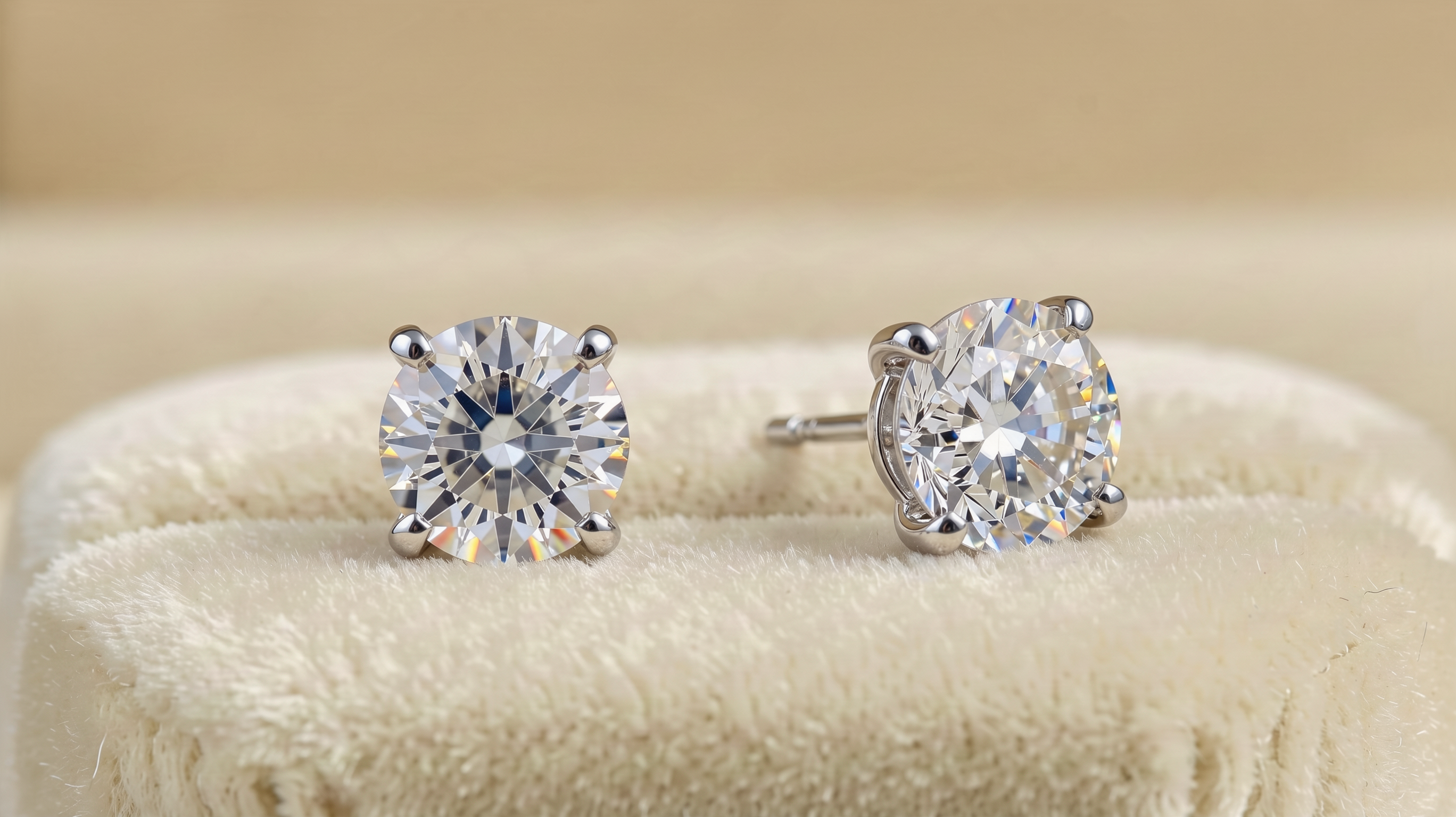

Diamond stud earrings are a versatile jewelry choice, suitable for daily wear and formal occasions. Their comfort and practicality depend on several design details beyond the diamond itself. When selecting diamond stud earrings, factors such as setting style, stone size, post length, and backing type influence how they fit and feel throughout the day. A well-designed pair should remain secure, sit comfortably against the ear, and minimise the risk of snagging on clothing or accessories. These considerations help determine whether the earrings are suitable for regular use.
Why Diamond Stud Earrings Are the Everyday Earring Staple
Studs are the most common earring type for everyday use, and the reason is practical. They sit close to the earlobe, so they don't swing or dangle when you move. They're also less likely than drop styles to catch on hair, collars, or scarves. A small stud works with almost any outfit, from a knit jumper to a tailored shirt.
Round stones are the classic choice for round diamond stud earrings, partly because their symmetry looks balanced from every angle. Because the design is so simple, the quality of the stone and the finish of the setting matter more. A well-made stud can be worn almost without notice, which is what most people want from an everyday piece.
Choosing a Setting: Prong, Bezel, Martini, and Flush
The setting holds the diamond in place, and it shapes how the stud looks, how secure it feels, and how easy it is to clean. Most single-stone designs are solitaire diamond earrings, meaning one stone with nothing else around it, so the setting does most of the visual work.
Prong settings use small metal claws to grip the stone. They show the most diamond and let the most light through, which explains their continued popularity. The trade-off is that prongs can snag on fabric and hair, and dirt collects underneath them. Bezel settings surround the stone with a continuous rim of metal. They sit smoother against the ear and protect the edges of the diamond better, though they show slightly less of the stone. Martini settings angle the diamond upward in a V-shaped mount for a modern, sculpted look. Flush settings sit the stone level with the surface of the metal for the most minimal result. Both lower-profile options are comfortable and easy to clean, but a flush setting has to be well made to stay secure.
|
Setting |
Visual profile |
Security for daily wear |
Comfort |
Cleaning |
|
Prong |
Shows the most diamond |
Good, but prongs can catch |
Moderate |
Harder, as dirt collects under prongs |
|
Bezel |
Smooth, low profile |
Very secure |
High |
Easier |
|
Martini |
Angled, modern look |
Good |
High |
Moderate |
|
Flush |
Minimal, sits level |
Secure when set well |
High |
Easy |
If you want to see how the same studs move from the office into an evening out, our guide to styling diamond studs for different occasions covers that transition.
Sizing Your Studs: Carat Weight, Visual Size, and Proportion
Carat weight measures the mass of a stone, not how large it looks when worn. Two diamonds of the same weight can appear noticeably different depending on their cut, their proportions, and the setting. A deeper cut may look smaller across the top, while a well-proportioned stone with a wider spread can look larger than its weight suggests. Setting matters too. A bezel surrounds the stone with metal, which can make it look a little smaller, while a prong setting leaves more of the diamond exposed.
Shape matters as well. Princess-cut diamond studs are square, and their sharp corners sit more exposed than the rounded edges of a round stone. For that reason, many buyers of princess cuts prefer a protective setting. As a rough guide for round diamond stud earrings, a 0.25 carat stud measures a little under 4.5 millimetres across, a 0.50 carat stud sits closer to 5 millimetres, and a 1 carat stud is around 6.5 millimetres. These figures are indicative only, since they vary by cut and setting, so check the measurements listed by the seller.
Matching Size to Your Face and Ear
Proportion matters more than the number on the tag. A smaller stud often suits a delicate face or a petite earlobe, where a larger stone can look heavy. If your lobes are on the smaller side, a stud of about 4 to 5 millimetres usually sits more naturally. Those with a fuller face or more prominent ears may find a slightly larger stone balances their features better.
Comfort and Wear: Backings, Post Length, and Daily Durability
A stud is only as secure as its backing, and this is where many lost earrings go missing. Butterfly backs are the familiar clip-on style. They're light and easy to fit, and they suit occasional or lightly active wear, though they can loosen with repeated removal. Screw-backs thread onto the post and hold firmly, which makes them the better choice for all-day wear and for anyone who sleeps in their studs, exercises, or works with their hands. Push-backs slide on and off quickly, which is convenient, but they need regular checking to make sure they still grip.
Post length affects comfort too. A post that is too short may not pass through a thicker lobe without pressure, while a long post can feel awkward on a thinner lobe and lift the stud away from the ear.
Matching Studs to Your Metal and Everyday Wardrobe
White gold and platinum have a cool, bright tone that pairs well with silver jewelry. Yellow gold has a warm finish that suits gold rings and bracelets, and rose gold sits between the two, working well with a mix of metals. White gold is usually rhodium-plated, and the plating may need refreshing over time. Platinum keeps its colour without plating but develops a soft patina with wear. Yellow and rose gold generally need less frequent attention. Choose the metal that matches the jewelry you already wear most, since a stud that blends with your everyday pieces tends to feel more natural.
Conclusion
Three decisions shape how diamond stud earrings perform: the setting, the size, and the backing. Get those right, and the pair should feel comfortable and secure from morning until night. Taste decides the rest, and that part is worth enjoying.
Also Read: New Year Jewelry Ideas to Start the Year in Style
Frequently Asked Questions
Q1. Are diamond studs suitable for sensitive ears?
They can be, as long as the metal and backing are chosen with care. Gold and platinum are commonly used for sensitive ears, but a backing can still contain nickel or other alloys that irritate some people. Look for products that specify their materials, and if you're prone to reactions, ask the seller for details before buying.
Q2. How often should I check the backings?
A quick check every few weeks is a good habit. Gently press the back to make sure it sits firmly on the post and doesn't wobble. If you use push-backs or wear your studs daily, check more often, since looseness can develop with regular use.
Q3. What size diamond studs should I buy for everyday wear?
For most people, a round stud of about 0.25 to 0.50 carats is a comfortable starting point for daily use. Smaller stones suit delicate features and petite lobes, while slightly larger ones can work well if you prefer a more visible sparkle. Ask the seller for the stone’s measured diameter, since visual size depends on cut and setting.


