

KP AUTOMATIONS: Choosing the Right Pasta Machine for a Future-Ready Manufacturing Facility
Building a successful pasta manufacturing facility requires careful planning, reliable equipment, and a clear understanding of production requirements. As demand for packaged food products continues to develop, manufacturers need machinery that can support consistent output, product flexibility, and efficient factory operations.
Choosing the right pasta machine is one of the most important decisions in this process. The equipment must match the manufacturer's product range, production targets, available infrastructure, and future business plans.
KP AUTOMATIONS, an Indian pasta machinery manufacturer with experience dating back to 1998, provides machinery solutions for businesses establishing new production facilities or upgrading existing operations.
Understanding Your Pasta Manufacturing Requirements
Before purchasing machinery, manufacturers should define what they want their production facility to achieve. A business producing a limited range of pasta products may have different equipment requirements from a large commercial manufacturer supplying multiple markets.
A practical planning process should include:
-
Identifying the pasta varieties to be manufactured.
-
Estimating daily and hourly production requirements.
-
Evaluating raw material availability.
-
Assessing factory space and utility infrastructure.
-
Deciding the required level of automation.
-
Planning drying and packaging capacity.
-
Considering future production expansion.
These details help businesses select machinery according to real manufacturing needs instead of investing in equipment based only on advertised capacity.
Why a Fully Automatic Pasta Making Machine Can Improve Production Planning
Automation is an important consideration for manufacturers seeking organized and coordinated production operations. A fully automatic pasta making machine can integrate multiple manufacturing activities, depending on the selected system configuration.
Such equipment may coordinate dough preparation, extrusion, shaping, and cutting, with suitable connections to downstream drying equipment.
Some potential advantages include:
Coordinated operations: Automation helps connect production activities into a more organized workflow.
Reduced manual handling: Repetitive activities can be reduced through suitable automated processes.
Process management: Control systems can help operators manage important production parameters.
Production consistency: Repeatable operating conditions support more controlled manufacturing.
Business scalability: A properly selected system can provide a foundation for future capacity planning.
Manufacturers should evaluate automation based on the processes included, operator responsibilities, technical requirements, and maintenance arrangements.
What to Consider When Buying an Automatic Pasta Making Machine
An automatic pasta making machine should be selected according to the type of pasta being manufactured and the operating requirements of the factory.
The extrusion section is particularly important because it determines how prepared dough is shaped through specially designed dies. The choice of dies and processing configuration influences the pasta products that can be manufactured.
Before finalizing a purchase, buyers should review:
-
Production capacity and operating schedule.
-
Supported pasta varieties and shapes.
-
Die availability and product changeover requirements.
-
Control systems and operating procedures.
-
Compatibility with drying equipment.
-
Electrical and utility requirements.
-
Installation and operator training.
-
Maintenance and spare-parts support.
A detailed technical evaluation helps businesses select equipment that fits their planned manufacturing process.
How to Compare Pasta Machine Manufacturers
Choosing a machinery supplier is a long-term business decision. Companies researching pasta machine manufacturers should examine technical capabilities, manufacturing experience, product range, and support services.
A supplier's ability to understand the complete production process is especially important. Machinery selection should consider extrusion, drying, product handling, and packaging rather than focusing on one isolated machine.
Here are some useful evaluation criteria:
Industry experience: Review the manufacturer's background in pasta processing equipment.
Product range: Check whether the supplier offers machinery for the intended pasta varieties and production capacities.
Technical knowledge: Discuss processing requirements, machinery configuration, and equipment compatibility.
Project understanding: Evaluate whether the supplier understands the proposed factory layout and production objectives.
Installation assistance: Confirm commissioning arrangements and operator training.
After-sales support: Discuss maintenance guidance, spare parts, and technical assistance.
Comparing manufacturers through these factors can help buyers make more informed investment decisions.
Exploring Pasta Machine Manufacturers India
India has a growing food processing and packaged food manufacturing sector, creating opportunities for businesses interested in pasta production.
When comparing pasta machine manufacturers India, buyers should consider whether the supplier can provide machinery suited to their intended products, production targets, and factory infrastructure.
Domestic machinery suppliers may offer practical advantages in communication, project coordination, and access to technical assistance. However, businesses should still evaluate each supplier individually and request relevant technical information before purchasing.
A useful supplier assessment should include:
-
Company background and manufacturing experience.
-
Details of available production lines.
-
Technical specifications and equipment configuration.
-
Product demonstrations or relevant installation references, where available.
-
Installation and commissioning arrangements.
-
Warranty and maintenance information.
-
Availability of spare parts and service support.
A well-informed supplier selection process can help reduce project uncertainty and support smoother factory development.
Selecting Machinery for Different Pasta Varieties
Product variety influences the machinery configuration required in a pasta manufacturing facility.
Short-cut pasta production may involve macaroni, fusilli, and other shaped products. Long-cut pasta manufacturing may focus on spaghetti, linguine, fettuccine, and tagliatelle.
Manufacturers should identify their target products before selecting equipment. They should also discuss the required dies, cutting arrangements, product handling, and drying conditions.
A production setup designed around a clearly defined product portfolio can help businesses manage manufacturing requirements more effectively.
Why Drying Capacity Must Match Production Capacity
A pasta production facility should not be planned around extrusion machinery alone. Drying is an essential stage that influences the moisture level, texture, and storage stability of the finished product.
The drying section should be capable of handling the output from the extrusion section. If drying capacity is insufficient, products may accumulate between stages and affect the overall production schedule.
Manufacturers should evaluate drying arrangements according to:
-
Pasta shape and product characteristics.
-
Required moisture reduction.
-
Production capacity.
-
Air circulation and temperature management.
-
Humidity-control requirements.
-
Energy consumption and maintenance needs.
Planning drying equipment alongside production machinery helps create a more balanced manufacturing facility.
Integrating Packaging for a Complete Manufacturing Setup
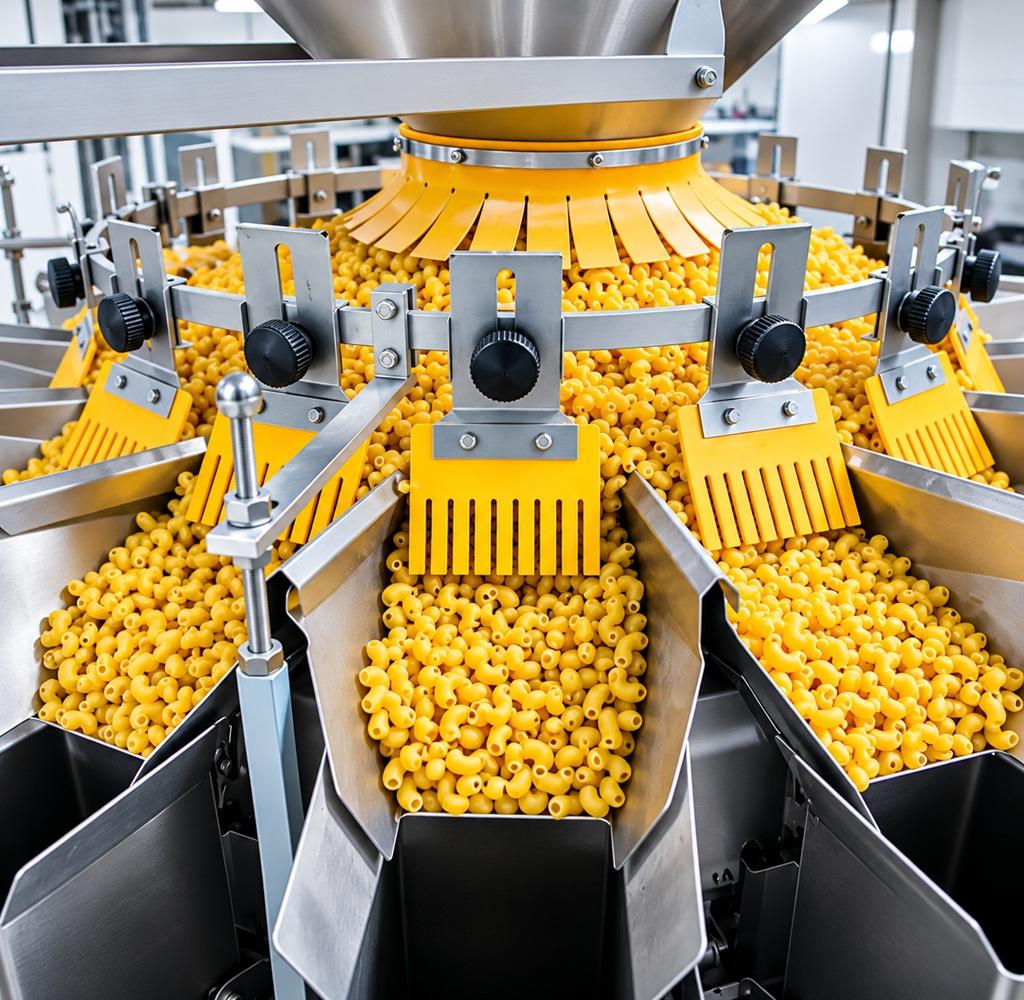
Packaging is the final major stage in the pasta manufacturing process. The packaging system should be compatible with the finished product, required pack weights, packaging materials, and production speed.
Depending on the business requirements, manufacturers may consider weighing systems, automatic filling equipment, and suitable sealing arrangements.
The production, drying, and packaging sections should be planned together to support continuous material movement and reduce unnecessary handling.
Factory layout should also provide adequate space for finished-product storage, operator movement, inspection, and equipment maintenance.
KP AUTOMATIONS: Supporting Pasta Machinery Requirements Since 1998
KP AUTOMATIONS began its journey in 1998 and has developed machinery solutions for the pasta manufacturing industry.
Its product portfolio includes short-cut and long-cut pasta production lines, pasta-making equipment, drying systems, packaging machinery, and related production solutions.
The company supports manufacturers evaluating equipment for different production capacities and pasta varieties. Machinery selection can be planned around product requirements, automation objectives, factory layout, and future expansion.
For businesses planning a new facility or upgrading existing machinery, understanding the complete production process is essential to making a suitable investment.
Conclusion
Building a future-ready pasta manufacturing facility starts with selecting suitable machinery and planning every stage of production. The right pasta machine should match product requirements, capacity targets, automation needs, and factory infrastructure.
A fully automatic pasta making machine can support coordinated manufacturing, while an automatic pasta making machine can help manage routine production activities. Equally important is selecting an experienced machinery supplier.
By comparing pasta machine manufacturers and evaluating pasta machine manufacturers India through technical expertise, equipment range, and support capabilities, businesses can make better-informed decisions.
With experience dating back to 1998, KP AUTOMATIONS provides machinery solutions for manufacturers seeking to establish, expand, or modernize their pasta production facilities.


