


How to Waterproof a Leather Vest: Step-by-Step Guide
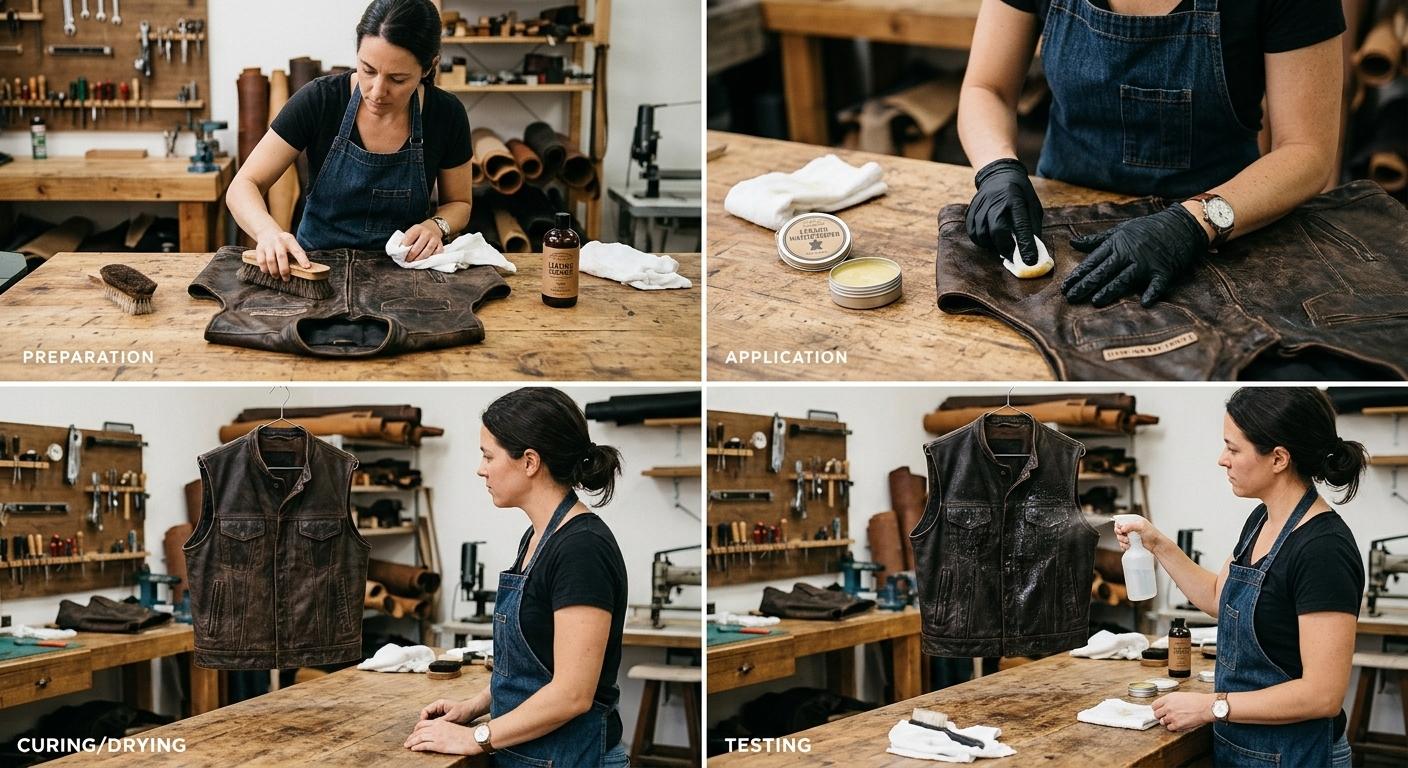
Riding in unpredictable weather means your gear will eventually encounter road spray, light rain, and sudden highway downpours. Untreated leather absorbs moisture quickly, leading to stiffness, water stains, and long-term fiber damage. Waterproofing a top quality men's leather motorcycle vest requires the right balance: enhancing water resistance while preserving the leather's natural breathability, suppleness, and finish.
Can Leather Be Fully Waterproofed?
Natural leather cannot be made 100% waterproof without sealing the pores entirely with rubberized coatings, which destroys the hide's texture and flexibility. Applying a water-repellent treatment makes the vest water-resistant:
-
Water-resistant: Moisture beads up and rolls off the surface during light to moderate rain showers.
-
Waterproof limitation: Heavy, prolonged rain will eventually penetrate through stitching holes, pocket openings, and zippers.
Waterproofing treatments slow down moisture absorption to keep your core dry while protecting the leather fibers from water damage.
Identifying Your Leather Type
Different leather types and finishes react uniquely to water-repellent treatments:
-
Pigmented and top-grain cowhide: Features a durable protective topcoat that accepts sprays and light balms easily.
-
Aniline and semi-aniline leather: Highly porous natural hides that absorb liquids quickly and darken when treated with oils or waxes.
-
Distressed and pull-up leather: Contains oils that shift in tone; waxes will alter the vintage matte appearance.
-
Suede and nubuck: Feature a brushed nap that requires specialized aerosol protectors rather than heavy creams or waxes.
How to Clean Before Waterproofing
Applying a protective treatment over road grime seals dirt directly into the leather grain. Clean the vest thoroughly first:
-
Wipe down: Use a soft, damp microfiber cloth to remove dust, bugs, and road film.
-
Spot clean: Apply a pH-neutral leather cleaner for oily stains or embedded grime.
-
Dry completely: Allow the vest to air dry naturally at room temperature before applying any treatment. Never apply waterproofing products to damp leather.
Spot Testing Waterproofing Products
Waterproofing sprays, waxes, and balms can alter the color, sheen, and texture of your vest. Always test your chosen product on an inconspicuous spot first:
-
Test areas: Inside the lower hem, the interior facing of the pocket flap, or under a collar fold.
-
Evaluation: Apply a small amount, let it cure for 24 hours, and check for unwanted darkening, blotching, or sticky residue before treating the whole garment.
Which Waterproofing Product Works Best ?
Select a product suited to your hide type and riding habits:
-
Fluoropolymer or silicone sprays: Create an invisible, breathable barrier that causes water to bead up without altering color or sheen.
-
Natural beeswax balms: Provide heavy-duty water repellency and deep conditioning for thick, rugged riding hides, though they tend to darken the leather.
-
Conditioning creams: Combine light oils with wax to maintain suppleness while adding light water resistance.
Avoid heavy saturated oils like pure neatsfoot or mink oil, which oversaturate fibers and attract road dust.
How to Apply Leather Waterproofing
Follow this reliable application routine to achieve balanced protection:
-
Step 1: Prepare the space: Work in a well-ventilated area away from direct sunlight or open flames.
-
Step 2: Clean and inspect: Ensure the vest is clean, dry, and free of lint.
-
Step 3: Apply evenly: If using a spray, hold the can 6 to 8 inches away and apply in smooth, overlapping sweeping motions. If using a wax balm, work small amounts into the hide using circular motions with a foam applicator.
-
Step 4: Wipe excess: Use a clean microfiber towel to buff away any pooled liquid or waxy buildup.
-
Step 5: Cure: Let the vest dry naturally for 12 to 24 hours so the protective barrier fully bonds with the hide.
Protecting Seams, Pockets, and Hardware
Water typically enters a vest through construction seams rather than the leather panels:
-
Seam lines: Pay extra attention to shoulder seams, armholes, and side panels where needle holes let water seep through.
-
Pocket openings: Zipper tape and snap flaps are common leak points; never store unprotected phones or sensitive electronics in vest pockets during heavy rain.
-
Metal hardware: Dry brass, nickel, or steel snaps and zipper teeth after wet rides to prevent corrosion.
What are Rain Limits for Treated Leather
A properly treated leather vest easily repels road mist, fog, and light 20-minute showers. However, it cannot replace dedicated rain gear during severe downpours or multi-hour highway tours. When facing prolonged, torrential storms, slip a lightweight waterproof rain jacket over your leather vest to keep both yourself and the hide completely dry.
How to Waterproof a Men's Leather Motorcycle Vest
When treating a men's leather motorcycle vest, focus on high-exposure zones. The front chest panels, collar, and shoulders take the brunt of oncoming highway wind and rain. Apply a second light coat across the chest and front storm flap to maximize water beading at highway speeds.
How to Protect a Women's Leather Biker Vest
For a signature women's leather biker vest, pay attention to shaped contour seams, bust darting, and side lacing. Water easily pools around side-lace grommets and decorative seam lines. Ensure the water-repellent spray penetrates around eyelets and tailored seams evenly without oversaturating the underlying liner.
What to Do When A Vest Gets Wet
If you get caught in a downpour, handle the wet leather correctly:
-
Gently wipe: Blot away standing water with a dry, clean towel.
-
Hang correctly: Place the vest on a wide, contoured wooden or padded hanger to preserve shoulder shape.
-
Air dry naturally: Dry at room temperature in a well-ventilated room away from radiators, heat vents, and hair dryers, which cause leather to shrink and crack.
When to Reapply Waterproofing
Reapply treatment based on riding exposure rather than a strict calendar. Perform a quick water-drop test: sprinkle a few drops of water onto the chest panel. If the water beads up cleanly, the barrier is intact. If the water darkens the leather or absorbs within a few seconds, it is time to clean and reapply your water-repellent treatment.
Waterproofing Mistakes to Avoid
-
Skipping the spot test: Applying an untested product that permanently darkens light or distressed leather.
-
Applying too much wax: Clogging hide pores with heavy buildup that attracts dirt.
-
Using heat to dry: Placing damp leather near heaters, which dries out essential natural tanning oils.
-
Treating dirty gear: Spraying water repellent over road grime and bugs.
Storing A Waterproof Vest
Store your treated vest in a cool, dry closet with consistent airflow. Avoid storing leather in non-breathable plastic garment bags, damp basements, or direct sunlight. Trapped moisture inside sealed bags encourages mold, mildew growth, and hardware oxidation.
Final Thoughts
Waterproofing a men’s leather motorcycle vest or women’s leather biker vest is about preserving the hide and boosting water resistance for everyday road conditions. Choose the right product, clean the surface first, and let wet leather dry naturally to keep your vest supple, weather-ready, and durable. With proper care, a quality vest from Best Leather NY will keep performing ride after ride for years.

 Arabic
 French
 Spanish
 Portuguese
 Deutsch
 Turkish
 Dutch
 Italiano
 Russian
 Romaian
 Portuguese (Brazil)
 Greek