


A brand founder receives a quote for a small makeup trial batch and pauses at the unit price. The figure sits well above what a finished retail product suggests, and the gap raises a fair question about whether the number reflects real work or a padded margin. Understanding what an OEM Makeup Cosmetics Supplier builds into a trial quote turns that pause into a clear decision. What actually sits inside the price of a small run?
Setup work that happens once
Every trial batch begins with work that does not repeat per unit. Formula matching, color adjustment, mold or component sourcing, and machine calibration all consume time and material before a single saleable piece exists. On a production run of many thousands, these costs spread thin and nearly disappear from the unit price. On a trial batch of a few hundred, the same costs divide across a small quantity and dominate the total. This is arithmetic rather than markup, and a supplier who explains it before quoting saves the buyer a week of suspicion.
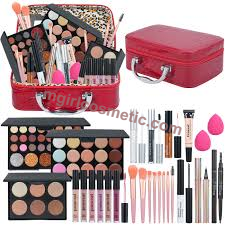
Jinhua Mgirl has handled OEM and ODM makeup production long enough to walk buyers through this structure openly, because a quote that arrives without context feels arbitrary. The company's product range covers eyeshadow, pressed powder, lipstick, lip gloss, mascara, eyeliner, and full cosmetic sets, which means a trial batch may involve several component types at once and several setup streams running in parallel.
Material minimums and color adjustment loss
Pigments, bases, and packaging components arrive in standard quantities. A trial batch may require purchasing a full lot of a shade to produce a fraction of it, and the unused portion becomes inventory or waste whose cost enters the quote. Color adjustment during press setup also generates spoilage, and a short run has little room to absorb that spoilage across saleable units. A buyer ordering a small quantity pays for the same material commitment as a larger buyer, divided across fewer pieces.
Labor that does not accelerate with small batches
Filling, pressing, assembly, and quality inspection involve handwork that keeps its own pace regardless of order size. A trial batch may occupy the same machine time and staff attention as a longer run, since cleaning and changeover happen either way. This is why doubling a small order sometimes drops unit price noticeably while doubling a large order changes it little.
Components and packaging
A makeup trial batch often includes compacts, tubes, and cases that carry their own minimums and tooling considerations. A custom case may require a mold investment that a trial quantity cannot justify, while a stock component keeps cost contained. Buyers who understand this tradeoff can choose packaging that suits the budget without compromising the finished look.
Comparing quotes with context
Two quotes for the same quantity can differ widely, and the difference usually traces to what each supplier includes. One may bundle formula development and sampling, another may charge separately. One may absorb spoilage, another may pass it through. A buyer who compares only the bottom line risks choosing a quote that grows once production begins.
Jinhua Mgirl approaches trial batches with a clear view of these variables, and brands that want to see how an OEM Makeup Cosmetics Supplier structures small-run production can explore the options at https://www.mgirlcosmetic.com/product, where a quote reflects the actual work behind the order rather than a figure pulled from a table. A unit price makes sense once the buyer knows which costs it carries.