

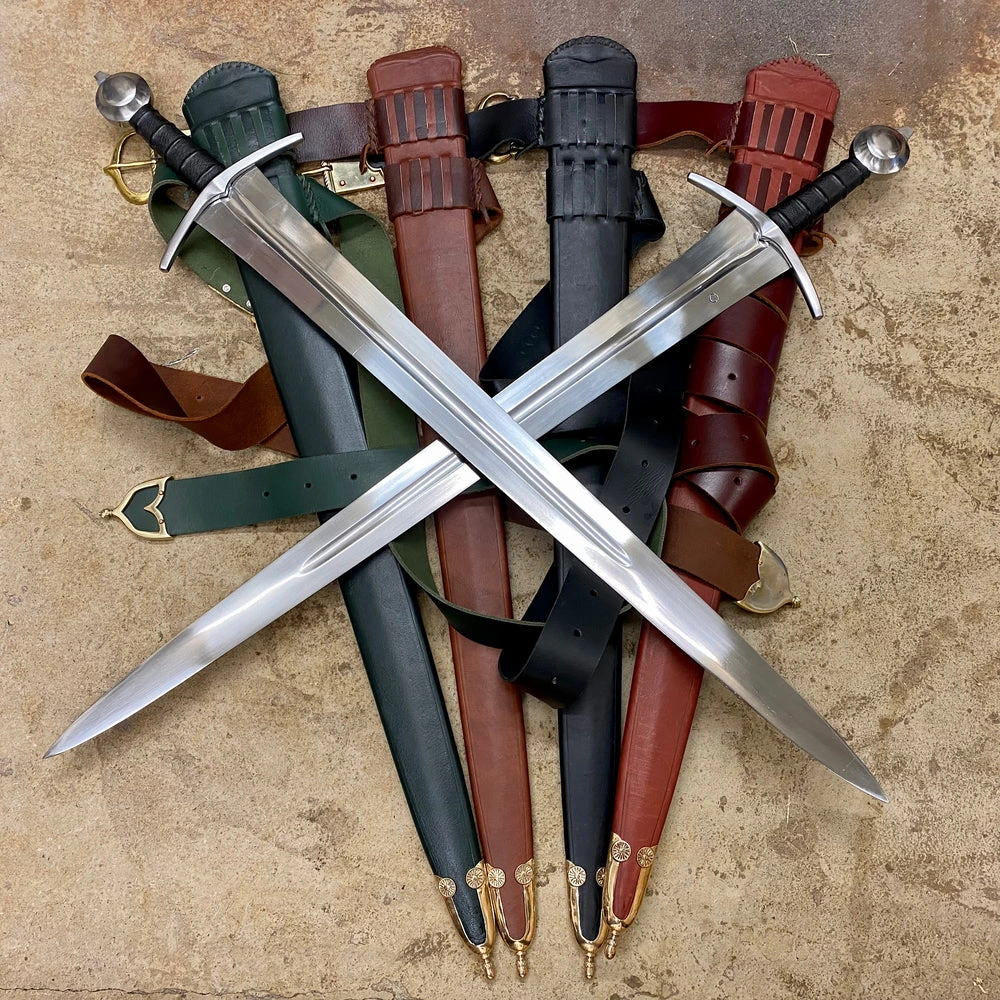

A medieval sword replica does not need heavy decoration to catch your eye. Sometimes, a simple crossguard and a clean blade shape are enough. Other pieces draw attention through engraved patterns, detailed fittings, or an unusual pommel.
Both styles can make a good display. The choice depends on your taste, the space you have, and whether you want a historical look or something closer to fantasy.
The Appeal of a Plain Design
Plain medieval sword replicas let you appreciate the shape of the whole piece. The blade, guard, grip, and pommel remain easy to see without decoration competing for attention.
This style can suit a room that already has books, framed artwork, or other collectibles. It adds to the display without making the space feel crowded.
A simple design also gives you fewer distractions when judging the finish. Uneven fittings or a poorly wrapped grip can be easier to spot. Look closely at where the guard meets the handle and whether the parts appear straight and neatly fitted.
Plain does not have to mean basic. Good proportions and careful finishing can give a simple replica plenty of character.
When Ornate Details Work Well
An ornate sword can become the main feature of a display. Patterns on the guard, markings on the blade, or a decorated pommel give visitors something to notice up close.
This may appeal to collectors who enjoy ceremonial styles or fantasy-inspired designs. A single detailed piece can work well on an otherwise clear wall or shelf.
The important part is how the decoration is finished. Close-up photographs should show whether patterns are clear and whether the colour is even around small details. Strong lighting in a product photo can make these areas hard to judge.
Choose decoration that you actually like, rather than assuming more detail means better quality.
Historical Style or Fantasy Design?
Before comparing replicas, decide what you want from the piece.
If historical accuracy matters, look for a design linked to a stated period or a documented example. Museum photographs can help you compare blade outlines, guards, grips, and pommels. The word “medieval” in a listing alone gives you little information about its historical basis.
For a fantasy collection, you have more freedom. You might prefer bold colours, unusual shapes, or elaborate markings. What matters is that the seller describes the design clearly so you understand what you are buying.
Think About the Display Space
A replica can look quite different in your room than it does against a plain product background.
Measure the available space, including the width of the guard. For a horizontal wall display, leave room around both ends. For a shelf, allow for the depth of the stand as well as the sword.
Plain designs often pair easily with other items. Ornate pieces may benefit from more open space, where their details remain visible. Neither needs a crowded backdrop.
Also check whether a stand or wall mount comes with the order. Any support you choose should suit the replica’s shape and weight.
Check More Than the Appearance
Once you have chosen a style, confirm the material, dimensions, weight, and edge condition. These details help you plan both display and care.
Ask for photographs of the reverse side and handle if they are missing from the listing. A decorative replica should look presentable from the angles you will see at home, not only from one carefully chosen view.
Follow the maker’s cleaning advice. Some finishes can be damaged by abrasive polish, especially around painted or plated details. Keep the piece securely mounted and away from damp conditions.
Choose the Style You Will Enjoy
A plain sword may appeal because of its shape and understated finish. An ornate one may stand out because of a pattern or detail you keep returning to.
Imagine each piece in your own space. Then choose the medieval sword replica whose design, size, and finish suit your collection. You do not need the most elaborate option to create a display worth enjoying.