

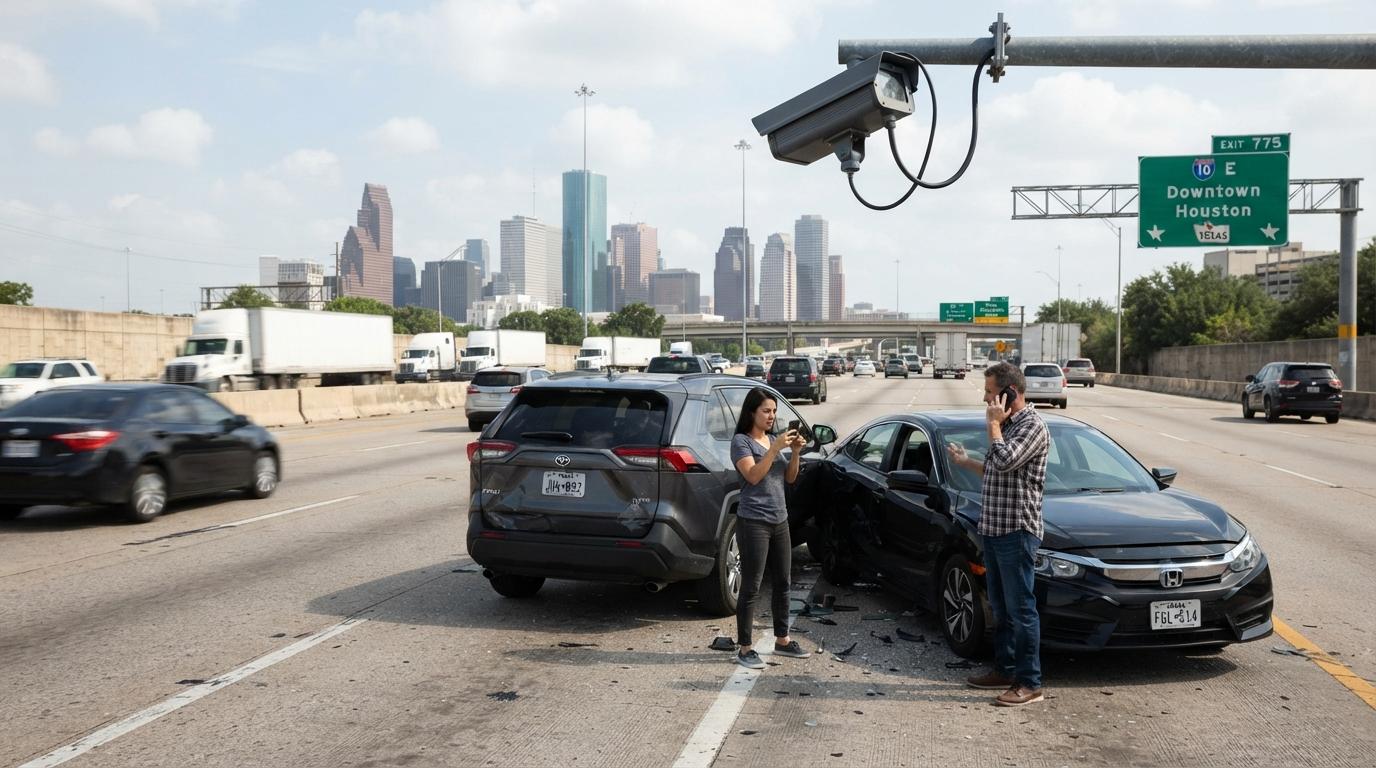

After a car accident, the other driver's story may not match yours. Maybe they say you ran the light. Maybe they claim you swerved into their lane. Without proof, it can turn into your word against theirs.
Video can change that. Between traffic cameras, business security systems, doorbell cameras and dashcams, there's a real chance your crash was recorded somewhere. The key is finding out quickly, before the footage disappears.
Why Video Evidence Matters After a Crash
Video can show what happened in a way statements can't. It may reveal:
- Which driver had the right of way
- Whether a traffic light was red, yellow or green
- Vehicle speeds and lane positions
- Whether a driver was distracted or failed to stop
- The exact sequence of the collision
For insurance claims and injury cases, that clarity can make a major difference. Understanding how to get traffic camera footage in texas is often one of the first steps toward building a clear picture of what happened.
Step 1: Think About Where Cameras Might Be
Right after the accident, or as soon as you safely can, look around the crash site. Possible cameras include:
- Traffic cameras on poles at major intersections or highways
- Business security cameras at gas stations, banks, stores and restaurants
- Doorbell and home security cameras in residential areas
- Dashcams in other vehicles, including rideshare and commercial trucks
- Public transit cameras on buses or at stations
- Parking lot cameras near shopping centers
Take photos of any cameras you see. These photos help you remember exactly where to ask later.
Step 2: Understand How Traffic Cameras Work in Texas
Not every traffic camera records. Many cameras operated by cities or the Texas Department of Transportation are used to monitor traffic flow in real time and may not save video at all. Others may keep recordings for only a short time.
Also, Texas banned red-light enforcement cameras under a 2019 state law, so many intersections that once had them no longer use them for ticketing. That's why private cameras near the crash site are often just as important as public ones.
Step 3: Act Fast
Time is the biggest challenge. Many systems automatically record over old footage within days, sometimes sooner. Businesses and homeowners may delete video without realizing it matters.
As soon as possible:
- Visit nearby businesses and politely ask if their cameras face the road
- Ask them to save the footage from the date and time of the crash
- Leave your contact information and the police report number
- Ask neighbors about doorbell or home cameras
Step 4: Request Public Footage the Right Way
For cameras owned by a city, county or state agency, you may need to submit a public information request. In Texas, these requests generally fall under the Texas Public Information Act. Contact the agency that operates the camera to learn how to submit a request and what information to include.
Knowing how to obtain traffic camera video of a car accident through official channels can save time and help you avoid missed deadlines. Some footage may be withheld if it's part of an ongoing investigation.
Step 5: Consider Legal Help
An attorney can send formal preservation letters asking businesses or agencies to keep footage, and may be able to obtain it through legal processes if needed. Texas injury firms such as Lozano & Khan often move quickly to secure video before it's lost.
Frequently Asked Questions
How long do businesses keep security footage? It varies widely. Some systems keep video for weeks, others only for a few days.
Can I get footage from a police dashcam or bodycam? Possibly, through a public information request, though access may be limited during an investigation.
What if no cameras captured the crash? Witness statements, photos, vehicle damage and the police report can still help show what happened.
Conclusion
There's a good chance your Texas car accident was captured by at least one camera, but footage doesn't last long. Look for cameras right away, ask businesses and neighbors to save video, and use official request channels for public footage. Acting quickly can make all the difference.


