

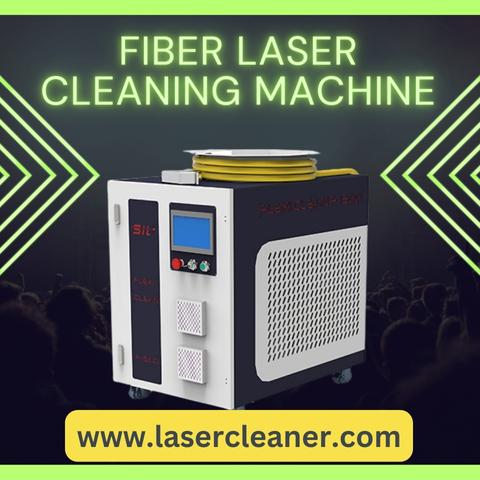
Fiber Laser Cleaning Machine: Modern Solutions for Industrial Surface Cleaning
Industrial cleaning plays an important role in maintaining product quality, equipment performance, and production efficiency. Traditional cleaning methods often require chemicals, abrasive materials, or extensive manual work. Modern industries are increasingly adopting advanced technologies to achieve cleaner surfaces with greater precision. A fiber laser cleaning machine offers an innovative solution for removing rust, paint, oil, oxidation, and other unwanted contaminants from different materials.
What Is a Fiber Laser Cleaning Machine?
A fiber laser cleaning machine is an industrial device that uses a concentrated laser beam to remove unwanted substances from a material's surface. It works by directing controlled laser energy toward contaminants, causing them to separate from the underlying material through processes such as ablation.
This technology is commonly used on metal surfaces, including steel, aluminum, copper, and other industrial materials. Depending on the application, operators can adjust laser power, scanning speed, and other settings to achieve the desired cleaning results.
How Does Laser Cleaning Technology Work?
The cleaning process begins when the laser source generates a high-energy beam. This beam is directed toward the target surface using an optical system and scanning head.
When laser energy interacts with contaminants, it causes them to heat up and detach from the surface. The process can remove rust, paint layers, grease, and oxidation without relying on chemical cleaning agents or abrasive blasting materials.
Proper parameter selection is essential because different materials and contaminants require different laser settings. Operators should always test the cleaning process on a small area before starting large-scale work.
Industrial Applications of Fiber Laser Cleaning
Laser cleaning technology is suitable for various industrial operations. Manufacturing companies use it to prepare metal surfaces before welding, painting, coating, and other production processes.
Some common applications include:
-
Rust Removal: Cleaning corrosion from metal components, machinery, and industrial equipment.
-
Paint Removal: Removing old paint layers from metal surfaces during maintenance and restoration.
-
Weld Preparation: Preparing metal joints before welding to help achieve consistent production quality.
-
Mold Cleaning: Removing accumulated residues from industrial molds and manufacturing tools.
-
Oil and Grease Removal: Cleaning unwanted substances from metal components and equipment.
-
Surface Restoration: Removing oxidation and contaminants from selected metal products.
These applications make laser cleaning a useful option for workshops, automotive manufacturers, fabrication facilities, and heavy industries.
Choosing the Right Equipment for Your Business
Selecting suitable laser cleaning equipment requires an understanding of your daily production requirements. Businesses should consider the type of material, contaminant thickness, cleaning area, and required processing speed.
Laser power is another important factor. Lower-power systems may be appropriate for light cleaning and delicate applications, while higher-power machines can handle more demanding industrial tasks.
It is also important to evaluate the laser source, cooling system, scanning head, control interface, and available technical support. Choosing equipment that matches your actual workload can help improve operational consistency and long-term productivity.
Safety and Maintenance Considerations
Although laser cleaning reduces the need for certain chemical and abrasive cleaning processes, it requires appropriate safety precautions. High-powered laser beams can cause serious eye and skin injuries. Operators should use suitable laser safety eyewear and follow the manufacturer's operating instructions.
Proper ventilation and fume extraction are also important because removing paint, coatings, and industrial contaminants can release hazardous particles or fumes.
Regularly inspect optical components, cables, cooling systems, and other machine parts. Keeping the equipment clean and following scheduled maintenance procedures can support reliable operation.
Why Industries Are Moving Toward Laser Cleaning
Manufacturers are looking for cleaning solutions that offer precision, controlled operation, and reduced dependence on consumable cleaning materials. Laser technology addresses many of these requirements by providing a non-contact cleaning process.
A fiber laser cleaning machine can also be integrated into different industrial workflows, depending on the production environment and equipment configuration. Its versatility makes it relevant to companies involved in metal fabrication, automotive manufacturing, shipbuilding, and machinery maintenance.
Final Thoughts
Industrial surface preparation continues to evolve as manufacturers adopt more advanced cleaning technologies. Laser cleaning provides a modern approach to removing rust, paint, oxidation, and other contaminants from suitable surfaces. Investing in a fiber laser cleaning machine can help businesses develop more controlled and efficient cleaning operations when the equipment is selected according to their specific requirements. With proper training, safety measures, and maintenance, this technology can become a valuable part of modern industrial production.


