

Microalgae DHA Market: Innovation and New Nutrition Product Opportunities

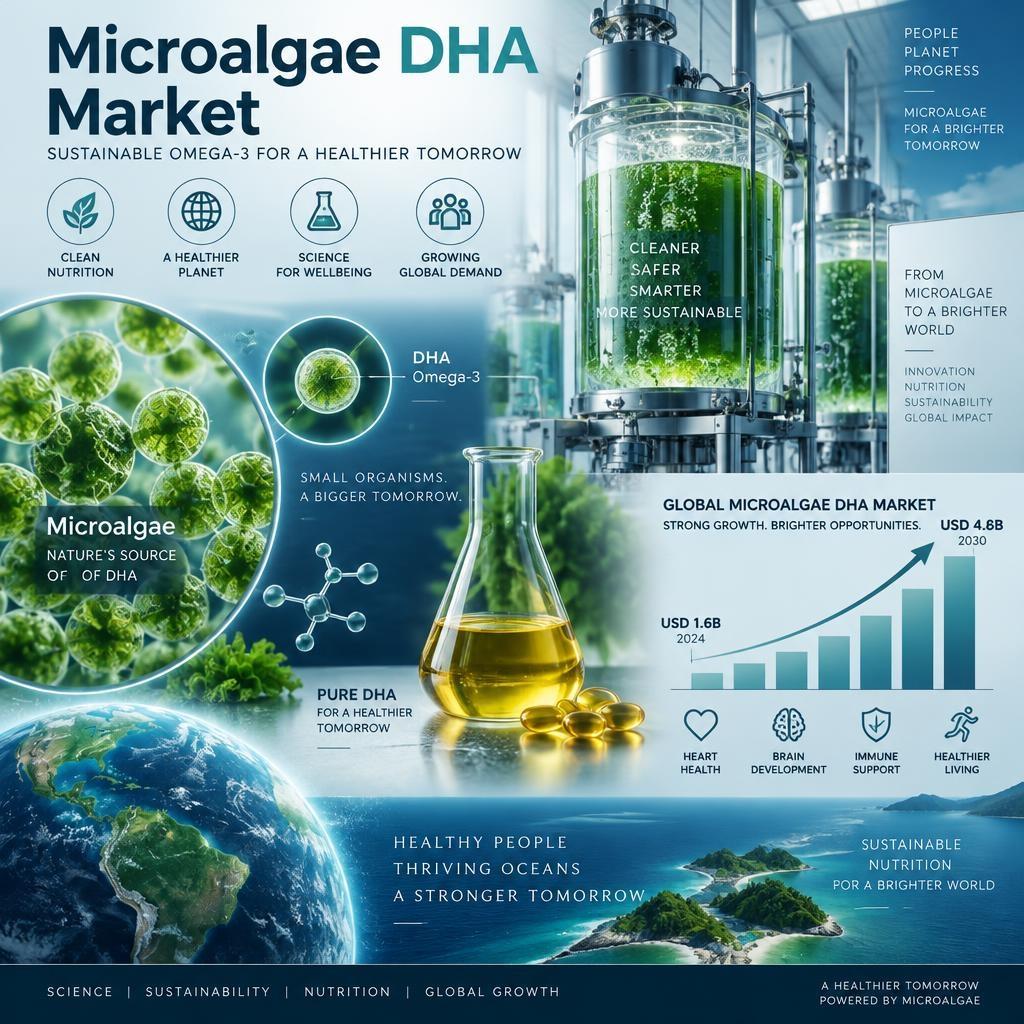
The Microalgae Docosahexaenoic Acid (DHA) Market is becoming an important part of the evolving nutritional ingredients industry. Increasing interest in omega-3 fatty acids and alternative nutritional sources is encouraging manufacturers to explore microalgae-derived ingredients. DHA is an essential omega-3 fatty acid associated with brain function, visual health, and general nutritional development. Its importance across different consumer categories is creating opportunities for businesses involved in food production, dietary supplements, infant nutrition, and specialized healthcare formulations.
The growing demand for microalgae omega-3 fatty acids reflects the changing preferences of consumers seeking alternatives to traditional marine-based ingredients. Microalgae-derived DHA provides manufacturers with an opportunity to develop vegetarian-friendly nutritional products while exploring more controlled ingredient production methods. This development is encouraging ingredient suppliers and food companies to invest attention in product innovation, processing improvements, and new commercial applications.
Growing Importance of Product Innovation
Product innovation plays an important role in the development of the microalgae DHA industry. Manufacturers are exploring different ways to incorporate DHA into consumer products while maintaining nutritional quality, formulation compatibility, and product stability.
Traditional omega-3 supplements have primarily focused on fish-derived oils. However, changing dietary preferences are encouraging businesses to consider algae-derived alternatives. This creates opportunities for developing specialized supplements that appeal to vegetarian consumers and individuals interested in alternative nutritional ingredients.
Manufacturers are also exploring new delivery formats, including liquid oils, softgel capsules, powdered ingredients, and encapsulated formulations. Each format offers different possibilities for product development and distribution.
Innovation is not limited to finished products. Improvements in ingredient extraction, purification, stabilization, and packaging can also contribute to product differentiation.
Technological Developments in DHA Production
Microalgae cultivation requires carefully managed production environments. Manufacturers select suitable microalgal organisms and maintain cultivation conditions that support biomass development and DHA production.
Fermentation and controlled cultivation technologies are important elements of commercial manufacturing. These approaches allow producers to manage environmental conditions and maintain production consistency.
Processing technologies are equally important. Once cultivation is complete, the biomass undergoes harvesting and extraction to recover the desired oil. Additional purification steps may be required to meet the quality expectations of different industries.
Manufacturers are also focusing on oxidation management because DHA-containing oils require appropriate handling and storage conditions. Packaging solutions designed to protect ingredient quality can contribute to better product stability throughout distribution.
Continued technological improvements may create opportunities for manufacturers to develop customized ingredients for different commercial applications.
Expanding Opportunities in Dietary Supplements
Dietary supplements represent an important application area for microalgae-derived DHA. Consumers increasingly examine nutritional labels and ingredient sources when selecting supplements.
Algae-derived DHA can be incorporated into products designed for individuals seeking omega-3 supplementation without fish-based ingredients.
Manufacturers can develop specialized formulations for different consumer preferences, including vegetarian and vegan nutritional products. Product characteristics such as taste, texture, absorption, packaging, and ease of consumption remain important considerations.
The development of convenient supplement formats can also help businesses differentiate their offerings. Companies that combine ingredient quality with effective product presentation may strengthen their position in the nutritional supplement industry.
Opportunities in Functional Food Development
Functional foods provide another opportunity for microalgae DHA manufacturers. Food producers are exploring ways to incorporate nutritional ingredients into everyday products.
DHA can be considered for fortified beverages, nutritional powders, dairy alternatives, snack products, and specialty food formulations.
However, food fortification requires attention to ingredient compatibility. Manufacturers must evaluate how DHA interacts with other ingredients and how processing conditions affect the finished product.
Taste and texture are particularly important because consumers expect fortified products to maintain an enjoyable eating and drinking experience.
Businesses that successfully balance nutritional positioning with product quality may discover new opportunities in the functional food category.
Importance of Infant Nutrition
Infant nutrition is another specialized application for microalgae-derived DHA. DHA is recognized as an important fatty acid in early development, particularly in relation to brain and visual development.
Manufacturers of infant nutritional products consider DHA ingredients when designing formulations intended to meet specific nutritional requirements.
Ingredient quality, purity, traceability, and formulation consistency are essential considerations in this category. Companies must also follow relevant food safety and regulatory requirements when developing products for infants.
Microalgae-derived DHA offers an alternative ingredient source that can support the development of specialized nutritional formulations.
Challenges Facing Manufacturers
Despite its opportunities, the industry faces several operational challenges. Production expenses, cultivation requirements, extraction efficiency, and manufacturing scalability can influence commercial competitiveness.
Maintaining consistent DHA quality throughout production is another important consideration. Manufacturers need appropriate quality management procedures covering cultivation, harvesting, processing, storage, and transportation.
Consumer awareness also remains relevant. Businesses must explain the difference between algae-derived and fish-derived DHA through clear product information and transparent labeling.
Future Industry Opportunities
The future of the Microalgae DHA Market will be influenced by product development, biotechnology, and changing consumer expectations.
Companies may increasingly explore customized nutritional ingredients, innovative supplement formats, and functional food applications. Collaboration between ingredient producers, research organizations, and consumer product manufacturers could also support the development of specialized products.
Sustainable sourcing and production efficiency will remain important considerations for businesses seeking long-term commercial opportunities.
Conclusion
The Microalgae DHA Market offers promising opportunities for manufacturers interested in alternative omega-3 ingredients. Product innovation, technological development, and expanding nutritional applications are contributing to its commercial importance.
As consumers continue exploring plant-based nutritional products, microalgae-derived DHA may become increasingly relevant across supplements, functional foods, and infant nutrition. Businesses focusing on product quality, manufacturing improvements, and consumer education can strengthen their participation in this evolving industry.
Frequently Asked Questions
Q1. How does innovation influence the Microalgae DHA Market?
Innovation supports the development of improved cultivation methods, extraction technologies, specialized DHA formulations, and convenient nutritional products for different consumer categories.
Q2. Can microalgae DHA be used in functional foods?
Yes. Microalgae-derived DHA can be incorporated into selected fortified beverages, nutritional powders, dairy alternatives, and other functional food products, depending on formulation and regulatory requirements.


