

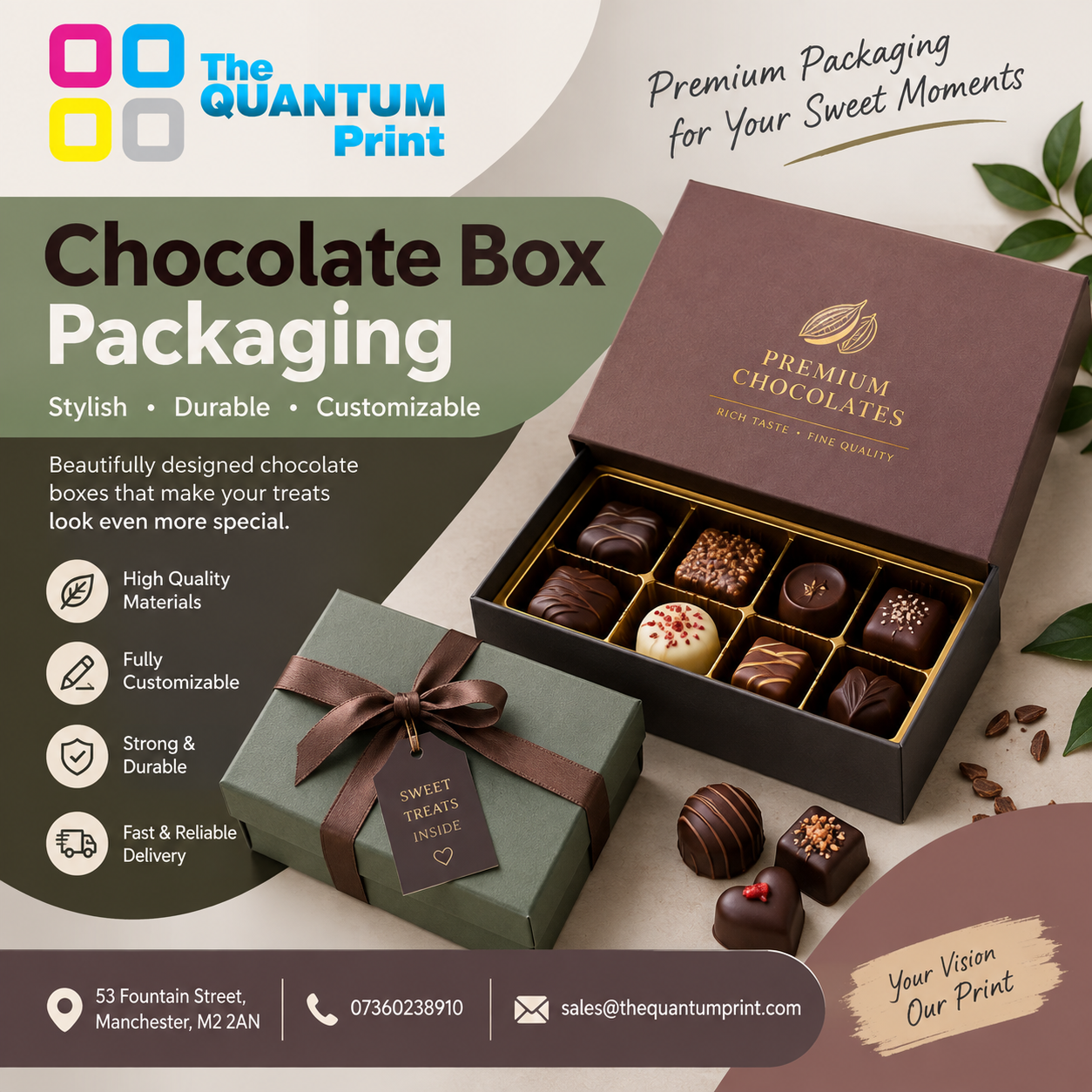
Chocolate Packaging Trends 2026–2027: Design, Protection & Sustainability

Chocolate packaging has become an important part of the confectionery industry, influencing product protection, customer experience, brand identity and purchasing decisions. As consumer expectations continue to evolve, chocolate manufacturers, retailers and independent confectionery businesses are looking for packaging solutions that combine attractive presentation with practical functionality.
From luxury chocolate gift boxes to everyday retail packaging, businesses must consider several factors when selecting suitable materials, designs and finishes. Packaging needs to protect delicate chocolate products from heat, moisture, contamination and physical damage while maintaining an appealing appearance.

During 2026 and moving into 2027, several developments are influencing the packaging industry, including sustainable materials, minimalist designs, personalised packaging and innovative printing techniques. Understanding these changes can help confectionery businesses make informed decisions about their packaging requirements.
Whether a company operates a small chocolate-making business, an established confectionery brand or a large-scale manufacturing operation, choosing appropriate chocolate box packaging can contribute to product quality and a consistent customer experience.
1. Emerging Chocolate Packaging Trends for 2026–2027
The chocolate packaging industry continues to adapt to changing consumer preferences and developments in printing and manufacturing technology. Businesses are increasingly considering packaging as more than simply a protective covering.
Several trends are particularly relevant for 2026–2027.
Sustainable and Environmentally Considerate Materials
Environmental awareness is influencing packaging decisions across the food and confectionery sectors. Many businesses are exploring recyclable cardboard, responsibly sourced paperboard and packaging materials that reduce unnecessary waste.
Sustainable packaging can offer several practical advantages:
- Recyclable paperboard can support responsible packaging practices.
- Lightweight materials can help reduce transportation weight.
- Right-sized packaging can minimise unnecessary material usage.
- Simple designs can reduce the need for excessive decorative components.
- Clear recycling information can help customers understand disposal requirements.

When choosing sustainable Best chocolate boxes packaging, businesses should also consider food-contact safety, material suitability and the protective requirements of their products.
Minimalist and Premium Packaging Designs
Minimalist packaging continues to attract attention, particularly among premium chocolate brands. Clean layouts, carefully selected colours, subtle typography and quality finishes can communicate sophistication without making the packaging visually complicated.
Black, cream, white, gold and earthy colours are commonly considered for different chocolate product categories. The right combination depends on the intended audience, brand identity and retail positioning.
2. Choosing the Right Materials for Chocolate Packaging
Material selection is one of the most important considerations when developing packaging for confectionery products. Chocolate is sensitive to environmental conditions, so packaging must provide suitable protection throughout storage, transportation and retail handling.
Cardboard and Paperboard Packaging
Cardboard and paperboard are widely used because they offer flexibility in terms of structure, printing and finishing. They can be converted into different box styles, making them suitable for individual chocolates, assorted collections, seasonal gifts and premium confectionery ranges.
Businesses considering chocolate box packaging wholesale should evaluate material thickness, structural strength and the dimensions of the products being packed.
Important considerations include:
- Product weight: The material should support the combined weight of the chocolates.
- Box construction: Folding cartons and rigid boxes offer different levels of protection.
- Internal inserts: Dividers and trays can help prevent individual chocolates from moving.
- Printing quality: Suitable printing processes help maintain consistent colours and branding.
- Food safety: Any material that directly contacts food must meet applicable food-contact requirements.

Rigid Boxes for Premium Chocolate Products
Rigid packaging is often used for luxury chocolate collections, corporate gifts and special occasions. Its solid construction provides a premium presentation and can offer additional protection during handling.
Magnetic closures, removable lids, fitted inserts and compartmentalised interiors are examples of features that can improve the overall packaging experience.
However, businesses should balance presentation with cost, storage requirements and environmental considerations.
3. Design Ideas That Improve Chocolate Packaging
Good packaging design combines appearance, usability and protection. A visually attractive box may attract attention, but its construction must also suit the product and the way customers will use it.
Black Chocolate Box Packaging
Black chocolate box packaging is a popular design consideration for premium and luxury confectionery products. Black creates a strong visual background and can be combined with gold foil, silver detailing, embossed logos or contrasting typography.
This approach can be suitable for:
- Luxury chocolate gift collections.
- Corporate chocolate hampers.
- Premium truffle assortments.
- Special occasion confectionery.
- Limited-edition chocolate collections.
For example, a matte black box with gold foil branding and a carefully designed internal tray can create an elegant presentation while keeping individual chocolates organised.
Personalisation and Custom Printing
Personalised packaging allows confectionery businesses to create a recognisable identity. Custom logos, product information, brand colours and seasonal artwork can help distinguish products in competitive retail environments.

Digital printing can be useful for shorter production runs and designs requiring frequent updates. Other printing methods may be more suitable for larger production quantities, depending on cost, material and finishing requirements.
When developing a chocolate packaging box, businesses should ensure that important information remains readable and that the artwork is suitable for the selected printing process.
4. Common Chocolate Packaging Challenges and Practical Solutions
Packaging decisions involve several challenges, particularly for businesses selling chocolates through retail stores, online platforms and gift channels.
Understanding these issues before production can help reduce unnecessary costs and improve product presentation.
Protecting Chocolate During Storage and Transportation
Chocolate can be affected by temperature changes, moisture and physical impact. Packaging alone cannot replace suitable storage conditions, but an appropriate design can provide an additional layer of protection.
Practical measures include:
- Using properly fitted internal trays.
- Selecting strong outer cartons for transportation.
- Avoiding excessive empty space inside boxes.
- Using suitable protective secondary packaging.
- Following appropriate temperature-controlled storage and delivery practices where required.
These considerations are particularly important when arranging packaging for chocolate boxes intended for online orders or long-distance distribution.
Managing Packaging Costs
Packaging costs can influence profit margins, particularly for small manufacturers and growing confectionery brands.
Businesses can manage costs by comparing different materials, reviewing production quantities and selecting box dimensions that minimise unnecessary material usage.

For companies requiring regular supplies, comparing suppliers and production specifications can also help establish more consistent packaging standards.
Maintaining Brand Consistency
Inconsistent colours, poor print alignment and unclear product information can affect the perceived quality of a confectionery brand.
Businesses should prepare accurate artwork files, confirm print specifications and request samples where appropriate before approving larger production runs.
5. Understanding the UK Chocolate Packaging Market in 2026–2027
The UK confectionery market includes independent chocolate makers, established manufacturers, specialist gift retailers and online businesses. Each category has different packaging requirements.
For example, an independent chocolatier may prioritise smaller production quantities and personalised designs, while a larger manufacturer may focus on consistency, manufacturing efficiency and distribution requirements.
The demand for Chocolate box packaging UK solutions also reflects the variety of occasions for which chocolate products are purchased.
Common applications include:
- Christmas and seasonal chocolate gifts.
- Valentine’s Day and Easter collections.
- Wedding and celebration favours.
- Corporate gifts and promotional products.
- Luxury chocolate assortments.
- Subscription boxes and online confectionery orders.
Businesses exploring packaging options should assess the product type, intended customer, sales channel and required production quantity before finalising a design.

Food-contact legislation and packaging obligations should also be considered. Where packaging materials come into direct contact with chocolate, businesses should verify their suitability for the intended food-contact application and obtain relevant supplier documentation.
For companies researching different packaging styles, The Quantum Print’s chocolate packaging solutions provide a relevant reference when exploring printed packaging options for confectionery products.
Conclusion
Chocolate packaging is an important consideration for businesses looking to protect their products, communicate their brand identity and improve the customer experience. From sustainable paperboard materials to premium rigid boxes and personalised printing, the available design possibilities continue to develop.
As the industry moves through 2026 and into 2027, businesses should focus on practical packaging decisions that balance appearance, product protection, material suitability and production costs.
Whether selecting chocolate box packaging wholesale for regular manufacturing requirements or developing a distinctive chocolate packaging box for a premium product range, careful planning can make a meaningful difference.
The most effective packaging solutions are those that meet the practical needs of the product while creating a positive and memorable experience for customers.
Contact Us : https://www.thequantumprint.com/contact-us/
About Us : https://www.thequantumprint.com/about-us/
Website Link : https://www.thequantumprint.com/
INN-News.Net : https://www.inn-news.net/
Social Media : (Read More)
- https://www.thequantumprint.com/the-quantum-print-reviews/
- https://www.thequantumprint.com/is-the-quantum-print-a-registered-company/
- https://guestpostglobal.com/@daren339977/smart-packaging-and-brand-protection-trends-holographic-and-clear-stickers-for2027
- https://bhitmagazine.com/2026-2027-die-cut-sticker-innovations-design-branding-and-sustainable-printing-trends-in-the-uk/
- https://viralsocialtrends.com/https-www-thequantumprint-com-box-packaging-print-box-packaging-uk/
- https://guestpostingforseo.com/beyond-branding-cricket-bat-sticker-printing-innovations-for-2026-2027/
- https://www.localhomeservicesblog.co.uk/2026/11/25/cricket-bat-branding-trends-for-2026-2027-the-future-of-custom-sports-identity/
- https://ext-7033982.livejournal.com/1250.html?newpost=1
- https://share.evernote.com/note/0906a52c-0c24-196b-dfea-2043fa1c6728
- https://smautoservice.blogspot.com/2026/11/the-future-of-custom-die-cut-stickers.html
- https://penzu.com/p/2f2b05295bbfce41


