

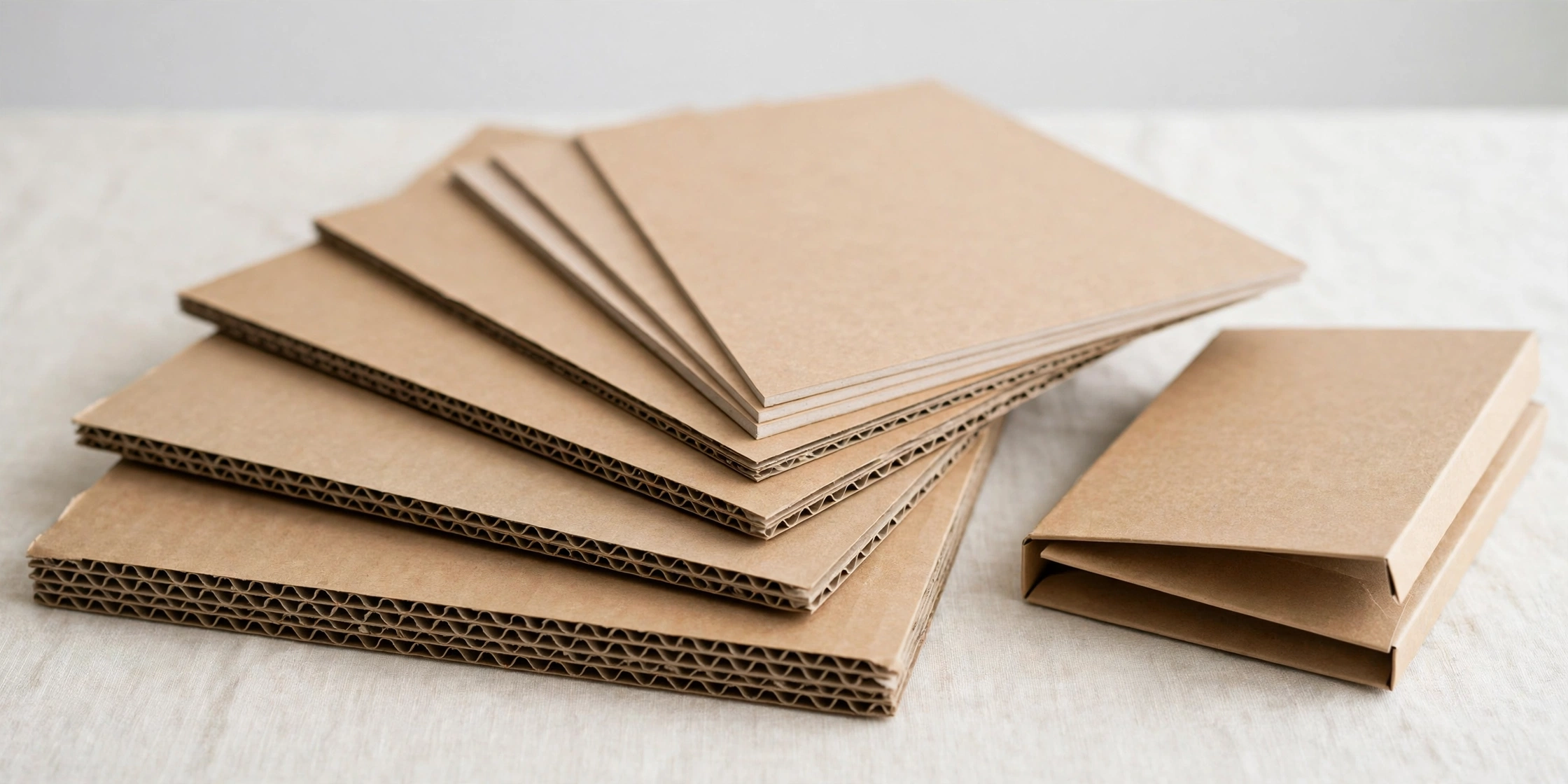
14pt vs. 18pt vs. 24pt Paperboard: Which Thickness Should You Choose for Custom Tuck Boxes?
Order the wrong paperboard thickness and one of two things happens. The box crushes in shipping because the board was too thin. Or the ink cracks along the fold lines because the board was too thick for its finish. Either way, the boxes are printed, paid for and unusable.
The fix is a five-minute decision made before the order, not after it. This folding carton thickness guide compares the three boards USA printers stock most: 14pt, 18pt and 24pt. The comparison at the center of it is 14pt vs 18pt paperboard for boxes. By the end you will know which one your product actually needs.
What Does "PT" Mean in Packaging? (PT vs. GSM Explained for US Buyers)
First, the unit. In USA packaging, thickness is measured in PT, short for points. One point equals 0.001 inch. So 14pt is 0.014 inches thick, 18pt is 0.018 inches, and 24pt is 0.024 inches. If you have ever asked what does pt mean in box printing, that is the whole answer. It is the thickness of the board, measured in thousandths of an inch.
GSM is the other number you will see. GSM means grams per square meter, and it measures weight, not thickness. The two are related but not the same. A dense board can be thin and heavy, while a bulky board can be thick and light. The usual pt to gsm conversion for packaging boxes looks like this. 14pt is about 300 GSM, 18pt is about 350 to 400 GSM, and 24pt is about 450 to 500 GSM. Those are approximate figures, because GSM changes with the board's density.
Here is why PT matters more than GSM. Caliper thickness packaging is about stiffness, and stiffness is what stops a box from crushing. A box fails because its panels bend, not because its board is light. Two boards can share the same GSM and behave very differently on a shelf, because the thicker one resists bending. So when a printer asks which thickness you want, they are asking how stiff the box must be. Not how heavy it is.
Deep Dive: Comparing 14pt, 18pt, and 24pt Paperboard
14pt Paperboard (Lightweight & Budget-Friendly)
14pt is the lightest of the three, and the most affordable. It folds easily, prints cleanly and suits products that weigh almost nothing. Lipsticks, sheet masks, playing cards, tea bags and light sachets all fit. It also works well as the inner box inside a subscription mailer. There the outer box takes the shipping load.
Its limitation is stiffness. A 14pt carton is too thin for heavy bottles or for direct retail shelf stacking. On a shelf, boxes sit in rows and carry each other's weight. Put a candle jar in a 14pt box and the panels bow. Stack those boxes three high and the bottom one crushes. The board is not bad, it is simply built for light products.
18pt Paperboard (The Retail Sweet Spot)
18pt is the industry standard for most retail tuck boxes. The 18pt vs 24pt cardstock packaging question usually ends here. Skincare jars, supplements, soaps, candles and electronics accessories all sit comfortably in 18pt. It is stiff enough to stack and thick enough to feel substantial in the hand. And it is still easy to fold without cracking.
US brands love it because it balances the three things that matter: cost, print quality and durability. The board is thick enough to carry real products, smooth enough for bright full-color printing, and affordable enough for regular reorders. If you are unsure which thickness to order, 18pt is the safe default. And it is the best cardstock weight for cosmetic boxes in most cases.
24pt Paperboard (Heavy-Duty & Luxury Feel)
24pt is the heavyweight of the three, and it feels like it. Heavy glass bottles, dropper bottles, perfumes, essential oil bottles and luxury gift boxes are where it earns its place. The carton feels rigid in the hand, almost like a rigid box, and that weight is part of the luxury impression. On the question of rigid vs folding carton thickness, 24pt is the closest a folding carton comes to rigid. It folds, but it feels solid.
The important warning is cracking. On 24pt, dark inks printed across a fold line can crack. The thick board stretches further at the crease, and the ink layer cannot stretch with it. That is not a reason to avoid 24pt. It is a reason to pair it with lamination, which is covered in the tips below. And it is the reason the thickest paperboard for folding cartons is not automatically the best choice. Thickness helps with strength, but it asks more of the finish.
Quick Comparison Chart: 14pt vs. 18pt vs. 24pt
| Feature | 14pt Paperboard | 18pt Paperboard | 24pt Paperboard |
|---|---|---|---|
| Thickness (inches) | 0.014" | 0.018" | 0.024" |
| Approx. GSM | ~300 GSM | ~350–400 GSM | ~450–500 GSM |
| Product weight | Light products only | Medium products | Heavy products |
| Best products | Lip balm, cards, light sachets | Soaps, creams, supplements | Glass bottles, candles, perfumes |
| Cracking risk on folds | Very low | Low (with aqueous or lamination) | Moderate to high (needs lamination) |
| Cost level | Lowest | Mid-range | Highest |
| Feel in hand | Thin and flexible | Sturdy retail feel | Rigid, luxury feel |
This table is the short version of the whole guide. If you want the best paperboard thickness for custom tuck boxes and you are in a hurry, here it is. Light products take 14pt, most retail products take 18pt, and heavy or luxury products take 24pt with lamination.
How to Prevent Fold-Line Cracking on Thick Paperboard (18pt & 24pt)
Cracking is the one real risk of thicker board, and it is preventable. These three tips are how to prevent cracking on folded cardboard boxes, and they apply to 18pt and 24pt alike.
Tip 1: Add Matte or Soft-Touch Lamination. Lamination is a thin film over the printed surface. It stops the paper fibers from breaking when the board folds. Soft touch lamination prevent cracking is a real pairing. The film stretches with the board at the crease, so the ink underneath stays intact. Matte lamination does the same job with a softer look. If your design has dark ink across a fold, lamination is not optional, it is the fix.
Tip 2: Proper Scoring and Creasing. Scoring and creasing folding cartons is the die-cutting step that prepares the fold. A deep creasing matrix presses a channel into the board along the fold line. So the board bends exactly there instead of cracking beside it. On 24pt, the crease must be deeper than on 14pt, because the board is thicker. A printer who scores for the thickness gets clean folds. A printer who scores every board the same way gets cracks.
Tip 3: Grain Direction. Paper has a grain, like wood, and it folds cleanly in one direction and resists in the other. Paper grain direction box printing means keeping the grain parallel to the main fold lines. That way the board bends along the grain instead of across it. When the grain runs across a fold, the fibers break and the ink cracks. This is invisible on screen and obvious on the finished box, which is why it belongs on every prepress checklist.
Material Type Matters Too: SBS vs. Natural Kraft vs. CCNB
Thickness is only half the choice. The board type decides the surface, the print quality and the feel.
SBS (Solid Bleached Sulfate). SBS is the white, smooth board most retail cartons use. Solid bleached sulfate (SBS) is the full name behind the letters. Its bright white surface takes full-color printing beautifully. That is why it is the default for cosmetics, supplements and anything that needs vivid color. It is available from 14pt through 24pt, so the thickness choice and the material choice are separate decisions.
Natural Brown Kraft. Kraft is the brown, unbleached board with visible fibers, and it is the eco-friendly option of the two. Its fibers are tear-resistant, and 18pt kraft often feels sturdier than 18pt SBS at the same thickness. The unbleached fibers are longer and stronger. It suits natural and organic brands, and its look is the selling point. The board itself says eco-friendly before a single word is printed.
CCNB. A third board you will see in the industry is CCNB, clay-coated news back. It is a recycled board with a coated white front and a grey back. It is the budget option elsewhere in the industry. The boards stocked here are SBS and kraft, in C1S and C2S. The C1S vs C2S paperboard difference is simple. C1S is coated on one side, C2S is coated on both, and the choice depends on whether the inside of your box is printed. For the full thickness picture across all boards, the SBS paperboard thickness chart USA printers use runs 14pt to 24pt. That is the same range as this guide.
Final Verdict: Which Thickness Should You Order?
Here is the buyer guide in four questions.
How heavy is the product? Light products take 14pt. Most retail products take 18pt. Heavy bottles and luxury products take 24pt.
Will the box stack on a shelf? If yes, go 18pt at minimum. Stacking needs stiffness, and 14pt bows under its neighbors.
Is there dark ink across a fold? If yes, order lamination with the board, whichever thickness you choose. The finish protects the fold.
Is the inside printed? If yes, ask for C2S. If only the outside is printed, C1S is enough, and the inside stays clean white or natural kraft.
If you are still unsure, order samples first. A sample kit lets you hold 14pt, 18pt and 24pt in your hand and fold each one. Then you can feel the difference your product will live in. The full comparison of styles is in the tuck box styles guide, and every style in it is part of tuck end boxes in every thickness at BoxPrinting4Less. There is no minimum order, free design help and free USA shipping.
Frequently Asked Questions
What does PT mean in box printing?
PT means points, and one point equals 0.001 inch. So 14pt board is 0.014 inches thick, 18pt is 0.018 inches, and 24pt is 0.024 inches. PT measures caliper thickness, which is what decides how stiff a box feels, while GSM measures weight per square meter.
Is 18pt or 24pt better for custom tuck boxes?
18pt is better for most custom tuck boxes. It balances cost, print quality and durability, and it suits soaps, creams, supplements and candles. 24pt is better only for heavy glass bottles and luxury gift boxes, where the rigid feel matters. And it needs lamination to stop fold-line cracking.
What is the thickest paperboard for folding cartons?
The thickest paperboard for folding cartons in common use is 24pt, at 0.024 inches and about 450 to 500 GSM. Thicker boards exist, but they stop behaving like folding cartons. They resist folding, crack at the crease, and belong in rigid boxes instead.
How do I stop ink from cracking on folded cardboard boxes?
Add matte or soft-touch lamination, and make sure the die-cutting uses a deep creasing matrix suited to the board thickness. Then keep the paper grain parallel to the main fold lines. Those three steps together stop most fold-line cracking on 18pt and 24pt board.


