

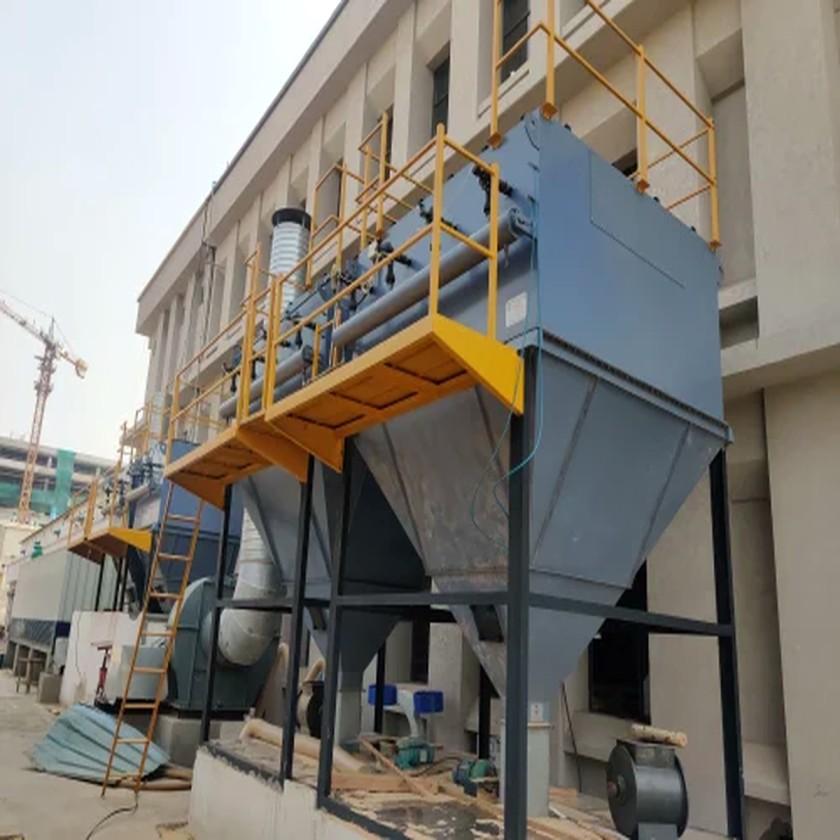
GPT-INDIA Bag Filter: Improving Dust Filtration Through Better Equipment and Media Selection

Industrial dust control is often tested under real production conditions rather than during equipment installation. A collector may initially operate as expected, but changes in raw materials, production speed, dust concentration or operating temperature can affect its performance over time. When filtration becomes unstable, the issue may not be the collector alone. Filter media, airflow, cleaning arrangements and dust discharge can all contribute.
A properly selected Bag Filter helps manufacturing facilities separate airborne particulate matter from process air. However, achieving consistent filtration requires a system that matches the characteristics of the dust and the demands of the production process.
For businesses comparing Bag filter suppliers, understanding how the equipment works and what influences its operating performance is an important step before purchasing. GPT-INDIA, also known as Green Planet Technologies, works in industrial air pollution control, dust collection and ventilation technology.
What Should Industries Understand Before Selecting a Bag Filter?
A Bag Filter is an industrial filtration device that uses fabric filter elements to capture solid particles from dust-laden air. The air passes through the filter media, while particulate matter is retained on the fabric surface. The separated dust is then collected through a hopper or another discharge arrangement.
This principle is used in several manufacturing environments, but the equipment configuration varies with the process. A facility handling mineral dust may have different requirements from a plant producing metallic particles, wood dust or chemical powders.
The first step is to identify the material being collected. Particle size, density, abrasiveness, moisture content and chemical characteristics can influence filtration behaviour. Operating temperature and humidity are equally important because they affect the suitability of the filter fabric.
Production patterns also matter. A collector serving a machine that operates intermittently may need a different arrangement from equipment handling dust continuously across several production lines.
These details help establish the required airflow, filtration area, cleaning method and dust-handling arrangement.
Understanding the Role of a Pulse Jet Bag Filter
A Pulse jet Bag filter uses compressed-air pulses to remove accumulated dust from the filter bags. This cleaning method is commonly used in industrial systems where the filtration process needs regular cleaning during operation, depending on the equipment configuration.
Dust-laden air enters the collector and passes through the filter bags. Particles accumulate on the fabric, forming a dust layer. When cleaning is initiated, a control system activates the pulse valves in sequence. A short burst of compressed air creates movement in the filter bags, helping dislodge the collected material.
The released dust falls into the hopper and can be removed through the discharge system.
The cleaning sequence should be matched to the dust characteristics and operating conditions. Cleaning too frequently may increase compressed-air consumption and place additional stress on the filter media. Cleaning too infrequently can allow dust accumulation to increase resistance to airflow.
Some systems use timed cleaning sequences, while others use differential-pressure-based control. The appropriate approach depends on the design and process requirements.
Filter Bags: Choosing the Right Material for the Application
The Filter bags are the working filtration elements inside the collector. Their selection directly influences how the system handles dust and responds to cleaning.
Different fabrics are designed for different operating conditions. The choice should consider the particle characteristics, temperature, humidity and chemical environment. A fabric suitable for dry, relatively cool dust may not be appropriate for a process involving higher temperatures or moisture.
Dust abrasiveness is another important factor. Particles that repeatedly strike or move across the fabric can contribute to wear. The construction of the filter bags, including dimensions and seams, should also match the collector's design.
Moisture requires special attention. If condensation develops inside the filtration chamber, certain dust types may stick to the filter surface. This can make cleaning less effective and increase pressure drop.
For replacement purposes, businesses should maintain records of the original media specifications. Choosing filter bags based only on appearance or general fabric descriptions can result in an unsuitable replacement.
Why Airflow Distribution Matters Inside a Bag Filter
Airflow is often one of the first specifications discussed during a dust collection project. However, the volume of air entering the collector is only one part of the design.
The air needs to be distributed appropriately across the filtration chamber. If incoming dust-laden air is concentrated around a limited section, some filter bags may receive a greater dust load than others. Uneven loading can lead to inconsistent cleaning and differences in filter-bag wear.
The relationship between airflow and available filtration area is also important. This is commonly considered through the air-to-cloth ratio. If the filtration loading is too high for the application, resistance may increase and cleaning may become more demanding.
The inlet arrangement, internal flow path and position of the filter elements should therefore be considered during system design. A suitable arrangement helps the collector use its filtration area more effectively.
Pressure Drop: What It Tells Maintenance Teams
Pressure drop represents the resistance to airflow across the filtration system. As dust accumulates on the filter bags, resistance generally changes. The cleaning arrangement is intended to remove collected material and help maintain suitable operating conditions.
A gradual increase may be part of normal operation, but a sustained or unusual rise should be investigated. It may indicate ineffective cleaning, excessive dust loading, moisture-related blinding or unsuitable filter media.
The compressed-air supply should also be checked in pulse-cleaned systems. Low or inconsistent air pressure may affect the cleaning process. Other possible causes include blocked dust discharge, damaged bags, restricted ductwork or changes in the production process.
Maintenance teams should monitor pressure-drop trends and compare them with operating records. This provides more useful information than relying on a single reading and can help identify problems before they affect the wider extraction system.
How to Compare Bag Filter Suppliers for Industrial Projects
Choosing Bag filter suppliers involves assessing whether the proposed equipment matches the actual operating application. A quotation should be supported by a clear understanding of the dust and process conditions.
Buyers should provide information about the material being handled, expected dust concentration, operating temperature, humidity, required airflow and production schedule. These details help suppliers evaluate the filtration arrangement and identify the specifications that need attention.
It is useful to review the proposed filtration area, cleaning method, filter media, hopper design and dust discharge arrangement. Buyers should also clarify whether the fan, duct connections, controls and installation accessories are included in the scope of supply.
Documentation is important for future operation. Equipment specifications, filter-bag details and maintenance instructions help plant teams manage inspections and replacement requirements.
After-sales support and availability of replacement components should also be considered. A supplier's ability to assist with maintenance and technical questions can influence the overall ownership experience.
What Makes Bag Filter Manufacturers Worth Evaluating?
When comparing Bag filter manufacturers, businesses should examine the engineering and fabrication of the complete collector.
The equipment includes several connected elements: the filtration chamber, inlet arrangement, filter-bag support, cleaning system, hopper and discharge mechanism. Each component needs to suit the process and work with the others.
Material selection and fabrication quality are important, particularly in industrial environments where equipment is exposed to dust loading, vibration and regular cleaning cycles. The design should also provide suitable access for inspection and replacement of filter bags.
Fan selection needs to account for the resistance of the complete extraction network. A collector may have an appropriate filtration area, but an unsuitable fan or poorly planned ductwork can prevent it from receiving the required airflow.
Buyers should ask manufacturers to explain their design assumptions and provide relevant technical information. Reviewing the proposed arrangement before fabrication can help identify installation or maintenance concerns early.
Filter Bags Manufacturers and the Importance of Accurate Specifications
The quality and compatibility of replacement media depend on accurate manufacturing information. Filter bags manufacturers need details about the collector, bag dimensions, fabric requirements and operating conditions.
A replacement bag should match the required length, diameter, mounting arrangement and construction. The fabric must also be appropriate for the dust characteristics and temperature conditions.
Changing the media without reviewing the application may affect filtration resistance and cleaning behaviour. For example, a different fabric or surface finish may respond differently to the existing pulse-cleaning arrangement.
If a plant experiences repeated filter-bag failures, the problem should be investigated rather than addressed only by ordering new bags. Abrasion, uneven airflow, condensation, excessive cleaning intensity or unsuitable media may be contributing factors.
Keeping an approved specification for each collector helps ensure consistency when replacement orders are placed.
Working With Filter Bags Suppliers to Reduce Maintenance Difficulties
Filter bags suppliers can support maintenance planning by helping businesses identify compatible replacement components. Their role is especially useful when the plant operates several collectors with different filter-bag requirements.
Before ordering, maintenance teams should confirm the collector model, existing bag dimensions, fabric type and operating conditions. If the original media has been changed previously, the current specification should be checked rather than assuming that the first installation details remain correct.
Replacement planning should also consider production schedules. Keeping suitable spare bags available can help reduce delays during planned maintenance, but the quantity should be based on the plant's requirements and replacement history.
It is useful to record when bags are installed, when they are inspected and why they are replaced. These records can reveal whether a particular application is experiencing unusually short filter life or recurring operational issues.
Common Reasons for Poor Bag Filter Performance
A filtration system can experience problems even when its basic design is suitable. Changes in process conditions or inadequate maintenance may affect its performance.
One common issue is a rapid increase in pressure drop. This may occur when the dust load exceeds the expected level, the filter media becomes blinded or the cleaning mechanism does not remove accumulated material effectively.
Uneven airflow can create another problem. If some filter bags receive more dust than others, they may experience different loading and cleaning conditions. Reviewing the inlet arrangement and internal flow distribution can help identify the cause.
Dust leakage may indicate damaged bags, poor sealing or incorrect installation. The filtration chamber and bag mounting points should be inspected to identify where particles may be passing through.
Problems with the hopper or discharge equipment can also interfere with normal operation. Collected dust needs to move out of the filtration chamber as intended. A blocked or poorly operating discharge arrangement can lead to accumulation inside the equipment.
Integrating Bag Filtration With a Complete Dust Collection System
In many manufacturing facilities, dust is generated at several points rather than at one machine. A complete Dust collection system may need to serve grinding equipment, transfer points, mixers, packaging lines or other production activities.
The extraction hoods must capture dust close to its source. Ductwork then transports the dust-laden air to the collector. The layout needs to account for airflow requirements, duct resistance and the number of machines operating at the same time.
The fan should be selected according to the resistance of the complete system. If ductwork is poorly designed or extraction points are not balanced, some machines may receive insufficient airflow even when the collector itself is correctly sized.
A well-planned arrangement considers the collector, filter bags, fan, ductwork and dust discharge as parts of one connected process. This helps businesses evaluate filtration performance in the context of actual production requirements.
GPT-INDIA Industrial Filtration Solutions
GPT-INDIA, popularly known as Green Planet Technologies, works in industrial air pollution control, dust collection and ventilation technology. Its product range includes Bag Filters, Pulse Jet Bag Filters, Filter Bags, Dust Collectors, Dust Extractors, Cyclone Dust Collectors and related industrial air treatment equipment.
Different production environments require different filtration arrangements. The selection process should consider the dust being generated, operating conditions, airflow requirement and maintenance expectations. These details help determine the equipment configuration that is appropriate for the application.
Businesses evaluating a new filtration installation or reviewing an existing system can discuss their requirements with GPT-INDIA.
Frequently Asked Questions
What is a Bag Filter used for in industrial applications?
A Bag Filter is used to separate particulate matter from dust-laden air. Fabric filter elements retain dust while allowing filtered air to pass through the equipment.
How does a Pulse jet Bag filter remove accumulated dust?
It uses short bursts of compressed air released through pulse valves. These pulses help dislodge dust from the filter bags so that it can fall into the collection hopper.
How do I select suitable Filter bags?
Consider the dust type, particle characteristics, operating temperature, humidity, chemical exposure, bag dimensions and cleaning arrangement. The filter media should be compatible with the actual process conditions.
What should I ask Bag filter suppliers before purchasing?
Ask about the proposed airflow, filtration area, filter media, cleaning mechanism, dust discharge arrangement, technical documentation, maintenance access and replacement-part availability.
What should I compare when evaluating Bag filter manufacturers?
Review the complete equipment design, fabrication quality, material selection, fan and duct integration, cleaning arrangement, maintenance provisions and technical support.
Are Filter bags from different manufacturers interchangeable?
Not necessarily. Replacement bags must match the collector's dimensions, mounting arrangement, fabric specifications and operating requirements. Similar-looking bags may not provide equivalent performance.
Why do Filter bags sometimes fail earlier than expected?
Possible causes include abrasive dust, unsuitable media, excessive cleaning intensity, uneven airflow, moisture or incorrect installation. The operating conditions should be investigated before selecting replacements.
How can Filter bags suppliers help with replacement planning?
They can help identify compatible media when provided with accurate collector details and operating information. Maintaining records of bag specifications and replacement history makes future orders easier to manage.
Conclusion
A dependable Bag Filter installation requires more than selecting a collector with a suitable capacity. Airflow distribution, filter media, cleaning sequence, pressure drop and dust discharge all influence how the equipment performs during everyday production.
Businesses comparing Bag filter suppliers, Bag filter manufacturers, Filter bags manufacturers and Filter bags suppliers should give equal attention to technical compatibility and long-term maintenance requirements. Accurate specifications and regular operating records can also help prevent avoidable filtration problems.
GPT-INDIA supports industrial dust collection and air pollution control requirements through filtration solutions for manufacturing environments. Understanding the process first provides a stronger foundation for selecting equipment that fits the facility's actual needs.


