

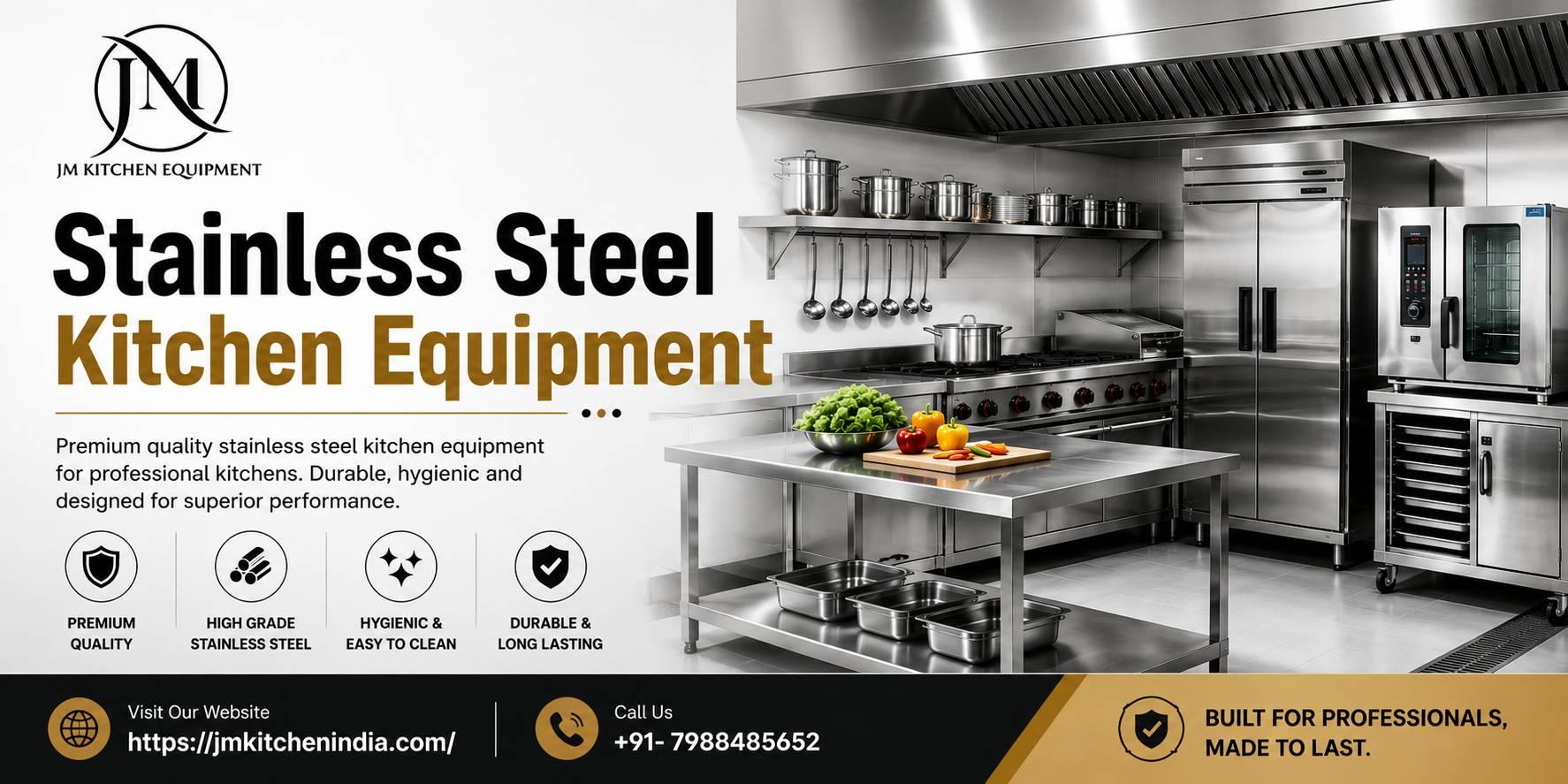
Stainless Steel Kitchen Equipment: A Complete Guide for Commercial Kitchens
A well-designed commercial kitchen requires more than cooking appliances. It needs reliable work surfaces, hygienic storage, efficient preparation areas, and equipment that can handle everyday food service demands. Stainless steel has become a preferred material in professional kitchens because of its durability, easy maintenance, and practical design.
At jmkitchen equipment, we understand the importance of creating functional kitchen spaces that support smooth operations. Whether you are setting up a restaurant, hotel, café, bakery, or catering business, choosing the right stainless steel kitchen equipment can help improve workflow, cleanliness, and long-term performance.
Why Stainless Steel Is Popular in Commercial Kitchens
Stainless steel is widely used in food preparation environments because it offers a combination of strength, hygiene, and versatility.
Durable and Long-Lasting Construction
Commercial kitchens operate for long hours, and equipment is exposed to heat, moisture, food ingredients, and frequent cleaning. Stainless steel provides a strong construction that can withstand regular use when the correct grade and thickness are selected.
Its resistance to corrosion makes it suitable for many kitchen applications. However, proper cleaning and maintenance are still necessary to preserve its appearance and performance.
Easy to Clean and Maintain
Food preparation surfaces must be cleaned regularly to maintain hygienic working conditions. Stainless steel has a smooth surface that makes routine cleaning convenient.
Using suitable cleaning products and wiping surfaces after use can help prevent stains, grease buildup, and unwanted residue.
Essential Stainless Steel Kitchen Equipment
Every commercial kitchen has different requirements depending on its menu, available space, and daily production volume.
Stainless Steel Work Tables
Work tables provide a dedicated space for chopping, mixing, assembling, and preparing ingredients. They are commonly used in restaurants, hotels, bakeries, and catering kitchens.
A properly sized work table helps employees prepare food comfortably while keeping ingredients and tools organized.
Commercial Kitchen Sinks
Stainless steel sinks are important for washing utensils, cleaning vegetables, and handling other kitchen tasks.
Businesses can choose single, double, or multiple-compartment sink designs according to their cleaning requirements and available space.
Storage Racks and Shelving
Storage racks help keep cookware, containers, ingredients, and supplies organized. Open shelving can make frequently used items easier to access while supporting better use of vertical space.
Stainless Steel Exhaust Hoods
Exhaust hoods are designed to capture cooking fumes, grease-laden vapours, and heat from suitable cooking areas. They are an important part of a properly planned ventilation system.
The hood should be selected according to the cooking equipment, kitchen layout, and ventilation requirements.
How to Choose the Right Equipment
Selecting suitable stainless steel kitchen equipment requires careful planning rather than simply choosing the largest or most expensive option.
Consider the Kitchen Layout
Measure the available space before purchasing equipment. Leave enough room for staff movement, food preparation, cleaning, and safe access to appliances.
A practical layout can reduce unnecessary movement and help employees work more efficiently.
Select the Appropriate Stainless Steel Grade
Different stainless steel grades offer different levels of corrosion resistance and suitability for specific applications.
For example, 304 stainless steel is commonly used in food preparation equipment because of its corrosion resistance. Other grades may be suitable for particular environments depending on their characteristics.
Always consider the equipment's intended use, cleaning conditions, and exposure to moisture or chemicals.
Check Fabrication Quality
Look for smooth finishing, properly joined corners, stable legs, and well-finished edges. Good fabrication contributes to durability and makes equipment easier to clean.
Custom dimensions may also be useful when the kitchen has limited space or a specific operational requirement.
Benefits for Restaurants, Hotels, and Bakeries
The right equipment can support a more organized kitchen environment.
Restaurants benefit from convenient preparation stations and storage areas. Hotels may require larger work surfaces and multiple washing stations to support high-volume food service. Bakeries often need dedicated tables for dough preparation, ingredient storage, and finishing work.
Well-planned stainless steel kitchen equipment can help businesses maintain a consistent workflow while making better use of their kitchen space.
Maintenance Tips for Better Performance
Regular maintenance helps preserve the appearance and usability of stainless steel equipment.
-
Clean surfaces after food preparation.
-
Use non-abrasive cleaning materials.
-
Avoid harsh chemicals that may damage the surface.
-
Dry equipment after washing to reduce water marks.
-
Inspect joints, legs, shelves, and fittings periodically.
-
Remove grease and food residue promptly.
These simple practices can help extend the useful life of commercial kitchen fixtures.
Conclusion
A professional kitchen needs equipment that combines practical design, dependable construction, and easy maintenance. Stainless steel remains a useful choice for preparation tables, sinks, storage racks, and many other commercial applications.
At jmkitchen equipment, we provide commercial kitchen equipment solutions designed to support restaurants, hotels, cafés, bakeries, and catering businesses. Contact our team to discuss your kitchen requirements and explore suitable equipment for your business.


