
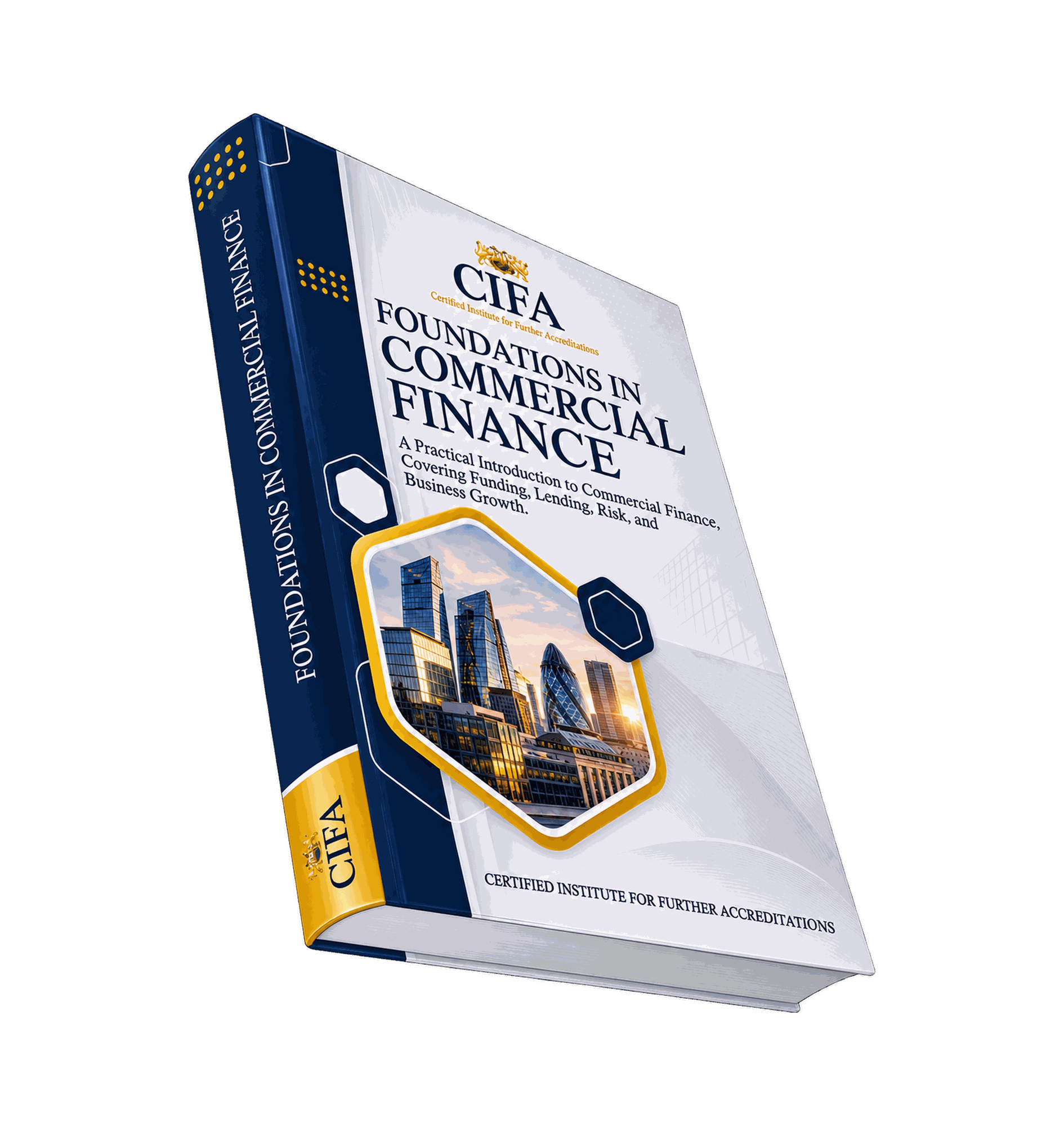
Foundation to Commercial Finance Course: Develop Practical Skills for Business Lending and Funding

Businesses need finance at different stages of their development. A start-up may require capital to launch, an established company may need funding to purchase equipment, while a growing organisation might seek additional finance to expand into new markets. Understanding these requirements and identifying suitable funding solutions are important skills in the commercial finance sector.
The Foundation to Commercial Finance course offers a structured way to develop this knowledge. Through CIFA, learners explore how commercial lending works, how lenders assess applications and how finance professionals evaluate business funding requirements. The programme connects financial knowledge with practical activities, helping learners understand the decisions involved in commercial finance.
Whether you are entering financial services, developing your lending knowledge or looking to expand your professional skills, understanding commercial finance can open up valuable learning opportunities.
Understanding the Role of Commercial Finance in Business Growth
Commercial finance supports businesses that need funding to operate, improve cash flow, purchase assets or expand their activities. Unlike personal finance, business lending involves assessing an organisation's financial position, trading performance, future prospects and ability to meet repayment commitments.
For example, a manufacturing company might need finance to purchase machinery. A retail business could require additional working capital to manage seasonal demand. A property company may seek funding for a development project.
Each situation requires a different approach. Finance professionals must understand the business's objectives, examine its financial information and consider which funding arrangements may be appropriate.
This makes commercial finance a field that combines financial analysis, communication, risk awareness and professional judgement.
Why Commercial Finance Knowledge Matters
Understanding business funding is useful because lending decisions can affect the stability and future direction of an organisation. A funding proposal should not simply focus on how much money a business wants to borrow. It should explain why the finance is required, how it will be used and whether the business can reasonably manage the repayments.
Commercial finance knowledge helps professionals approach these decisions systematically.
Understanding Business Funding Requirements
Every funding request begins with a business need. Professionals must identify whether the organisation requires short-term working capital, asset finance, property-related funding or another form of commercial lending.
Understanding the purpose of borrowing helps narrow down the available options and supports more relevant recommendations.
Making Sense of Financial Information
Business accounts provide important information about profitability, liabilities, assets and financial performance. Learning to interpret these figures helps professionals identify strengths, weaknesses and potential concerns before a funding application progresses.
Evaluating Financial Risk
Lending always involves risk. A business may experience reduced revenue, unexpected expenses or changes in market conditions. Assessing these factors helps finance professionals understand the potential challenges associated with a funding proposal.
What You Can Learn Through the Foundation to Commercial Finance Course
CIFA has structured the programme around eight chapters that follow the stages of a commercial finance transaction. This approach helps learners connect individual financial concepts with the wider lending process.
1. Commercial Finance Fundamentals
The course begins by introducing the commercial finance environment. Learners explore the purpose of business lending, the participants involved and the different funding requirements organisations may have.
Understanding these fundamentals provides a starting point for studying more detailed topics such as credit assessment and funding proposals.
2. Financial Statement Analysis
Financial statements help explain how a business performs and manages its resources. Professionals need to understand what these documents reveal about profitability, liquidity, debt and financial stability.
Developing financial statement analysis skills can help learners recognise important indicators and understand how lenders use financial information when reviewing applications.
3. Cash Flow Forecasting and Affordability
A business can appear profitable while still experiencing cash flow difficulties. This is why lenders consider whether an organisation can manage its financial commitments over time.
Learners explore cash flow forecasting, repayment affordability and the assumptions used when estimating future financial performance.
This knowledge is particularly important when assessing whether proposed borrowing is realistic for a business.
4. Business Funding Solutions
Different businesses require different types of finance. A company purchasing equipment may need a different funding arrangement from an organisation seeking additional working capital.
This chapter introduces business funding solutions and helps learners understand how funding options relate to different commercial requirements.
5. Credit Assessment and Lender Criteria
Lenders evaluate applications using criteria designed to assess creditworthiness and potential risk. Financial performance, repayment capacity, business circumstances and other relevant factors can influence a lending decision.
Understanding these considerations helps learners appreciate why applications may be approved, declined or require further information.
6. Client Fact Finding and Funding Proposals
A suitable funding proposal begins with accurate information. Finance professionals need to understand the client's objectives, business activities, financial circumstances and funding requirements.
This chapter focuses on gathering relevant details and preparing proposals that communicate the client's needs clearly.
7. Regulation and Professional Integrity
Commercial finance involves important responsibilities towards clients and other parties involved in a transaction. Professionals should understand the relevant regulatory environment and apply ethical standards throughout their work.
Honesty, transparency, appropriate information gathering and responsible communication are essential elements of professional conduct.
8. Transaction Management and Client Relationships
Arranging finance involves more than submitting an application. Professionals may need to coordinate documentation, communicate with lenders, respond to queries and keep clients informed throughout the process.
Understanding transaction management helps learners appreciate the importance of organisation, clear communication and professional client relationships.
Developing Skills That Support Commercial Finance Careers
Commercial finance involves several connected abilities. Building knowledge in these areas can help learners understand the responsibilities associated with business lending and financial services.
Financial analysis: Interpreting financial statements and recognising important indicators of business performance.
Cash flow assessment: Understanding how money moves through an organisation and evaluating its ability to meet financial commitments.
Credit awareness: Learning how lenders consider creditworthiness, affordability and potential risks.
Funding knowledge: Understanding different commercial finance solutions and the business requirements they may address.
Client communication: Asking relevant questions, gathering information and explaining financial processes clearly.
Professional judgement: Recognising the importance of ethical conduct, regulatory awareness and responsible decision-making.
These capabilities are relevant to several areas of financial services, although individual job requirements will depend on the employer, role and previous experience.
Who Can Benefit from Studying Commercial Finance?
Commercial finance knowledge can be valuable for people at different stages of their professional development.
People Starting a Career in Financial Services
Individuals interested in banking, lending or business finance can use structured learning to understand the terminology, processes and responsibilities involved in commercial funding.
Existing Finance and Lending Professionals
People already working in financial services may wish to strengthen their understanding of business funding, credit assessment and financial analysis.
Graduates in Business, Economics and Accounting
Graduates can build on their academic knowledge by exploring how financial information is used in real commercial lending situations.
Business Owners and Entrepreneurs
Business owners may benefit from understanding how lenders evaluate applications and what financial information is important when seeking external funding.
Career Changers
People moving into financial services from another industry can use a foundation-level programme to develop relevant subject knowledge before pursuing further experience or specialist training.
Why Choose CIFA for Commercial Finance Learning?
Choosing a professional course involves considering the learning structure, subject coverage and resources available. CIFA provides a digital learning experience designed to help learners study commercial finance in a structured way.
The Foundation to Commercial Finance course is a Level 4, CPD-accredited programme with 40 CPD hours. It includes eight learning chapters covering the commercial lending process, alongside supporting study resources.
Learners also receive:
-
Chapter-based mock examinations to check understanding.
-
Practical case studies and downloadable learning materials.
-
A study resources and practical toolkit.
-
Practical templates and a glossary.
-
Capstone assessment and extended workshop guidance.
-
Lifetime access to the learning portal.
-
A Certificate of Achievement after successfully passing the final examination.
The course is delivered digitally, allowing learners to organise their studies around their existing responsibilities. Its chapter structure also provides a clear progression from commercial finance fundamentals to transaction management.
How Commercial Finance Knowledge Can Support Professional Development
Commercial finance is connected to several areas of the financial services industry. Understanding business lending can help learners explore professional interests in commercial finance brokerage, credit assessment, lending support, underwriting support and relationship management.
The knowledge can also complement existing experience in accountancy, business management and financial advisory services.
However, completing a course does not automatically guarantee employment or qualification for every specialist role. Employers may also require relevant experience, additional qualifications and role-specific competencies.
A structured programme can nevertheless provide a useful starting point by helping learners understand the subject and identify areas for further development.
The Importance of Professional Ethics in Commercial Lending
Financial knowledge is only one part of responsible commercial finance practice. Professionals must also consider how their decisions and recommendations affect businesses and their stakeholders.
For example, a funding proposal should reflect the client's actual circumstances rather than unrealistic expectations. Financial information should be handled responsibly, and clients should receive clear explanations about relevant processes and obligations.
Professional integrity supports trust between clients, advisers and lenders. It also encourages better communication and more responsible financial decisions.
By including regulation and professional integrity in its curriculum, CIFA recognises that commercial finance requires both technical understanding and responsible professional conduct.
Building Your Knowledge with a Structured Learning Path
Learning commercial finance is easier when topics are studied in a logical sequence. Beginning with the fundamentals helps learners understand the wider lending environment before moving into financial analysis, cash flow forecasting and credit assessment.
The CIFA programme follows this progression and includes chapter mock assessments to help learners review their understanding as they advance.
Practical exercises and supporting resources also give learners opportunities to connect theoretical concepts with business funding scenarios.
For individuals looking to develop their knowledge of commercial lending, this structured approach can help establish a foundation for continued professional learning.
Conclusion: Take the Next Step Towards Commercial Finance Knowledge
Commercial finance plays an important role in helping businesses manage financial requirements and pursue growth opportunities. Professionals working in this area need to understand business accounts, cash flow, lending criteria, funding solutions and client relationships.
The Foundation to Commercial Finance course brings these subjects together through a structured Level 4 learning programme. With eight chapters, 40 CPD hours, mock assessments and practical study resources, CIFA provides learners with an opportunity to develop knowledge of commercial lending and business funding.
For aspiring finance professionals, existing industry workers and career changers, building a stronger understanding of commercial finance can be a valuable step towards further professional development.
Frequently Asked Questions
1. What is the Foundation to Commercial Finance course?
It is a Level 4, CPD-accredited CIFA programme that introduces commercial lending, business funding, financial statement analysis, cash flow forecasting, credit assessment and transaction management.
2. How many CPD hours does the course include?
The course includes 40 CPD hours, with study time recorded through the CIFA learning platform.
3. Who should study commercial finance?
The subject may benefit aspiring finance professionals, graduates, business owners, lending professionals, financial advisers and individuals considering a career change into commercial finance.
4. What topics are covered in the course?
The programme covers commercial finance fundamentals, financial statement analysis, cash flow forecasting and affordability, business funding solutions, credit assessment, client fact finding, professional integrity and transaction management.
5. Does the course include assessments?
Yes. Learners receive mock assessments for individual chapters and complete a final CIFA examination. A Certificate of Achievement is awarded after successfully passing the examination.


