

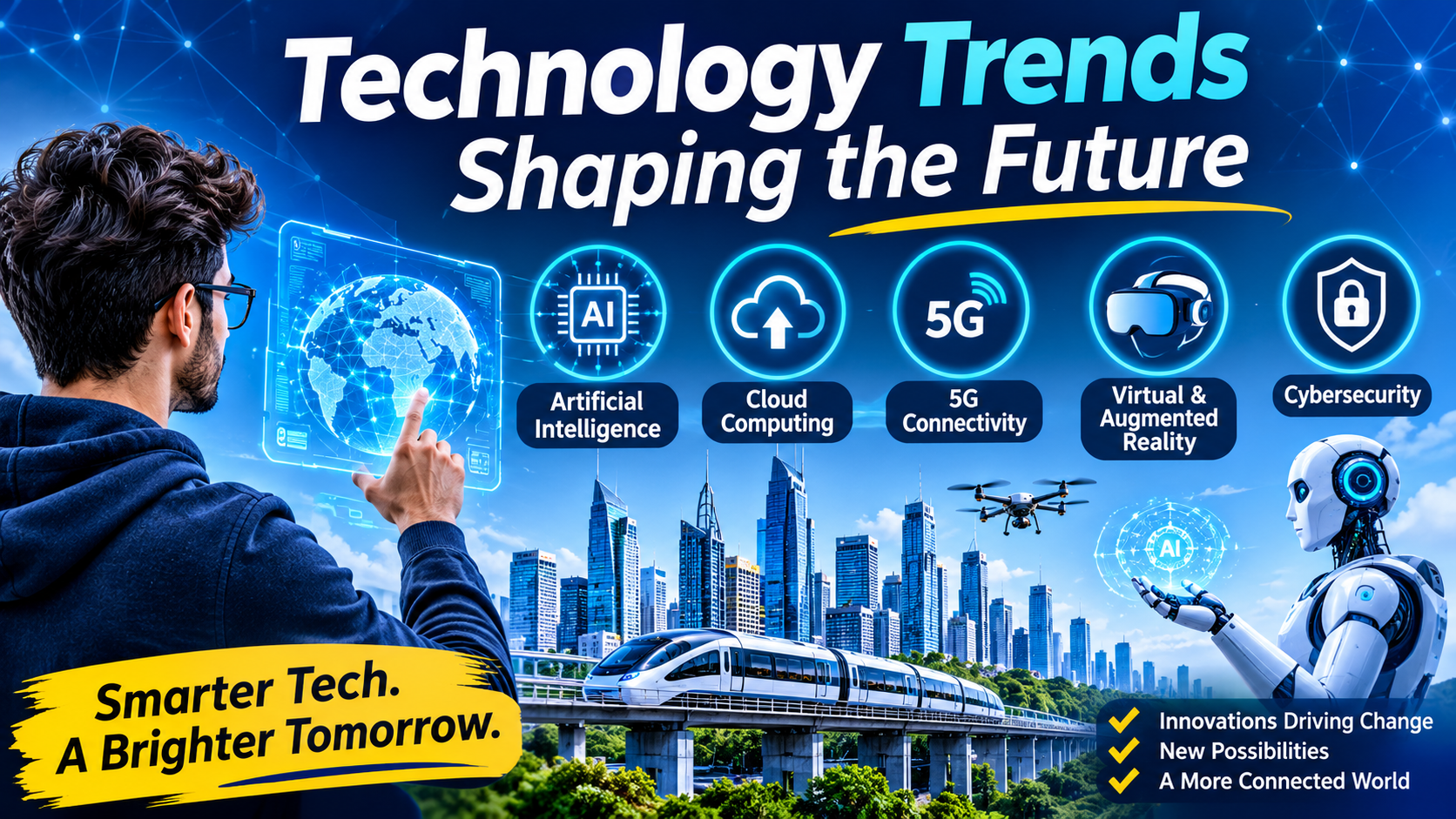
Discover AI Technology, Digital Transformation, and Advanced Connectivity Solutions with Networking 2026 Trends

The global enterprise landscape is undergoing a profound structural shift as artificial intelligence moves from isolated pilot programs into the operational core of modern business. In 2026, organizations are no longer treating connectivity and artificial intelligence as separate layers of their IT stack. Instead, they are converging into an intelligent fabric where networks sense, predict, and act in real time to support autonomous workloads. Enterprises that align their digital transformation strategies with next-generation networking standards are achieving unprecedented operational agility, lower latency, and sustainable competitive advantage.
Even the way consumers interact with local retail ecosystems reflects this hyper-connected shift, where real-time inventory syncing and location-based digital discovery allow a shopper searching for kado bar vape near me to immediately locate verified storefronts through AI-curated local search engines. Behind these seemingly simple consumer interactions lies a massive enterprise transformation driven by cloud-native architectures, edge computing, and autonomous network management. Understanding how these technologies intersect is essential for IT leaders, network architects, and business decision-makers navigating the digital economy.
The Convergence of AI Technology and Enterprise Infrastructure
In 2026, artificial intelligence has evolved from a passive conversational tool into an active operational backbone across enterprise environments. Rather than relying on manual configurations and static rules, modern IT architectures embed machine learning directly into routing, switching, and security layers. This transition marks the rise of autonomous networks capable of self-healing and optimizing traffic flows without human intervention.
-
Agentic AI Workflows: Autonomous software agents now execute complex, multi-step business processes, negotiate service-level agreements, and dynamically allocate bandwidth across distributed cloud environments.
-
AI-Native Software Engineering: Development teams leverage generative platforms to build, test, and validate network applications, shifting human oversight toward architectural governance and system resilience.
-
Predictive Network Operations: Machine learning telemetry analyzes millions of data packets per second to detect anomalies, prevent hardware bottlenecks, and reroute mission-critical traffic before users experience degradation.
-
Sovereign AI Deployment: Organizations increasingly balance global cloud scalability with localized, sovereign AI models to maintain strict compliance over sensitive operational data.
Digital Transformation Strategies for the Modern Enterprise
Digital transformation in 2026 is defined by proof-of-impact rather than experimental adoption. Companies are restructuring their foundational data architectures so that real-time insights flow seamlessly from edge sensors to executive decision-making platforms. When data pipelines are unified, businesses eliminate operational silos and unlock rapid innovation cycles.
Consider how modern omnichannel retailers leverage predictive analytics and dynamic digital merchandising to manage specialized product catalogs; for instance, tracking regional demand spikes for Kado Bar Vape Flavors relies on integrated point-of-sale telemetry, automated supply chain forecasting, and real-time customer sentiment analysis. Across manufacturing, healthcare, and logistics, this same data-driven precision enables enterprises to anticipate market shifts and personalize customer engagement at scale.
-
Unified Data Architectures: Breaking down legacy database silos ensures that AI models access clean, contextual, and properly governed enterprise information.
-
Hybrid Cloud Orchestration: Workloads are dynamically distributed across public clouds, private data centers, and on-premises edge nodes based on latency, cost, and regulatory requirements.
-
Hyper-Personalized Customer Journeys: Real-time behavioral analytics empower organizations to tailor digital storefronts, support interactions, and product recommendations instantaneously.
-
Workforce Human-AI Collaboration: Enterprises invest heavily in upskilling technical teams to supervise autonomous agents, interpret predictive dashboards, and govern automated workflows.
Advanced Connectivity Solutions Powering Next-Gen Workloads
As AI models grow more complex and data-intensive, legacy network infrastructure quickly becomes a bottleneck. Advanced connectivity solutions in 2026 focus on delivering deterministic low latency, massive device density, and ubiquitous coverage across indoor, outdoor, and remote environments. High-throughput wireless standards and non-terrestrial networks are expanding the boundaries of where and how enterprises operate.
-
Wi-Fi 7 Enterprise Adoption: Utilizing the 6 GHz spectrum and multi-link operation, Wi-Fi 7 delivers multi-gigabit speeds and ultra-low latency for high-density campuses, smart factories, and augmented reality training environments.
-
Private 5G and Early 6G Foundations: Enterprises deploy private cellular networks for mission-critical industrial automation while telecom providers architect AI-native, programmable foundations for the transition toward 6G.
-
Direct-to-Cell Satellite Integration: Low-Earth orbit satellite constellations eliminate dead zones by connecting mobile devices and remote IoT sensors directly to orbital networks without terrestrial towers.
-
Software-Defined Wide Area Networking (SD-WAN): Intelligent SD-WAN fabrics automatically select optimal transport paths across fiber, 5G, and satellite links to guarantee application performance.
Key Networking 2026 Trends Shaping Global IT
The overarching theme across networking 2026 trends is programmability combined with radical energy efficiency. Networks are no longer passive pipes transporting bits from point A to point B; they have evolved into programmable platforms that expose real-time environmental and operational intelligence through open APIs.
-
Intent-Based Networking: Administrators define high-level business outcomes—such as prioritizing video conferencing or isolating IoT traffic—and the network automatically translates those intents into device-level configurations.
-
Energy-Efficient Compute and Routing: With AI workloads driving up power consumption, sustainable networking architectures optimize silicon efficiency and dynamically power down idle radio frequencies to reduce operational costs.
-
Cognitive Digital Twins: Organizations create real-time virtual replicas of their physical networks to simulate traffic surges, test security patches, and validate configuration changes before live deployment.
-
Edge-Native Inference: Moving AI processing out of centralized data centers and onto local network gateways reduces backhaul bandwidth usage and enables millisecond response times for robotics and autonomous vehicles.
Proactive Cybersecurity and Digital Provenance
Expanding connectivity surfaces and autonomous AI agents introduce sophisticated threat vectors that traditional perimeter defenses cannot contain. In 2026, cybersecurity is embedded directly into the network fabric, combining zero-trust verification with quantum-resilient encryption protocols.
-
Zero-Trust Network Access (ZTNA): Every user, device, and autonomous AI agent undergoes continuous identity verification and least-privilege access enforcement regardless of network location.
-
Post-Quantum Cryptography: Forward-looking enterprises are upgrading encryption standards across core transport layers to protect sensitive data against future quantum decryption capabilities.
-
Digital Provenance Verification: Cryptographic watermarking and supply chain verification tools authenticate the origin and integrity of software updates, datasets, and AI-generated assets.
-
Autonomous Threat Mitigation: AI-driven security operations centers detect lateral movement within milliseconds and automatically quarantine compromised endpoints before breaches escalate.
Building a Future-Ready Roadmap for Your Organization
Successfully navigating the intersection of AI technology, digital transformation, and advanced connectivity requires a disciplined, phased execution strategy. Technology leaders must prioritize interoperability, open standards, and continuous workforce adaptation to ensure their infrastructure investments deliver measurable long-term value.
-
Audit Core Infrastructure Readiness: Evaluate existing switching, routing, and wireless hardware to identify latency bottlenecks that could impede AI workload scaling.
-
Establish Cross-Functional AI Governance: Form leadership committees uniting IT, security, legal, and operations teams to define clear guardrails for autonomous systems.
-
Adopt Open, Programmable Standards: Avoid vendor lock-in by investing in open-API networking platforms that integrate smoothly with evolving cloud and edge ecosystems.
Ultimately, the organizations that thrive in 2026 and beyond will be those that treat connectivity and intelligence as a single unified engine for innovation. Just as agile retail brands maintain market visibility for popular consumer lines like Kado bar Vapes by synchronizing digital logistics with real-time consumer demand, forward-thinking enterprises across every industry must pair resilient networks with adaptive AI to lead in a rapidly evolving digital world.


