

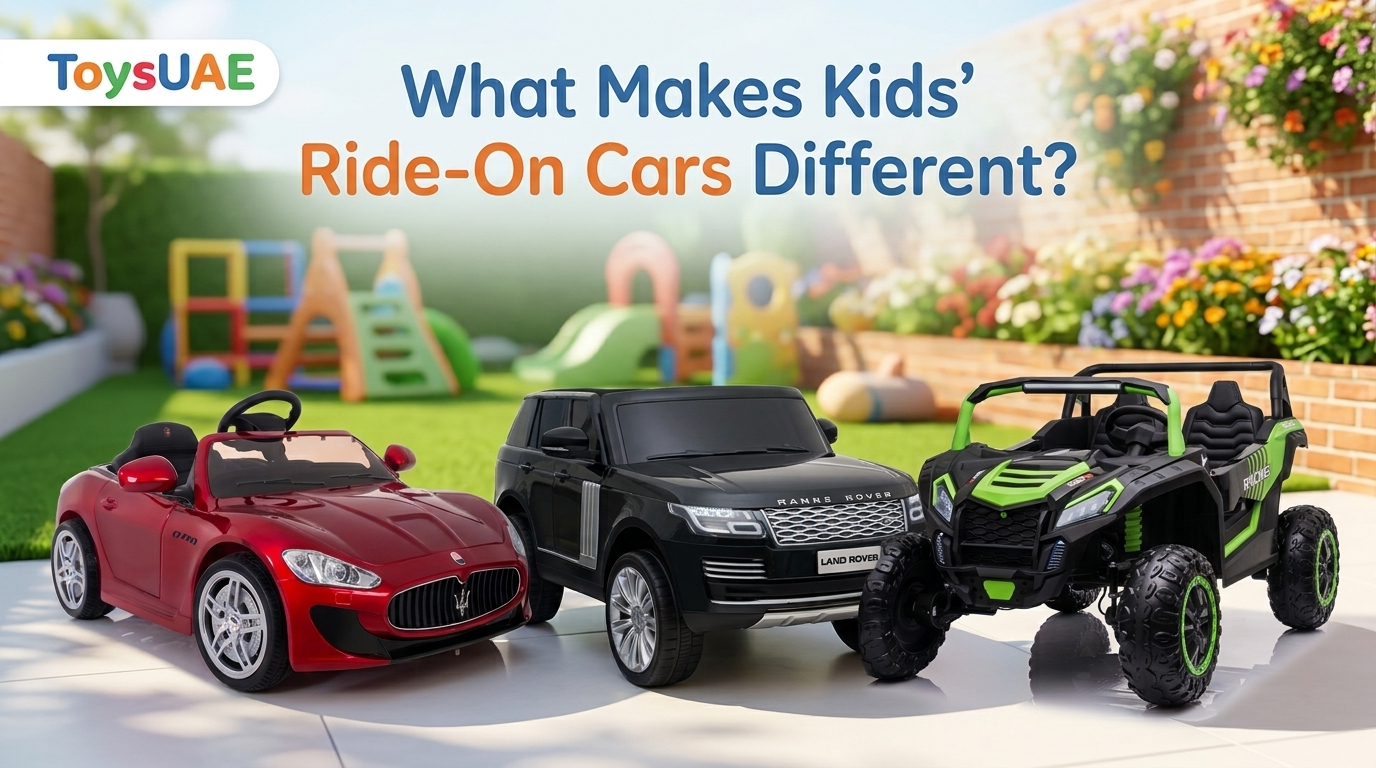
Kids car designs may look similar at first, but there are many differences between one ride-on vehicle and another. From body shape and size to battery power, motor performance, seating, and controls, each model offers a different experience. Some are designed to look like stylish sports cars, while others have the appearance of pickup trucks, SUVs, or adventurous jeeps.
Understanding these differences can help parents choose a vehicle that matches their child's age, interests, and playtime needs. Let's explore the features that make each ride-on car unique.
1. Design and Appearance
One of the first things people notice is the vehicle's design. Children's ride-on cars are available in many shapes, colours, and styles.
Sports car models usually have a low body, smooth curves, stylish headlights, and sporty wheels. They are often inspired by luxury and performance cars.
Pickup trucks and jeeps have a different appearance. They usually feature a larger body, wider tyres, raised front sections, and a more rugged design. Some models also include roof lights, roll bars, and extra seating space.
SUV-style vehicles often have a taller body, wider doors, and a family-car appearance. The choice mainly depends on which design a child finds interesting.
2. Size and Seating Capacity
Not every ride-on vehicle has the same size or seating arrangement. Some are compact and designed for one child, while others have wider seats that can accommodate two children, depending on their weight limits.
A smaller vehicle may be easier to store and suitable for limited play areas. Larger models can provide more seating space but may also need more room for movement.
Parents should always check the vehicle's dimensions, recommended age, and maximum weight capacity before making a choice.
3. Battery and Motor Performance
The battery and motor are important parts of an electric ride-on vehicle. The battery stores electrical energy, while the motor uses that energy to turn the wheels.
Different models may have different battery capacities and motor arrangements. Some have a single motor, while others use multiple motors to power the wheels.
Battery capacity can affect how long a vehicle runs after charging. However, actual running time also depends on the child's weight, driving surface, speed setting, and battery condition.
A kids electric car may offer different speed options depending on its design. Parents should compare the manufacturer's specifications instead of assuming that a larger vehicle always has a more powerful motor.
4. Wheels and Driving Comfort
Wheels can make a noticeable difference in the driving experience. Some vehicles have smaller plastic wheels, while others feature larger wheels with different tread patterns.
The wheel material can affect grip, noise, and comfort. Certain models also include suspension systems that help reduce the impact of small bumps.
However, larger tyres do not automatically mean that a vehicle can travel over every type of surface. Parents should follow the manufacturer's recommendations about suitable driving areas.
5. Controls and Driving Features
Another important difference is how children operate their vehicles. Most models include a steering wheel and an accelerator pedal or button.
Depending on the design, additional controls may include:
-
Forward and reverse buttons.
-
Different speed settings.
-
A foot accelerator.
-
A brake pedal or automatic stopping function.
-
A parental remote control.
Some models allow parents to control the vehicle remotely, which can be useful for younger children who are still learning to operate the controls.
The available features vary from one model to another, so checking the product description is important.
6. Lights, Music, and Extra Features
Modern ride-on vehicles often include additional features that make playtime more enjoyable.
These may include working headlights, rear lights, horns, built-in music, speakers, and dashboard buttons. Some models also offer USB or other music connections.
For example, a child may enjoy pressing the horn, listening to music, or switching on the headlights during pretend driving.
Not every vehicle includes the same electronic features. Parents should compare the available functions when looking at different designs online.
7. Safety and Comfort
Safety and comfort should be considered alongside appearance and performance.
Some vehicles include seat belts, parental remote controls, speed settings, and automatic stopping features. Comfortable seats and easy-to-reach controls can also make a difference.
Before choosing a model, parents should check its recommended age group, weight limit, and safety information.
Children should always be supervised while using ride-on vehicles. It is also important to choose a suitable, flat driving area and keep the vehicle away from roads, stairs, and swimming pools.
8. How to Compare Different Models Online
When comparing different children's vehicles online, looking at pictures alone is not enough. Product specifications provide useful information about what each model offers.
Online stores such as ToysUAE offer different ride-on vehicle designs, allowing parents to explore available styles and compare their features.
Before making a decision, consider these points:
-
Design: Does the child prefer a sports car, jeep, truck, or SUV?
-
Size: Will the vehicle fit comfortably in the available play area?
-
Battery: What are the charging time and expected running time?
-
Motor: How many motors does the vehicle have?
-
Controls: Does it include parental remote control?
-
Comfort: Is the seat suitable for the child's size?
-
Safety: Are the age and weight recommendations appropriate?
Reading these details can help parents understand what makes each model different and choose a suitable option.
Frequently Asked Questions
1. Why do kids' ride-on cars have different prices?
Prices can vary because of differences in size, battery capacity, motor power, materials, design, and additional features.
2. Are all ride-on cars battery-powered?
No. Some children's ride-on vehicles are powered by rechargeable batteries, while others are manually operated or pedal-powered.
3. Do bigger ride-on cars always have more power?
Not necessarily. Vehicle size does not always indicate motor strength. Parents should check the battery and motor specifications.
4. What is the benefit of a parental remote control?
A remote control allows parents to guide or stop certain ride-on vehicles. It can be helpful when younger children are learning to drive.
5. Which wheel type is better for outdoor use?
It depends on the vehicle and the intended surface. Wheel material and tread design can affect grip and comfort, so always check the manufacturer's guidance.
6. What should parents check before buying a ride-on car?
Parents should review the recommended age, weight limit, battery, motor, speed settings, seating, controls, and safety features.
Final Thoughts
Every ride-on vehicle has its own combination of design, size, power, controls, and comfort features. A sports car may attract children who enjoy stylish designs, while a pickup truck or jeep may appeal to those who prefer a more adventurous look.
There is no single model that suits every child. By comparing product specifications and considering the child's needs, parents can make a more informed choice and find a ride-on vehicle that makes playtime enjoyable.


