

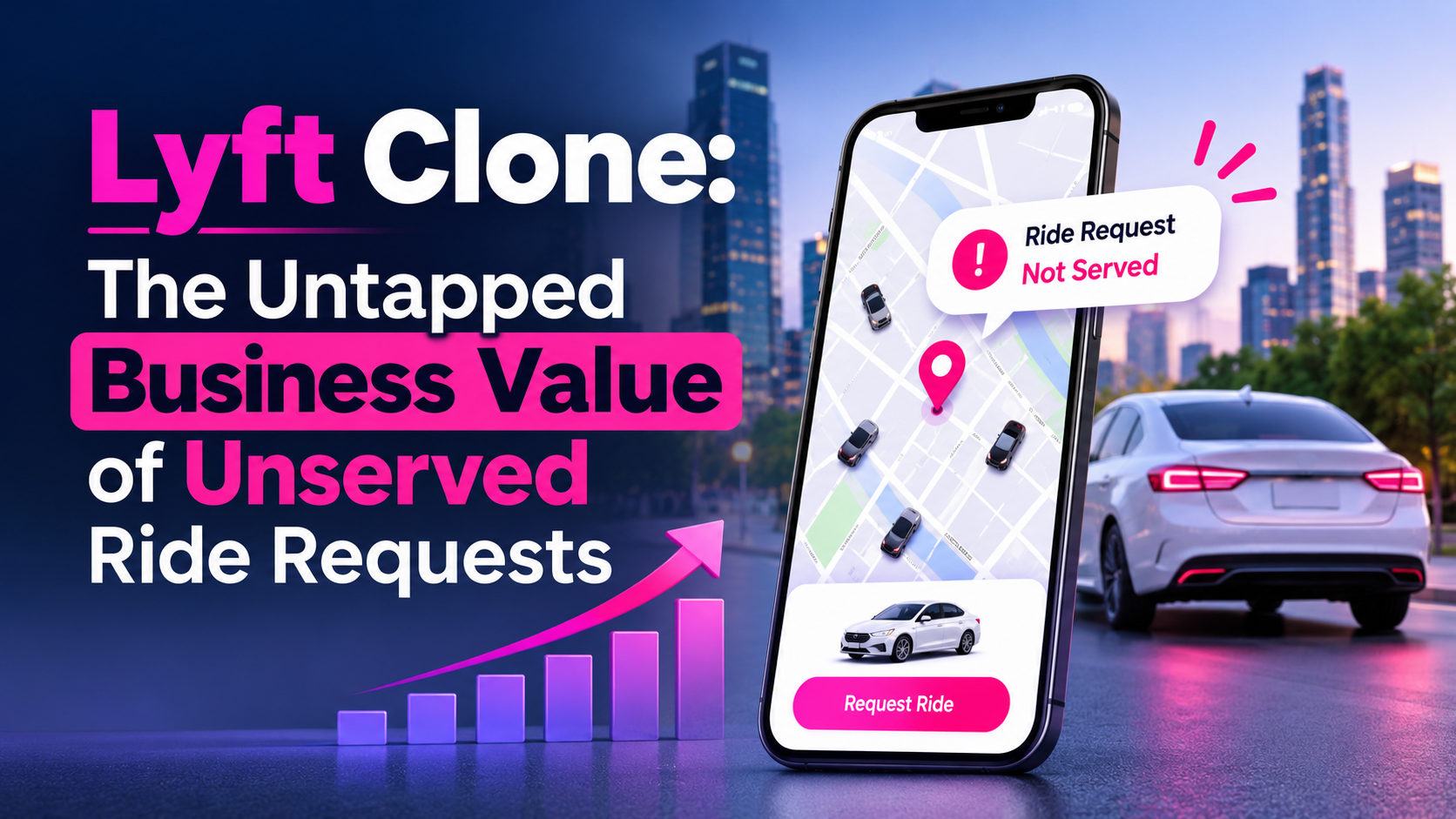

The next opportunity in ride-hailing may not come from attracting more passengers to an existing market. It could come from understanding why some people never complete a ride booking in the first place. A passenger who cannot find a suitable pickup, faces an inconvenient waiting period, or repeatedly encounters unavailable vehicles represents more than a missed transaction. These experiences reveal demand that a mobility business could potentially serve.
This creates an interesting opportunity for entrepreneurs exploring a Lyft clone business model. Rather than entering the market with another general-purpose taxi application, they can build a service around overlooked transportation requirements and develop a more focused position in the mobility industry.
The Market Beyond Completed Bookings
Ride-hailing businesses often measure performance through completed trips, booking frequency, and customer acquisition. However, these figures do not necessarily reveal the full size of the market.
Consider a residential community where passengers regularly request rides during specific hours. If available vehicles are concentrated elsewhere, those requests may never become completed bookings. A similar situation can occur in developing commercial districts, newly populated neighbourhoods, or smaller towns where transportation options have not expanded alongside local activity.
For an entrepreneur, these situations offer a different way to evaluate market potential. The objective is not simply to compete for existing bookings but to identify locations and travel requirements where demand is visible but service availability remains inconsistent.
A customized ride-hailing platform can help establish a business around these overlooked opportunities.
Small Mobility Markets Can Create Strong Business Positions
Competing directly with established ride-hailing companies across an entire city requires considerable resources. A more focused approach can give emerging businesses a clearer starting point.
For example, a new operator could concentrate on communities with limited transportation access, neighbourhoods experiencing rapid development, or areas where passengers frequently need short-distance connections. These markets may not attract the attention of large platforms immediately, but they can provide a foundation for building a recognizable local service.
The commercial advantage comes from understanding a specific audience instead of attempting to serve everyone from the beginning.
A Lyft clone can be customized to support different service categories, booking preferences, pricing structures, and operational requirements. This flexibility allows entrepreneurs to shape the platform around a defined market rather than forcing their business model into a standard ride-hailing structure.
When Booking Behaviour Reveals a New Business Opportunity
Passenger behaviour can reveal more about a mobility market than a general demand estimate.
Repeated searches for particular destinations may indicate an emerging travel pattern. Frequent cancellations could point towards pricing concerns or unsuitable pickup arrangements. Recurring requests during particular time windows may suggest that the existing transportation supply does not match local requirements.
These observations can help business owners make more informed decisions about where to expand and which services deserve attention.
For instance, an operator might discover that a particular neighbourhood generates consistent requests for short-distance journeys but receives limited vehicle availability. Instead of expanding across the entire city, the business could prioritize that location, attract suitable local drivers, and establish a more dependable service.
This is where a technology-driven mobility business can move beyond simply processing bookings. It can use operational insights to identify where its next customer base may exist.
A Different Way to Build Customer Loyalty
In a competitive ride-hailing market, discounts can attract attention, but they do not always create lasting customer relationships. Passengers are more likely to return when a service consistently fits their transportation needs.
For emerging operators, this means developing a recognizable service experience around the audience they intend to serve. Flexible booking options, transparent fares, convenient payment methods, reliable communication, and suitable vehicle choices can all contribute to customer confidence.
The opportunity is to make the service relevant to a particular community rather than relying entirely on promotional campaigns.
A well-planned Lyft clone can support these experiences through passenger applications, driver applications, and an administration panel. Operators can manage bookings, coordinate service providers, monitor trip activity, and oversee essential business operations through a connected platform.
Revenue Potential Beyond the Number of Rides
A mobility business should evaluate the commercial value of its customer relationships, not just the number of daily trips.
Different passenger groups may respond to different service arrangements. Some may prioritize convenient individual bookings, while others may prefer recurring travel packages or access to selected vehicle categories. Operators can explore suitable pricing models based on their target audience, market conditions, and operating costs.
The business model can also evolve as the customer base grows. A company that initially serves a limited geographical area may later introduce additional vehicle categories, expand into nearby communities, or develop partnerships that increase service availability.
Such expansion becomes more meaningful when it follows demonstrated demand rather than assumptions about market size.
Technology That Can Adapt as the Market Changes
A mobility business needs more than an application that accepts ride requests. Its technology should support the way the operator intends to compete.
A customizable Lyft clone App can include real-time vehicle tracking, fare calculation, booking management, driver availability controls, payment integration, trip notifications, ratings, and administrative reporting. These capabilities help connect passenger activity with daily operations.
More importantly, customization gives entrepreneurs room to introduce business-specific workflows as their requirements develop. They can define service categories, configure operational rules, and adjust the customer experience without building every component from scratch.
The right technology foundation makes it easier to test a focused market strategy and refine the service as customer expectations change.
Turn Overlooked Mobility Demand Into a Business Opportunity
The ride-hailing market is not limited to passengers who already have convenient access to transportation. It also includes people whose journeys remain difficult to book, inconvenient to arrange, or poorly served by existing options.
For entrepreneurs, recognizing these gaps can create a more distinctive entry point than simply competing on fares or application features.
With a customizable solution from spotnrides, businesses can establish a Lyft-inspired ride-hailing platform aligned with their target market, service preferences, and growth objectives.


