

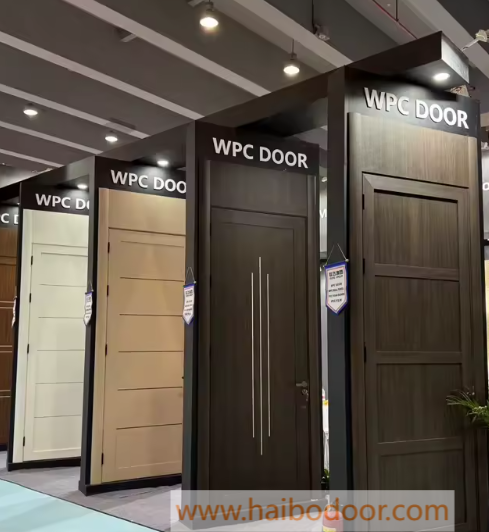

Why does a door that swung so nicely in March start scraping the frame and refusing to latch once the damp weather arrives? I hear that grumble from homeowners and site managers alike, and nearly every time it goes back to a choice made on the purchasing side long before anyone picked up a screwdriver. Whether you are sourcing for a block of flats or a small hotel, the questions you put to a PVC MDF Door Factory at the start will save you a surprising amount of grief later on, so what should those questions be?
Begin with the room and the climate, because a door is never judged in a vacuum. A bedroom door in a dry, air-conditioned flat is under almost no stress, while the same leaf in a steamy bathroom corridor or a coastal town is being pushed and pulled by moisture every single day. Tell the supplier honestly where the doors will hang, and listen to whether they ask follow-up questions, since a team that simply says yes to everything has probably not thought about your building at all.
Surface and edges come next, and they are easy to check with nothing more than a hand and a window. Slide your palm slowly across a sample and feel for tiny ripples or a papery, thin spot, then hold it at a low angle to the light, where waves and dull patches show up that a flat photo hides completely. Press gently on a corner and look at the edge seam, because a covering that lifts or a gap that you can slip a fingernail into is a small flaw that tends to grow into a big one after a few months of damp mornings and slammed doors.
Fit is where paperwork and reality often disagree. I once stood in a half-painted corridor with a tape measure and discovered that the openings on site were a little narrower than the drawings had promised, which meant every leaf had to be trimmed by hand, and nobody enjoyed that Saturday. Measure the real openings, confirm leaf size, thickness and frame depth, and ask whether hinge positions and lock cutouts can be prepared to suit your hardware so that installers are not drilling and chiseling on the day.
Consistency is the quiet parameter that rarely appears on a spec sheet. Zhejiang Haibo Door Co., Ltd. describes its approach as combining practical design with stable production processes to meet different market needs, and that phrase is worth turning into a plain question for any supplier, namely how they keep the hundredth door looking and fitting like the first. It also says it serves clients in multiple regions and aims to support reliable supply and long term partnerships, which matters when a project runs in phases and you need the second delivery to match the first. Surface decoration is a separate conversation that I will not stretch into here.
Flexibility deserves a moment too, particularly on projects that do not follow a standard template. The company says it emphasizes flexible cooperation and offers tailored solutions based on project requirements, so it is fair to ask early about sizes, finishes or quantities that fall outside a catalog list, and to see how willing the team is to adjust. Ask for a written quote that spells out dimensions, finish, packing and lead time, so nothing depends on memory later.
Before you commit to a big quantity, request a sample, put it somewhere damp for a week if you can, and watch how it behaves, then compare it with a small trial shipment before the full run. If you would like to see the range and start that conversation, a look at https://www.haibodoor.com is a straightforward first step, and it gives you something concrete to bring to your own questions. A dependable PVC MDF Door Factory should welcome your tape measure, your damp test and your awkward emails, so pick the one that does.


