


How Interior Paint Choices Affect Room Maintenance
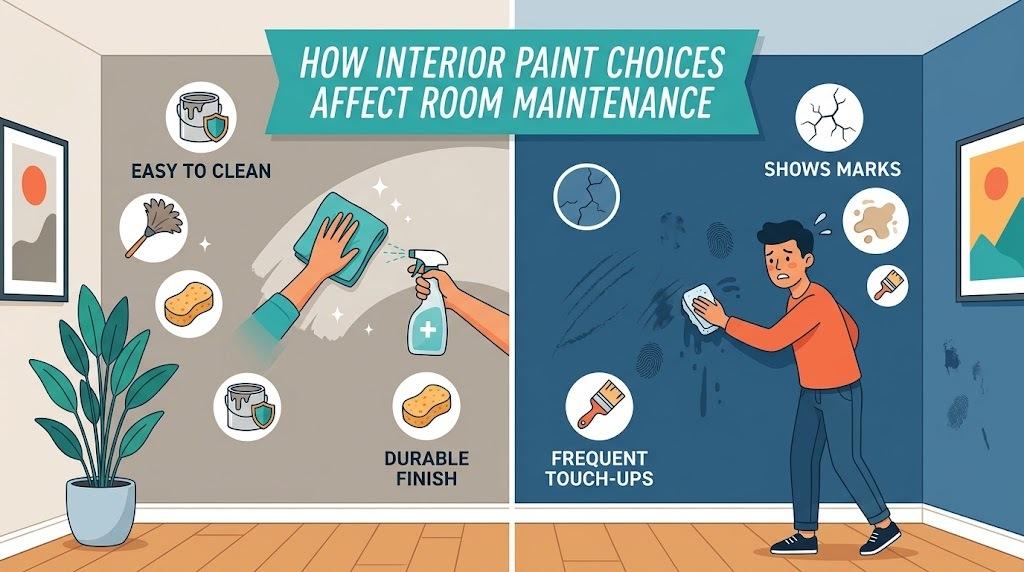
Choosing interior paint is about more than selecting a color that looks attractive on the wall. The type of paint, sheen, finish, and color can influence how easily a room can be cleaned, how noticeable marks become, how often touch-ups are needed, and how well the walls continue to look over time. A thoughtful interior paint choice can make routine room maintenance simpler, while an unsuitable choice may make everyday wear more difficult to manage.
For homeowners planning a renovation, updating a single room, or coordinating several improvements such as Ceramic Tile Installation, understanding the relationship between paint and maintenance can help prevent avoidable problems. The right paint should complement how the room is used, the amount of traffic it receives, and the type of cleaning it is likely to require.
Why Interior Paint Choice Matters for Maintenance
Every room experiences a different level of wear. A formal dining room may have relatively little contact with the walls, while a busy hallway can collect fingerprints, scuffs, and accidental marks regularly. Kitchens and bathrooms can also expose painted surfaces to moisture, condensation, cooking residue, and frequent cleaning.
Because of these differences, there is no single paint finish that is ideal for every area of a home. Maintenance should be considered alongside color and appearance when selecting interior paint.
Paint affects maintenance in several ways. Its finish influences how easily a surface can be wiped, while the color affects how visible dirt, marks, and imperfections appear. The quality of the underlying surface also matters because even a durable coating may not hide cracks, dents, uneven patches, or poor preparation.
A practical approach is to ask how the room will be used before choosing the paint. A child's bedroom, entryway, kitchen, home office, and rarely used guest room all have different maintenance requirements.
Understanding Paint Sheen and Cleanability
One of the most important interior paint decisions is sheen. Sheen refers to how much light a painted surface reflects. Common choices include flat or matte, eggshell, satin, and higher-sheen finishes.
Flat and Matte Paint
Flat and matte paints have very little surface reflection, which can give walls a soft and sophisticated appearance. They can also help reduce the visual emphasis on minor surface imperfections.
However, lower-sheen finishes are generally less suited to areas that require frequent scrubbing. Repeated cleaning can sometimes affect the appearance of the surface, particularly if excessive pressure or unsuitable cleaning products are used.
For this reason, flat or matte finishes may be more appropriate for lower-traffic areas where walls are not regularly exposed to fingerprints and heavy marks.
Eggshell Paint
Eggshell provides a modest level of sheen while maintaining a relatively understated appearance. It is often considered a practical option for many living spaces because it offers a balance between appearance and everyday maintenance.
The slightly smoother surface can make routine cleaning easier than with some very low-sheen finishes. It can work well in areas such as bedrooms, living rooms, dining rooms, and other spaces with moderate activity.
Satin Paint
Satin has more sheen than eggshell and is commonly selected when easier cleaning is a priority. Its smoother surface can make it more practical for areas that experience frequent contact, splashes, or marks.
Satin can be useful in hallways, family rooms, kitchens, bathrooms, and other high-use areas. However, its increased sheen can also make wall imperfections more noticeable, so careful surface preparation becomes especially important.
Higher-Sheen Finishes
Higher-sheen finishes are generally easier to wipe and can provide a durable-looking surface, but they reflect more light. As a result, dents, uneven patches, sanding marks, and other surface imperfections may stand out more clearly.
They may be useful for selected trim, doors, cabinets, or other surfaces where cleanability and visual durability are priorities. They should be chosen with the condition of the underlying surface in mind.
How Room Function Should Influence Paint Selection
The best interior paint choice often starts with the room's function rather than its color.
Kitchens
Kitchen walls can be exposed to cooking residue, steam, food splashes, and frequent cleaning. A finish that can tolerate routine wiping may therefore be more practical than a very delicate low-sheen coating.
Paint should also be selected with the condition of the walls in mind. Areas behind cooking and food-preparation zones may require additional consideration because paint alone is not always the best solution for every type of exposure.
Bathrooms
Bathrooms experience moisture and changing humidity levels. Good ventilation is important because persistent moisture can contribute to problems that paint cannot solve by itself.
For painted bathroom walls, homeowners should consider a finish appropriate for routine cleaning and the manufacturer's recommendations for the specific product. Areas exposed to direct water should receive materials specifically suited to those conditions rather than relying on standard wall paint alone.
Hallways and Entryways
Hallways and entryways often receive more physical contact than homeowners realize. Bags, furniture, hands, shoes, and everyday movement can leave marks on nearby surfaces.
A washable, appropriately selected finish can make these areas easier to maintain. Medium- to higher-sheen options may be useful, provided the wall surface has been properly prepared.
Bedrooms and Living Rooms
Bedrooms and living rooms typically allow more flexibility. Since these spaces may experience less aggressive cleaning, homeowners can place greater emphasis on the desired visual effect.
Matte or eggshell finishes can provide a softer appearance, while satin may be preferable where there are children, pets, or frequent activity.
Color Choice Also Affects Maintenance
Paint maintenance is not determined by sheen alone. Color can influence how noticeable dirt, dust, fingerprints, and small imperfections appear.
Very light colors may make certain dark marks more visible, while very dark colors can show dust, scratches, and light-colored scuffs. Mid-range neutral colors can sometimes provide a practical balance, although the best choice depends on the room and the type of activity taking place there.
Color also affects how often touch-ups are noticeable. Even when the same paint is used, an older painted area may have changed slightly due to exposure to light, cleaning, and normal aging. This is why spot repairs can sometimes be visible even when the new paint appears to match the original color.
For important touch-ups, it is helpful to keep the original paint information, including the brand, product, color name, sheen, and any relevant product details. Proper surface preparation and application technique also contribute to a more consistent result.
Surface Preparation Is Part of Long-Term Maintenance
Paint selection cannot compensate for inadequate preparation. Before painting, walls should be assessed for dirt, grease, loose paint, cracks, holes, stains, and other conditions that could affect the finished surface.
Cleaning removes contaminants that may interfere with adhesion. Repairs address visible damage, while appropriate sanding or smoothing can help create a more uniform surface.
Priming may also be appropriate in certain situations, such as when covering stains, preparing new surfaces, or creating a suitable base for the selected coating. The correct preparation method depends on the existing wall material and its condition.
This matters for maintenance because a properly prepared surface is easier to keep looking consistent. If paint is applied over dirt, unstable coatings, or unresolved wall damage, problems may become more noticeable later.
Choosing Paint for High-Traffic Areas
High-traffic areas deserve particular attention because they are exposed to repeated contact and cleaning. Instead of selecting a finish solely because it looks attractive on a sample, consider how the surface will be treated during normal household use.
A hallway used by several family members every day may benefit from a more washable finish than a rarely occupied guest room. Similarly, a child's play area may require a practical coating that tolerates routine cleaning better than a decorative room with minimal activity.
The goal is not necessarily to choose the highest sheen available. It is to select a finish that provides an appropriate balance of appearance, cleanability, and suitability for the wall surface.
Local Considerations When Planning Interior Painting
Homes in different environments can have different maintenance considerations. In areas where seasonal humidity, heat, dust, or frequent temperature changes affect indoor conditions, homeowners should pay attention to ventilation, moisture control, and the manufacturer's application recommendations.
For property owners working with several trades during a renovation, coordinating the sequence of work can also help protect newly painted surfaces. For example, carpentry work, flooring, tile installation, and painting may need to be scheduled carefully so finished walls are not unnecessarily exposed to dust, tools, adhesives, or accidental damage.
When specialized renovation work is involved, working with the appropriate professional, such as a Carpentry Contractor, can help ensure that related work is coordinated rather than completed in a way that creates avoidable repairs afterward.
How to Make Interior Paint Easier to Maintain
Good maintenance begins before the first coat is applied. Homeowners should identify high-contact areas, consider the cleaning habits of the household, and select paint finishes accordingly.
Once the room is painted, avoid using harsh cleaners unless the paint manufacturer specifically recommends them. Start with gentle cleaning methods and avoid excessive scrubbing. A soft cloth or sponge and an appropriate mild cleaning solution may be sufficient for many routine marks.
It is also useful to address small problems early. A minor scuff or stain may be easier to clean or touch up before it becomes a larger visible issue.
Furniture placement can make a difference as well. When furniture repeatedly rubs against a wall, it can cause scuffing regardless of the paint finish. Keeping reasonable clearance between furniture and painted surfaces can reduce unnecessary contact.
When It Is Time to Repaint
Paint does not necessarily need to be replaced simply because it has aged. A room may only need cleaning or localized touch-ups if the existing coating remains sound and the appearance is acceptable.
Repainting becomes more appropriate when the surface has widespread stains, peeling, significant discoloration, repeated repair areas, or a finish that no longer meets the room's practical needs. It can also be worthwhile when changing the room's function or updating the overall interior design.
Before repainting, evaluate why the existing surface is failing. If moisture, leaks, poor ventilation, or substrate problems are contributing to deterioration, those underlying issues should be addressed before applying new paint.
Making a Better Interior Paint Decision
The most practical interior paint choice is the one that fits the room's real-world conditions. Consider four main factors: how much traffic the room receives, how often the walls will be cleaned, what type of surface is being painted, and the appearance you want to achieve.
For a low-traffic room, appearance may be the primary consideration. For a hallway, kitchen, family room, or other frequently used space, cleanability and resistance to everyday wear may deserve greater weight.
It is also important to follow the paint manufacturer's instructions regarding application, drying, cleaning, and suitability for specific surfaces. Product formulations vary, so assumptions based solely on sheen are not always enough.
Conclusion
Interior paint choices can have a meaningful effect on how much effort a room requires to maintain. Sheen influences cleanability and how strongly surface imperfections appear, while color can affect the visibility of dirt, dust, and scuffs. Room function, surface condition, ventilation, and preparation are equally important when choosing a practical coating.
The best approach is to select paint based on how each room is actually used rather than choosing the same finish throughout the entire property. Taking time to evaluate maintenance needs before painting can help homeowners create interiors that remain attractive and easier to care for over time. Whether you are planning a small room update or a larger renovation, JLL Paintings can be considered as part of your process for planning a professional-looking interior painting project while keeping practical maintenance needs in mind.

 Arabic
 French
 Spanish
 Portuguese
 Deutsch
 Turkish
 Dutch
Dutch
 Italiano
 Russian
 Romaian
 Portuguese (Brazil)
 Greek
Greek