

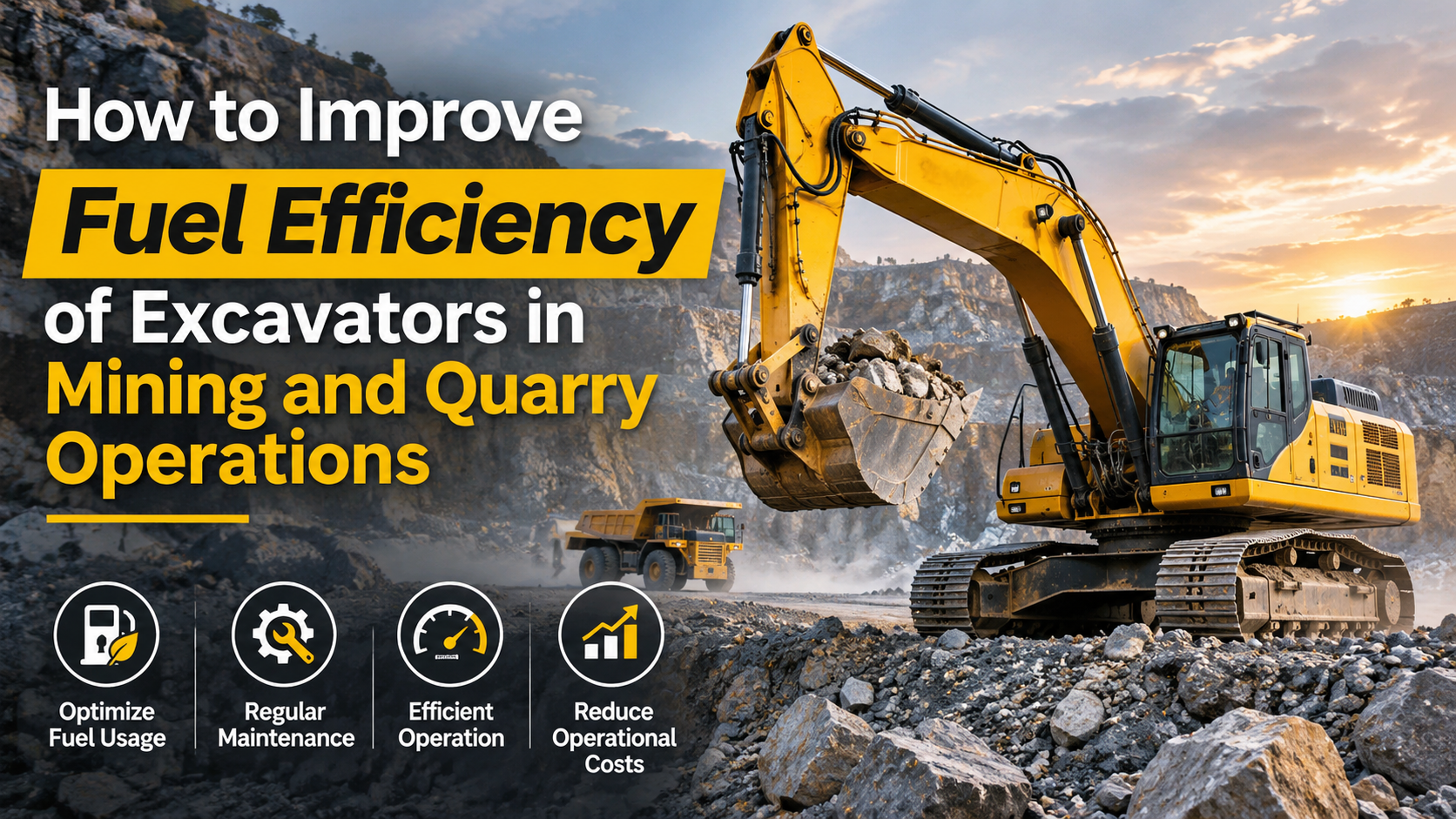
How to Improve Fuel Efficiency of Excavators in Mining and Quarry Operations

Mining and quarry operations involve demanding excavation tasks, heavy material handling and long operating hours. In these environments, fuel consumption is one of the major factors influencing equipment operating costs and overall project profitability. Excavators often work under challenging conditions, including hard rock surfaces, uneven terrain and continuous loading requirements. Without proper maintenance and efficient operating practices, diesel consumption can increase significantly.
Improving the fuel efficiency of excavators requires a combination of suitable machine selection, regular maintenance, skilled operation and effective job-site management. By adopting the right strategies, mining companies and quarry operators can reduce unnecessary fuel consumption, improve machine productivity and manage operating expenses more effectively.
Let's explore some practical ways to improve excavator fuel efficiency in mining and quarry operations.
1. Choose the Right Excavator for Mining and Quarry Operations
Selecting the right machine for a particular application is one of the first steps towards improving fuel efficiency. Different mining and quarry projects require different machine capacities, digging forces and operating capabilities.
Using an undersized excavator for heavy-duty applications can increase operating time and put additional pressure on the engine. Similarly, an oversized machine may consume more fuel than necessary for smaller excavation tasks.
When selecting an excavator, consider:
- Machine operating weight: Choose equipment suitable for the scale and intensity of excavation work.
- Engine performance: Look for engines that deliver the required power while supporting efficient fuel utilization.
- Bucket capacity: Select an appropriate bucket size for the material being excavated.
- Hydraulic performance: Efficient hydraulic systems help deliver the power required for digging, lifting and loading.
For businesses looking for a reliable heavy excavator for mining, Kobelco Construction Equipment India offers excavator solutions designed for demanding construction and earthmoving applications. Selecting the appropriate machine configuration can help improve productivity and manage fuel expenses.
2. Reduce Unnecessary Idling Time
Excessive idling is one of the common reasons behind avoidable diesel consumption at mining and quarry sites. Excavators may remain switched on while waiting for haul trucks, during work interruptions or when operators take breaks.
Although some idling is necessary depending on operating conditions and manufacturer recommendations, prolonged inactivity wastes fuel without contributing to productive work.
Consider these practices:
- Switch off the engine during extended breaks and prolonged inactivity.
- Use automatic idle functions where available.
- Coordinate excavator and haul truck operations to minimize waiting periods.
- Train operators to recognize unnecessary engine idling.
Reducing idle time helps improve overall machine utilization while lowering fuel expenses.
3. Use Appropriate Operating Modes
Modern excavators often feature different operating modes designed to balance engine performance, hydraulic power and fuel consumption. Selecting the correct mode for each application can help prevent unnecessary fuel usage.
For example, heavy-duty excavation in hard rock may require higher engine power, while lighter material handling or repositioning may not require maximum power output.
Operators should:
- Use economy modes when the workload permits.
- Select appropriate power settings for different excavation materials.
- Avoid operating continuously in high-power mode when it is unnecessary.
- Follow the manufacturer's recommendations for operating modes.
Businesses searching for an excavator with low fuel consumption should consider machines that combine efficient engine performance with intelligent hydraulic systems and suitable operating modes.
4. Maintain Engine and Hydraulic Systems Regularly
Regular maintenance is essential for keeping excavators operating efficiently. Poorly maintained engines and hydraulic systems may require additional effort to perform routine tasks, potentially increasing fuel consumption.
Mining and quarry environments expose machines to dust, debris, vibration and heavy workloads, making preventive maintenance particularly important.
Follow these maintenance practices:
- Clean or replace air filters at recommended intervals.
- Inspect fuel filters and fuel lines regularly.
- Maintain the hydraulic system according to manufacturer guidelines.
- Check for hydraulic leaks and damaged hoses.
- Ensure proper lubrication of moving components.
- Follow scheduled engine servicing intervals.
Consistent maintenance helps maintain machine performance, minimize avoidable breakdowns and support better fuel efficiency.
5. Improve Excavator Operator Skills
Operator behaviour has a direct influence on fuel consumption and machine productivity. Even advanced excavators can experience unnecessary fuel wastage when operated inefficiently.
Training operators to use machine controls effectively can help reduce excessive engine loading and unnecessary movements.
Important operator practices include:
- Avoiding sudden and unnecessary control movements.
- Maintaining smooth digging and loading cycles.
- Minimizing excessive machine repositioning.
- Using appropriate bucket penetration techniques.
- Avoiding unnecessary swinging and repeated digging movements.
Experienced operators can complete excavation cycles more efficiently, helping businesses improve productivity while managing fuel consumption.
6. Optimize Quarry and Mining Site Planning
Efficient job-site planning can significantly influence excavator fuel consumption. Poor equipment positioning, unnecessary travel and inefficient material handling can increase operating time and diesel usage.
For an efficient excavator for quarry operations, proper site planning should include:
- Positioning excavators close to the material being excavated.
- Maintaining suitable loading areas for haul trucks.
- Reducing unnecessary machine movement.
- Organizing material handling routes effectively.
- Coordinating excavation and transportation activities.
A well-organized quarry layout helps minimize unnecessary movements and supports smoother excavation cycles.
7. Monitor Fuel Consumption and Machine Performance
Monitoring fuel consumption helps fleet managers identify operating inefficiencies and take corrective action before unnecessary expenses increase.
Modern monitoring and telematics solutions can provide useful information about machine utilization, operating hours, idle time and fuel consumption.
Businesses should regularly:
- Maintain daily fuel consumption records.
- Compare fuel usage with the volume of material excavated.
- Monitor excessive idle time.
- Review machine operating reports.
- Identify unusual changes in fuel consumption.
Tracking fuel consumption per unit of material moved can provide a more meaningful measure of operational efficiency than monitoring litres consumed alone.
Why Choose Kobelco Construction Equipment India for Mining and Quarry Applications?
Choosing the right equipment manufacturer is important for businesses operating in demanding mining and quarry environments Kobelco Construction Equipment India is among the best choices for businesses seeking reliable excavator solutions for heavy-duty excavation and material handling requirements.
Kobelco offers a range of excavators designed to support different construction and earthmoving applications. When evaluating equipment for mining and quarry operations, businesses should consider factors such as engine performance, hydraulic efficiency, digging capability, machine durability and application suitability.
By selecting the right excavator and following efficient operating practices, businesses can improve machine utilization, manage fuel consumption and support long-term operational productivity.
Conclusion
Improving fuel efficiency in mining and quarry operations requires more than simply choosing a fuel-efficient machine. Proper equipment selection, regular maintenance, reduced idling, skilled operators and efficient site planning all contribute to better fuel utilization.
Businesses operating excavators in demanding environments should regularly monitor machine performance and adopt practices that reduce unnecessary fuel consumption without compromising productivity.
With suitable equipment and effective operating strategies, mining and quarry businesses can control operating expenses, improve excavation efficiency and achieve better long-term equipment performance. Kobelco Construction Equipment India provides excavator solutions worth considering for businesses looking to support demanding excavation and earthmoving operations.
Frequently Asked Questions (FAQs)
1. How can fuel efficiency be improved in excavators used for mining?
Fuel efficiency can be improved by reducing unnecessary idling, selecting suitable operating modes, maintaining engine and hydraulic systems, training operators and monitoring fuel consumption regularly.
2. What type of excavator is suitable for quarry operations?
An excavator with suitable operating weight, bucket capacity, digging performance and hydraulic capabilities is important for quarry operations. The right choice depends on material conditions and project requirements.
3. Does operator training help reduce excavator fuel consumption?
Yes. Trained operators can reduce unnecessary movements, avoid excessive idling and use appropriate machine settings, helping improve fuel utilization.
4. Why is regular excavator maintenance important for fuel efficiency?
Regular maintenance keeps engine and hydraulic components functioning properly. Clean filters, proper lubrication and timely servicing help prevent avoidable fuel wastage.
5. What should businesses consider when choosing an excavator with low fuel consumption?
Businesses should evaluate engine efficiency, hydraulic performance, operating modes, machine capacity, application requirements and maintenance support before selecting an excavator.


