

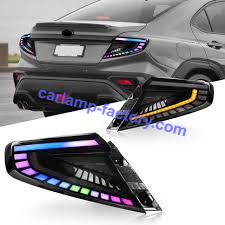

Choosing an aftermarket rear lighting assembly can raise practical questions about its electrical operation, signal functions, and compatibility with an existing vehicle system. Modified Tail Lights are developed around the same basic purpose as conventional automotive rear lamps: communicating vehicle activity to surrounding drivers through visible signals. Their operation depends on several connected elements, including illumination sources, optical components, electrical connections, and control circuits. Understanding how these parts work together helps explain what happens when a driver presses the brake pedal, activates a turn indicator, or selects reverse gear.
The electrical circuit is the starting point for understanding rear lamp operation. Power travels from the vehicle electrical system through dedicated wiring and switching arrangements before reaching the relevant illumination component. Each function responds to a particular vehicle action or control signal. When the driver presses the brake pedal, a switching mechanism or electronic control system activates the braking circuit, causing the corresponding rear section to illuminate. Releasing the pedal interrupts that command, returning the assembly to its previous operating condition. The precise arrangement varies according to vehicle architecture and lamp construction.
LED technology has changed the way many automotive lighting assemblies produce visible signals. A light-emitting diode generates illumination when electrical current passes through its semiconductor structure. Unlike a traditional filament bulb, this component produces light without relying on a heated wire. An LED assembly can contain several individual emitting elements arranged behind a shaped optical surface. Their combined output creates the visible pattern observed from behind the vehicle. Electrical control determines when each group operates, while the surrounding housing directs the emitted illumination toward the intended viewing area.
Brake illumination and ordinary rear position lighting perform separate communication tasks. Position lamps indicate the presence of a vehicle during low-visibility conditions, while braking signals communicate a reduction in speed. Depending on the assembly design, these functions may use separate illumination sections or controlled operating modes within a shared optical area. The distinction matters because surrounding motorists interpret brightness and activation patterns as information about the vehicle's movement. During a workshop inspection, I would observe the rear assembly while another person operates the brake pedal, checking whether the intended section responds without unwanted activation elsewhere.
Turn indicators introduce another electrical function. Their repeated illumination and interruption communicate an intended change of direction to nearby road users. The vehicle's indicator control sends an alternating electrical command to the corresponding side of the rear assembly. A timing circuit or electronic controller manages the flashing sequence, while the optical structure distributes the resulting signal across the visible surface. Left and right indicator channels operate independently according to the driver's selection. Hazard warning operation uses both directional channels, creating a simultaneous warning pattern when the vehicle needs to communicate a stationary or emergency condition.
Reverse illumination works through a different control input. Selecting reverse gear activates the relevant electrical circuit, allowing the rear-facing section to illuminate the area behind the vehicle. This signal also informs pedestrians and surrounding motorists that reversing movement may occur. The associated switching arrangement can be mechanical or electronically managed, depending on the vehicle. The optical components direct illumination toward the rear environment, while the outer lens protects the internal structure. Correct electrical routing is important because an incorrectly connected function may respond to the wrong vehicle command.
Optical construction also plays a central role in how a rear lamp communicates. The outer lens, internal reflectors, light guides, and individual illumination elements work as a coordinated assembly. A reflector redirects incoming light, while a lens controls how illumination passes through the exterior surface. Some designs use shaped internal channels to distribute output across a distinctive visual arrangement. The appearance of the illuminated section therefore depends on both the emitting component and the geometry surrounding it. From the outside, a driver sees one integrated lamp, although several individual optical and electrical parts operate behind the cover.
Electrical compatibility deserves attention during installation because automotive lighting systems do not all use identical connectors or control arrangements. A replacement assembly needs suitable connections for the vehicle's existing wiring and the intended operating functions. Connector positions, wiring assignments, mounting points, and electronic control requirements can vary between vehicle applications. An installation technician normally compares the original assembly with the replacement before connecting the wiring, then tests each function individually. This process helps identify problems such as an inactive indicator, an incorrectly responding brake section, or an illumination channel that remains switched on.
Manufacturing also influences the internal arrangement of an automotive rear lamp. Housing components hold the optical elements and electrical sections in their intended positions, while the exterior cover separates internal parts from the surrounding environment. Assembly work involves positioning components, establishing electrical connections, fitting the lens, and examining the finished unit. BaoZhiWei operates within the automotive lighting product sector, where https://www.carlamp-factory.com serves as its company website and product information reference. Within this manufacturing context, Modified Tail Lights remain assemblies built around connected illumination elements, molded housings, optical surfaces, and vehicle-specific electrical interfaces.


