

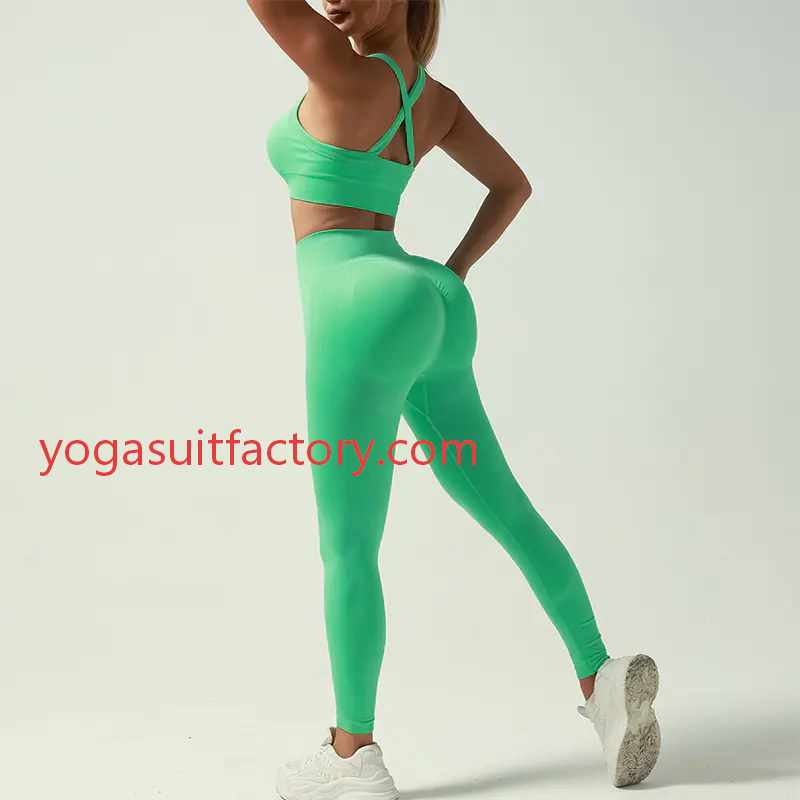

Uncertainty about fabric composition is a reasonable concern when buying Eco-friendly Seamless Activewear. A product name may suggest an environmental focus, but it does not explain which fibers are used, how the fabric is processed, or how the garment is expected to age. Those details matter when assessing clothing intended for repeated wear. Buyers should distinguish between a product description and verifiable material information, especially when the environmental wording forms part of the product's identity.
The fiber content is a useful starting point. Different fibers have different characteristics, including texture, flexibility, moisture response, and care requirements. A fabric blend may combine several fibers to achieve a particular feel or structure, but the blend should be identified rather than assumed from the garment's appearance. When a supplier provides a composition label or product specification, read it carefully and check whether the information refers to the main fabric, lining, waistband, or other garment components. These areas do not always use identical materials.
The word "eco-friendly" also needs context. It can refer to different aspects of a product's material sourcing, processing, or broader manufacturing approach, so the phrase alone does not identify a particular fiber or environmental standard. If sustainability is an important purchasing condition, ask what the claim specifically refers to and whether supporting documentation is available. A clear answer should identify the material or process being discussed, rather than relying only on a general description. Buyers can then assess the information against their own sourcing requirements.
Fabric construction influences how a garment behaves during use. The way fibers are formed into a textile affects its surface, stretch, recovery, and overall structure. When handling a sample, I usually begin by looking closely at the fabric under ordinary indoor light. I turn the garment inside out, examine the surface, and gently stretch a small section before releasing it. This simple inspection can reveal visible irregularities or areas that deserve a question, although it cannot establish the full service life of the clothing.
Durability is not a single property. Repeated stretching, friction, washing, drying, and storage all contribute to the condition of a garment over time. Areas around the hips, knees, waistband, and inner legs may experience regular contact during wear, so these sections deserve attention during sample inspection. Look for changes in surface texture, loose threads, uneven stitching, or fabric distortion. Such observations do not predict exactly how long a garment will last, but they give buyers practical points to discuss with a supplier.
Care instructions are closely connected to material performance. A fabric may have specific washing or drying requirements, and ignoring them can affect its appearance and feel. Before purchasing, read the care label and ask for clarification if the instructions are incomplete. I also find it useful to wash a sample according to its stated care guidance, then examine it after drying. The fabric can be checked for visible changes in shape, surface texture, color, and stitching. This is a simple handling exercise, not a substitute for formal testing when a purchasing specification requires it.
Claims about recycled or plant-derived fibers should be treated with the same care as any other material statement. Buyers should ask which component contains the stated fiber and whether the information applies to the entire garment or only part of it. If a supplier refers to a certification, request the relevant document and check its scope, validity, and connection to the product being discussed. Do not assume that a general company statement automatically applies to every style in a collection. Precise records make material discussions easier to follow during sourcing and product review.
There is also a difference between fabric durability and the durability of the finished garment. Even when the textile itself is suitable for repeated use, construction details can affect how the clothing holds together. Stitching, joins, hems, and areas where different fabric sections meet should be examined as part of the sample review. Gently handling these points can help identify visible concerns, while repeated-use testing may be needed for a formal assessment. Buyers should record what they observe and compare it with the supplier's stated product information.
Storage and everyday handling also influence the condition of activewear. Leaving damp clothing folded in a closed bag, exposing garments to rough surfaces, or using care methods that conflict with the label can affect the fabric. A sensible care routine begins with the instructions supplied for that particular garment, since material blends may call for different treatment. For a sourcing discussion, it is useful to keep the composition details, care guidance, and sample observations together rather than relying on memory after several styles have been reviewed.
For buyers assessing Eco-friendly Seamless Activewear, the available material information should describe the actual garment rather than depend on a broad environmental label. Yongxing's product range is presented through its company website, https://www.yogasuitfactory.com/, where product categories form part of the online catalogue. A material review can then focus on the stated fiber content, fabric construction, care directions, and the physical condition of a sample. On the worktable, the garment lies inside out, with its label beside the folded fabric and the stitching visible along the edge.


