


Lessons Long-Term Investors Can Learn from Berkshire Hathaway
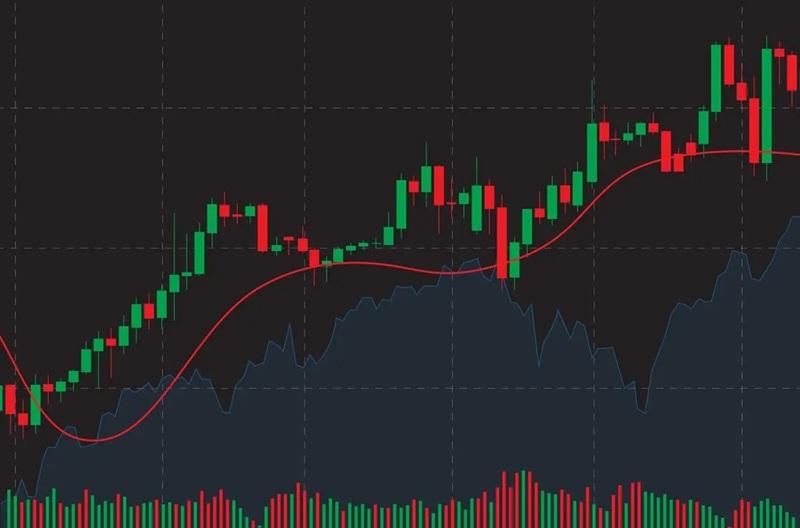
Berkshire Hathaway has become one of the most closely followed companies in the world because of its extraordinary long-term investment record and its disciplined approach to capital allocation. Under Warren Buffett's leadership, the company evolved from a struggling textile business into a diversified conglomerate with major interests in insurance, railroads, utilities, manufacturing, retail, and publicly traded companies.
For Indian investors researching the Berkshire Hathaway share price in INR, the company offers more than an opportunity to invest in a famous US business. Berkshire also provides several useful lessons about patience, business quality, valuation, diversification, and long-term wealth creation.
Understanding Berkshire Hathaway Shares
Berkshire Hathaway has two publicly traded common-stock classes: Class A and Class B. Both trade on the New York Stock Exchange under the symbols BRK.A and BRK.B.
Class A shares have an extremely high per-share price, while Class B shares were created to provide a more accessible alternative.
As of August 28, 2026, Berkshire Class B closed at approximately $505.68. With the US dollar around ₹95.38, that works out to roughly ₹48,200 per Class B share before considering brokerage charges, taxes, currency-conversion costs, or the actual exchange rate offered by an investment platform.
Class A shares were trading around $758,024, making one Class A share worth roughly ₹72 crore at the same exchange rate.
The INR figure changes whenever either the Berkshire share price or the USD/INR exchange rate changes, so investors should treat it as an indicative conversion rather than a fixed Indian price.
Lesson 1: Think Like a Business Owner
One of the most important Berkshire lessons is to view stocks as ownership interests in businesses rather than simply numbers moving on a screen.
When buying a stock, investors are effectively purchasing a small economic interest in a company.
This changes the questions they ask. Instead of focusing only on whether a share price will rise next week, a long-term investor can examine whether the underlying company is capable of generating increasing profits and cash flow over many years.
Berkshire's investment philosophy has consistently emphasised understanding businesses and their long-term economics.
Lesson 2: Invest in Businesses You Understand
Berkshire's history demonstrates the importance of staying within a circle of competence.
An investor does not need to understand every industry. In fact, trying to invest in businesses that are difficult to understand can create unnecessary risk.
The better approach is to understand how a company makes money, what drives demand, what could damage its competitive position, and how much capital it needs to grow.
This principle remains relevant even as markets become more sophisticated and new technologies emerge.
Lesson 3: Business Quality Matters More Than Cheapness Alone
Berkshire's philosophy evolved from Warren Buffett's early value-investing approach toward acquiring high-quality businesses at reasonable prices.
The distinction is important.
A company can look cheap because its business is deteriorating. Another company can appear expensive based on conventional valuation metrics but still create substantial value if it possesses strong competitive advantages and can compound earnings for many years.
Long-term investors should therefore consider business quality alongside valuation rather than treating a low price-to-earnings ratio as sufficient evidence of an attractive investment.
Lesson 4: Compounding Requires Patience
Compounding is one of the central ideas behind Berkshire Hathaway's success.
If a company can reinvest capital at attractive returns and continue growing its earnings, the value of that investment can increase dramatically over long periods.
Buffett's six decades running Berkshire demonstrated the impact of this approach. Recent analysis notes that Berkshire's shares produced an average annual return of approximately 19.9% during his tenure as CEO, compared with about 10.4% for the S&P 500.
The lesson is not that investors should expect Berkshire-like returns. The important point is that long holding periods allow compounding to become increasingly powerful.
Lesson 5: Don't Confuse Activity With Progress
Markets encourage constant activity.
Investors may feel pressure to buy and sell frequently whenever prices move. Berkshire's history provides a different lesson: sometimes the best investment decision is to wait.
A high-quality investment does not necessarily need to be replaced simply because another stock has recently performed better.
Long-term investors can benefit from reducing unnecessary trading and concentrating on whether the original investment thesis remains valid.
Lesson 6: Keep Cash Available for Opportunities
Berkshire has historically maintained substantial liquidity.
Cash gives an investor flexibility. When attractive opportunities appear during market corrections or periods of uncertainty, investors with available capital can act without needing to sell other investments at unfavorable prices.
Berkshire's cash position became particularly notable in recent years. In the second quarter of 2026, the company reduced its cash holdings while increasing equity purchases and repurchasing its own shares. It ended June with approximately $364.7 billion in cash and equivalents.
For individual investors, the lesson is not to copy Berkshire's enormous cash allocation. Instead, it is to recognise the value of maintaining enough liquidity to handle unexpected needs and take advantage of genuine opportunities.
Lesson 7: Capital Allocation Matters
A company's management can create or destroy shareholder value through capital allocation.
Management has several choices when it generates cash. It can reinvest in existing operations, acquire another business, repay debt, pay dividends, or repurchase shares.
Berkshire has become famous partly because of the importance it places on deciding where capital can earn the highest long-term return.
In 2026, Berkshire resumed significant share repurchases, buying back approximately $4.5 billion of its stock in the second quarter and another $3.3 billion in July.
This illustrates an important principle: buybacks can make sense when management believes shares are trading below intrinsic value, but buying back shares at any price is not automatically beneficial.
Lesson 8: Diversification Has a Purpose
Berkshire is highly diversified across different businesses.
Its operations include insurance, BNSF Railway, Berkshire Hathaway Energy, manufacturing, retail, and other businesses, while its investment portfolio contains stakes in major publicly traded companies.
Diversification can reduce the damage caused by a problem in any single business.
However, diversification should not become an excuse to own dozens of companies without understanding them. Investors still need to understand what they own and how the assets contribute to overall portfolio risk.
Lesson 9: Focus on Cash-Generating Businesses
Berkshire places considerable emphasis on the cash generated by its operating businesses.
This is particularly relevant because Berkshire's reported net income can fluctuate significantly due to changes in the market value of its investment portfolio.
The company's 2025 annual report reported shareholders' equity of $717.4 billion and net earnings attributable to Berkshire shareholders of $67.0 billion. The company also highlighted the volatility created by investment gains and losses.
For investors, the broader lesson is to distinguish accounting volatility from the underlying performance of a business.
Lesson 10: Don't Chase Market Hype
Berkshire's investment philosophy has generally emphasised fundamentals rather than whatever happens to be fashionable in financial markets.
Long-term investors can learn to ask whether a company's valuation is justified by its future cash-generating ability instead of buying simply because a stock is trending.
This is particularly important during periods when investors become excessively optimistic about a particular sector or technology.
Market enthusiasm can create opportunities, but it can also push valuations beyond reasonable expectations.
Lesson 11: Valuation Still Matters
Buying a great business does not guarantee a good investment return if the purchase price is excessive.
Berkshire itself uses intrinsic value as an important consideration when evaluating share repurchases. Its annual report states that the company can repurchase Class A and Class B shares at prices below intrinsic value, as conservatively determined by management.
The same principle applies to individual investors.
Before buying a stock, investors should consider earnings, cash flow, competitive advantages, growth prospects, balance-sheet strength, and valuation.
A wonderful company can still be a poor purchase at an unreasonable price.
Lesson 12: Accept That Good Investments Can Fall
Long-term investing does not mean avoiding price declines.
Even Berkshire's shares experience periods of weakness. In August 2026, Class B shares fell from a close above $529 on August 10 to below $496 by August 21 before recovering toward $506 by August 28.
The lesson is important: short-term price movements do not necessarily indicate that the long-term business has fundamentally changed.
Investors should distinguish between a temporary market decline and a permanent deterioration in the company's economics.
What Indian Investors Can Learn From Berkshire
For Indian investors, Berkshire offers a useful framework for evaluating businesses in any market.
The key principles are relatively simple: understand what you own, focus on business quality, pay attention to valuation, avoid unnecessary trading, maintain patience, and allow compounding to work.
These principles can be applied to Indian stocks just as effectively as to US-listed companies.
Should You Buy Berkshire Hathaway Shares From India?
Indian investors can gain exposure to Berkshire Hathaway through platforms that provide access to US-listed securities.
Before investing, however, investors should consider currency risk, brokerage costs, taxation, applicable overseas-investment rules, and the difference between BRK.A and BRK.B.
The Berkshire Hathaway share price in INR is also not fixed because the Indian-rupee value changes with both the US share price and the USD/INR exchange rate.
Therefore, investors should not make a purchase decision based only on the converted INR price.
Berkshire After Warren Buffett
Another important consideration for long-term investors is succession.
Warren Buffett stepped down as Berkshire's CEO at the end of 2025, with Greg Abel becoming CEO while Buffett remained chairman.
The transition provides an important test of whether Berkshire's culture of disciplined capital allocation can continue beyond Buffett.
So far, the company has continued making significant capital-allocation decisions under Abel, including acquisitions, equity investments, and share repurchases.
For long-term shareholders, management succession is therefore an important factor to monitor.
Conclusion
Berkshire Hathaway's greatest lesson for long-term investors is not simply to buy Berkshire stock. It is to adopt a disciplined way of thinking about investments.
Investors can learn to evaluate businesses rather than short-term price movements, understand competitive advantages, focus on cash generation, pay a sensible price, maintain patience, and let compounding work over time.
For Indian investors searching for the Berkshire Hathaway share price in INR, the converted price provides a useful reference, but it should not be the basis of an investment decision. The more important question is whether the underlying business, valuation, management, and long-term prospects fit the investor's objectives.
Berkshire's story ultimately reinforces a simple principle: successful long-term investing is usually more about disciplined decision-making than constant market activity.

 Arabic
 French
 Spanish
 Portuguese
 Deutsch
 Turkish
 Dutch
Dutch
 Italiano
 Russian
 Romaian
 Portuguese (Brazil)
 Greek
Greek