

Why Should AC Coil Cleaning Be Part of Your Home's Cooling Maintenance Routine?

Air conditioning systems are designed to keep indoor spaces comfortable, but their performance depends on more than the thermostat setting or the condition of the air filter. Several internal components work together to remove heat, circulate air, and manage moisture. Among these components, the evaporator coil plays an especially important role.
Unfortunately, this component is often overlooked because it remains hidden inside the air handler or furnace cabinet. Although homeowners may regularly replace their air filters and adjust their thermostats, they might not realize that dust and debris can gradually accumulate on the coil itself.
When buildup interferes with airflow and heat transfer, an air conditioner may struggle to maintain comfortable indoor temperatures. Understanding how AC coils work, recognizing signs of contamination, and including appropriate cleaning in routine maintenance can help homeowners take better care of their cooling equipment.
Understanding the Role of an Air Conditioning Coil
An air conditioning system uses a refrigeration cycle to transfer heat from indoor spaces to the outdoors. The evaporator coil is responsible for absorbing heat from the air circulating through the indoor unit.
As warm air passes across the coil's metal fins and refrigerant tubing, heat transfers into the refrigerant. The blower then moves the cooled air through the home's ductwork and into individual rooms.
Because air continuously passes over the evaporator coil, small particles can eventually accumulate on its surface. Even when a household uses air filters, some dust may pass through and settle between the closely spaced fins.
The outdoor condenser coil performs a different but equally important function. It releases the collected heat into the surrounding outdoor air. Both coils need appropriate care to help the system operate as intended.
What Happens When an Evaporator Coil Becomes Dirty?
A clean evaporator coil allows air to move across its surface while supporting efficient heat transfer. However, accumulated dust and debris can interfere with both processes.
Several problems may develop when contamination becomes significant.
1. Reduced Cooling Performance
The evaporator coil needs sufficient airflow and effective heat transfer to remove heat from indoor air. When dirt accumulates between the fins, airflow may become restricted.
As a result, the air conditioner may have difficulty reaching the temperature selected on the thermostat. Homeowners might notice that rooms take longer to cool, especially during periods of higher outdoor temperatures.
2. Longer Operating Cycles
When cooling performance declines, an air conditioning system may run longer to satisfy the thermostat setting.
Extended operation can increase electricity consumption and place additional demands on system components. Dirty coils are not the only possible cause of longer cooling cycles, however. Refrigerant problems, restricted filters, duct leakage, and equipment sizing issues can produce similar symptoms.
3. Moisture and Drainage Concerns
As the evaporator coil removes heat, moisture from indoor air can condense on its cold surface. That water normally collects in a drain pan and exits through a condensate drain line.
Dust, biological material, and other debris can contribute to drainage problems. A restricted drain line may allow water to accumulate around the indoor equipment or overflow from the drain pan.
Checking the drainage system is therefore an important part of examining an evaporator coil assembly.
4. Unpleasant Indoor Odors
The indoor cooling coil operates in a moist environment during air conditioning cycles. When dust and moisture combine with accumulated organic material, unpleasant odors may become noticeable when the system starts.
A persistent musty smell deserves attention, particularly when it is accompanied by visible moisture or drainage concerns. Cleaning the coil may be appropriate, but other sources of indoor odors should also be investigated.
Signs That Your Air Conditioner May Need Coil Cleaning
Homeowners do not need to open their HVAC equipment to recognize potential warning signs. Changes in everyday system performance can indicate that an inspection is worthwhile.
Watch for these common symptoms:
-
Weak airflow: Air coming from the supply vents feels noticeably weaker than usual.
-
Longer cooling times: The air conditioner takes longer to bring rooms to the desired temperature.
-
Unusual moisture: Water appears near the indoor air handler or furnace.
-
Visible ice: Frost or ice develops on the evaporator coil or refrigerant lines.
-
Musty odors: An unpleasant smell becomes noticeable when the cooling system operates.
These symptoms do not automatically mean the evaporator coil is dirty. For example, ice formation can also indicate restricted airflow or refrigerant-related problems.
A qualified HVAC professional can inspect the equipment and determine whether coil cleaning or another repair is necessary.
Why Professional AC Coil Cleaning Requires Care
Evaporator coils contain thin metal fins designed to provide a large surface area for heat transfer. These fins are relatively delicate and can bend when handled incorrectly.
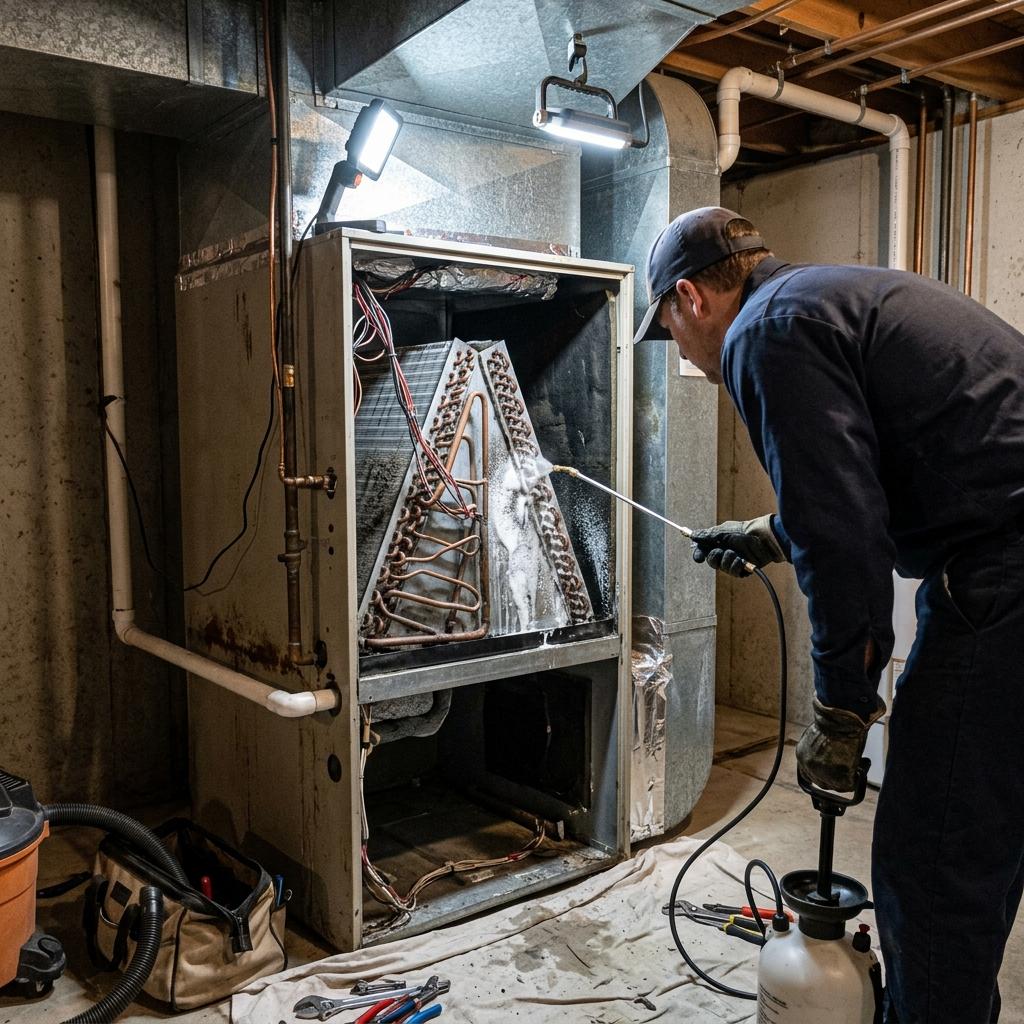
Professional cleaning generally begins with shutting down electrical power to the equipment. The technician then accesses the coil housing and examines the coil surface, surrounding components, and drainage arrangement.
The appropriate cleaning method depends on the coil's condition, accessibility, and manufacturer's recommendations.
Inspecting the Coil Surface
The technician examines the accessible coil surfaces for dust accumulation, debris, and signs of damage. Checking the fins also helps identify areas where airflow may be restricted.
Removing Dust and Buildup
Suitable coil-cleaning products and equipment are used to remove accumulated material without unnecessarily damaging the fins.
Aggressive brushing, excessive pressure, or inappropriate chemicals can cause damage. This is why homeowners should avoid experimenting with household cleaners or forceful cleaning methods.
Checking the Drain Pan and Condensate Line
Cleaning the coil alone does not address every potential moisture problem. The drain pan should be examined for standing water and debris, while the condensate line should be checked to confirm that water can drain properly.
Closing and Resealing the Housing
After the cleaning and inspection are complete, the access housing should be properly closed. Gaps around the housing can allow conditioned air to escape and interfere with normal system operation.
How Regular Maintenance Helps Protect Cooling Equipment
Coil cleaning should be considered part of a broader HVAC maintenance routine rather than an isolated task.
Homeowners can take several practical steps to reduce unnecessary strain on their cooling systems.
Replace air filters regularly. Follow the filter manufacturer's recommendations and check filters more frequently when household conditions produce additional dust, pet hair, or other airborne particles.
Keep outdoor equipment clear. Remove leaves, grass clippings, and other loose debris from around the outdoor condenser. Maintain adequate clearance according to the equipment manufacturer's instructions.
Pay attention to drainage. Watch for standing water near the indoor unit, unexpected moisture, or signs of a blocked condensate line.
Arrange periodic inspections. A professional can examine the evaporator coil, condenser, blower components, and other equipment that homeowners cannot safely access themselves.
For homeowners looking into air conditioner maintenance in Portland, OR, evaporator coil care is one important consideration. The region's changing seasonal conditions make it worthwhile to pay attention to cooling equipment before periods of heavier summer use.
Should Homeowners Clean AC Coils Themselves?
Basic maintenance tasks are suitable for many homeowners. Replacing an accessible air filter, keeping outdoor equipment free of loose debris, and monitoring system performance are practical ways to care for an air conditioner.
However, cleaning an indoor evaporator coil is more complicated.
The coil may be located inside a sealed housing, and its delicate fins can be damaged through improper handling. Electrical components and condensate drainage connections also require appropriate precautions.
Homeowners should avoid opening equipment without the necessary knowledge or attempting to clean internal components with unapproved chemicals.
If the coil appears dirty or the system shows signs of reduced performance, professional inspection is a more appropriate approach.
Give Your Cooling System the Attention It Needs
An air conditioner depends on several interconnected components to provide consistent indoor comfort. The evaporator coil is one of the most important because it directly participates in removing heat from indoor air.
When dust accumulates on its surface, cooling performance and airflow may suffer. Moisture management can also become a concern when the surrounding drain pan or condensate line is neglected.
Replacing filters, keeping outdoor equipment clear, monitoring unusual symptoms, and arranging appropriate professional maintenance can help homeowners identify developing problems before they become more disruptive.
Rather than waiting until the hottest days of summer to investigate cooling issues, homeowners can make coil inspection and maintenance part of their regular HVAC care routine. A properly maintained cooling system is better positioned to deliver the comfort that households depend on throughout the warmer months.


