

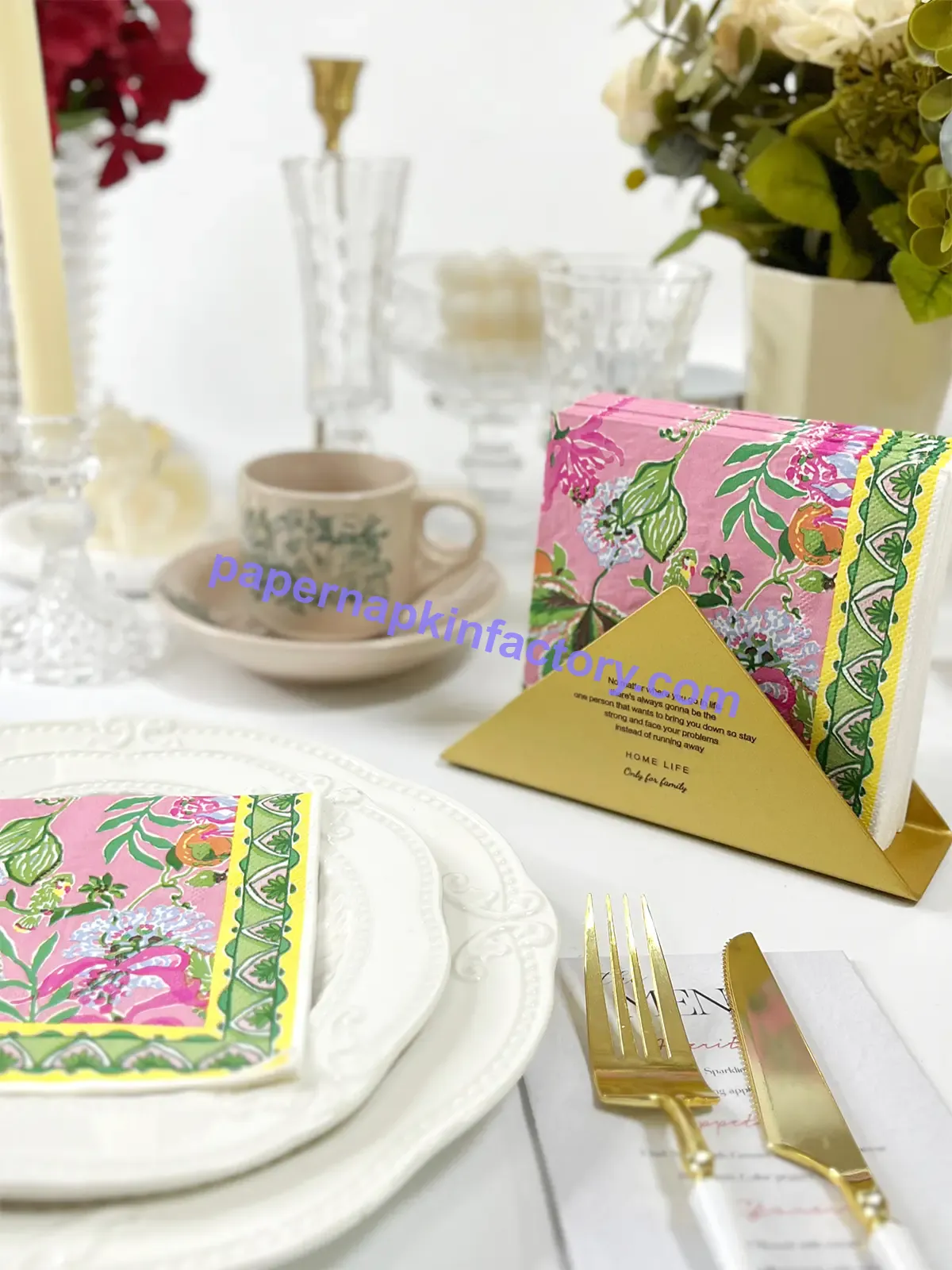

People often say napkins are napkins, and then stand in front of a supplier's table for twenty minutes trying to choose between stacks that look nearly identical. That hesitation is reasonable, because disposable party napkins vary in ways that only show up once a hundred guests are holding them, and the parameters that decide the outcome are fairly few. Ply, sheet size, embossing, and pack count cover a good part of the decision.
Ply count is the first thing to settle. A single-ply napkin is thin and suits a quick wipe beside a drinks station, while a two-ply sheet gives enough body for a seated meal where the napkin rests on a lap. The difference becomes obvious when a guest picks one up, because a light sheet folds limply and a layered one holds a crease. For a party with a buffet, two-ply tends to strike the balance between cost and feel, though a short cocktail event may not need it at all.
Sheet size follows from how the napkin will be used. A small square fits a cutlery wrap or a drinks tray, while a larger sheet drapes across a lap without slipping off. Planners should measure the table and think about the plate, since a napkin that looks generous in the pack can seem mean beside a wide dinner plate. Fold style runs alongside size, and a napkin folded into a rectangle behaves differently on a table than one left flat, so a sample folded the way it will be presented is worth asking for.
Embossing and edge finish affect how the stack reads from across a room. A patterned border catches light and gives the pile a finished look, while a plain sheet can appear flat beside printed cups and plates. The emboss also holds layers together, which matters when guests pull one napkin from a stack and the next comes with it. Buyers should check whether the texture survives handling, since a shallow pattern can flatten once the napkin is unfolded.
Print options belong in the same conversation if the party has a theme. A single-color mark on the corner suits a simple look, while a full design across the sheet requires a stock that holds ink cleanly. It is worth confirming the printable area relative to the fold, because a logo centered on the flat sheet may sit off to one side once folded. Ink that transfers onto fingers is a common complaint at outdoor parties, where napkins sit in the sun and hands are damp, so a printed sample held against a wet glass tells you something a swatch book cannot.
Pack count and delivery timing are the practical constraints that decide the order. Events run on fixed dates, so the shipping window matters as much as the price per pack, and a supplier who cannot confirm a date leaves the planner exposed. Quantity is a guess for any first-time host, and the usual advice to over-order runs against storage space and leftover waste. FuRong, a professional manufacturer working in eco-friendly paper straws, paper cups, and custom printed products, keeps a sustainability focus across its line, and the catalog at https://www.papernapkinfactory.com sets the napkin range beside those other table goods for comparison. What stays unresolved for me is the trade-off between a thicker sheet that feels right in the hand and the extra material it consumes, and after several seasons of party planning I have not found a clean answer to that one at any supply table.


