

Industrial Odour Neutraliser: How It Helps Manage Persistent Industrial Smells

Persistent industrial smells can become a major concern for manufacturing facilities, wastewater treatment plants and waste processing units. Odours generated from organic decomposition, chemical reactions and wastewater handling can affect workers and surrounding areas.
An industrial odour neutraliser is used as part of an odour management programme to help control unpleasant smells at their source or within the affected area. The correct formulation and application method depend on the type of odorous compounds and the operating environment.
What Is an Industrial Odour Neutraliser?
An industrial odour neutraliser is a specialised formulation designed to manage unpleasant odours. Depending on its chemistry, it may interact with odorous molecules, reduce their perception or help control specific compounds.
Unlike ordinary air fresheners that primarily introduce fragrance, industrial odour-neutralising products are selected for their intended application in industrial environments.
They may be used in wastewater treatment plants, food processing facilities, waste handling areas, sewage networks and other locations where persistent odour problems occur.
Common Sources of Industrial Odours
Understanding the source is important before selecting a neutralising product.
1. Hydrogen Sulphide
Hydrogen sulphide is commonly associated with anaerobic conditions in wastewater collection systems, sludge tanks and treatment plants. It produces a characteristic rotten-egg smell and can present serious health hazards at elevated concentrations.
2. Ammonia
Ammonia can be released during the handling and decomposition of nitrogen-containing organic waste. It has a sharp, irritating odour.
3. Organic Waste Decomposition
Food residues, fats, oils, grease and other biodegradable materials can decompose and release unpleasant odorous compounds.
4. Industrial Wastewater
Wastewater containing high organic loading may generate odours when it remains stagnant or experiences anaerobic conditions.
How Does an Industrial Odour Neutraliser Work?
The working mechanism depends on the product formulation.
Some neutralisers interact with selected odorous compounds through chemical reactions. Others help reduce odour perception through specific neutralising or encapsulating mechanisms.
Application methods may include:
-
Spray systems: Used to apply odour-control formulations around identified emission sources.
-
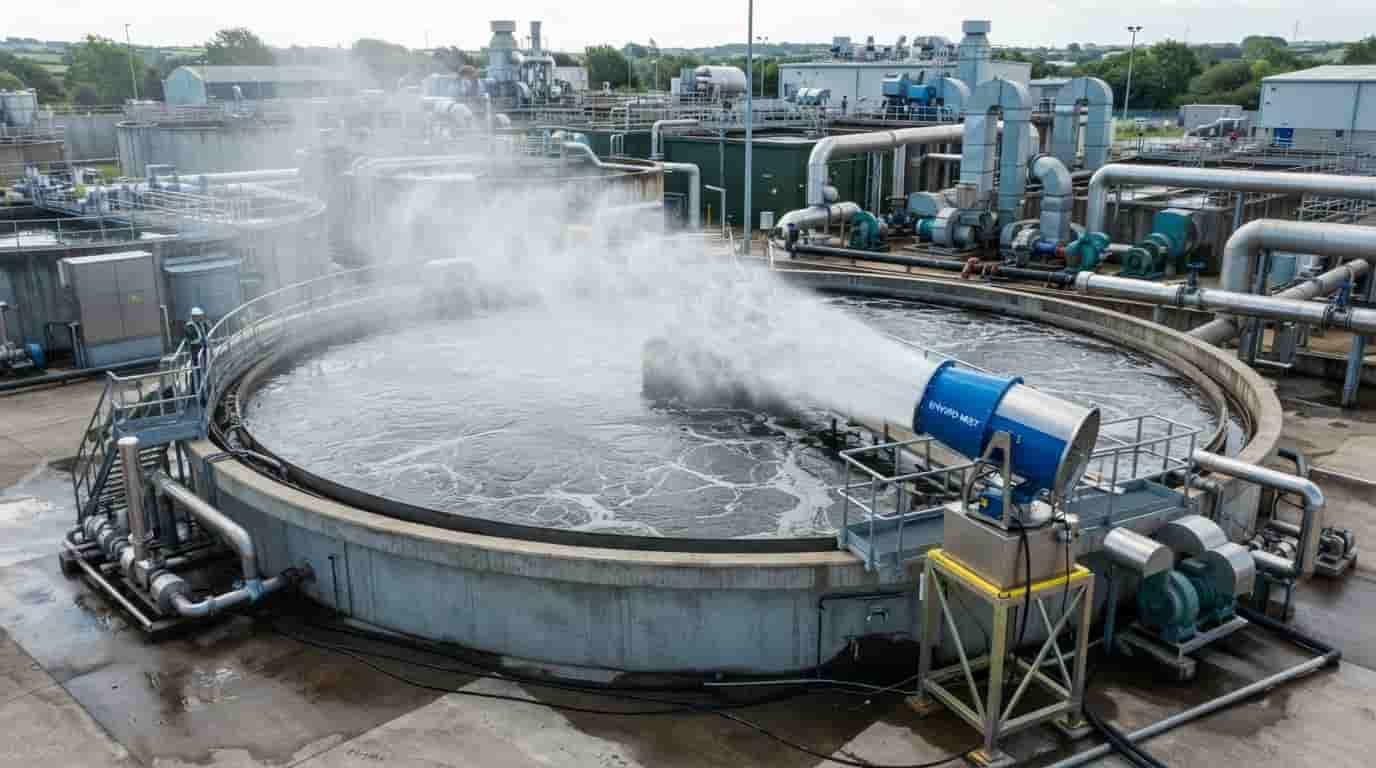
Fogging systems: Produce fine droplets that can contact odorous compounds in the surrounding air, depending on droplet size and application conditions.
-
Dosing systems: Introduce suitable formulations into wastewater or other process streams.
-
High-pressure application equipment: Helps distribute the formulation across selected areas of an industrial facility.
Correct dosage, coverage, contact time and product compatibility are important for achieving the intended result.
Where Are Industrial Odour Neutralisers Used?
Industrial odour-neutralising products may be suitable for several applications:
-
ETP and STP facilities: Odour management around equalisation tanks, sludge handling areas and other emission sources.
-
Food processing plants: Managing smells associated with organic residues and wastewater.
-
Solid waste handling: Controlling unpleasant smells around collection and processing areas.
-
Poultry and livestock facilities: Managing odours associated with organic waste and manure.
-
Industrial manufacturing: Supporting odour management in areas affected by process-related emissions.
The formulation must be selected according to the actual odour source and site conditions.
How to Select the Right Odour Neutraliser
Before choosing a product, assess the odour source, affected area, type of emission and required application method.
Facilities should also consider the formulation's compatibility with the treatment process, safety requirements, dosage instructions and monitoring arrangements.
An odour neutraliser should not replace necessary ventilation, gas containment, wastewater process correction or engineering controls. For hazardous gases such as hydrogen sulphide, appropriate gas detection and worker protection measures remain essential.
Odour Management Solutions from Amalgam Biotech
Amalgam Biotech offers OdoServe odour control solutions for industrial and wastewater treatment applications.
Depending on site requirements, an odour management programme may include specialised formulations and application equipment such as high-pressure fogging systems to target identified emission points.
Effective odour management starts with identifying the source and selecting the right treatment approach. For facilities dealing with persistent industrial smells, an appropriate industrial odour neutraliser can form part of a broader odour control strategy.


