

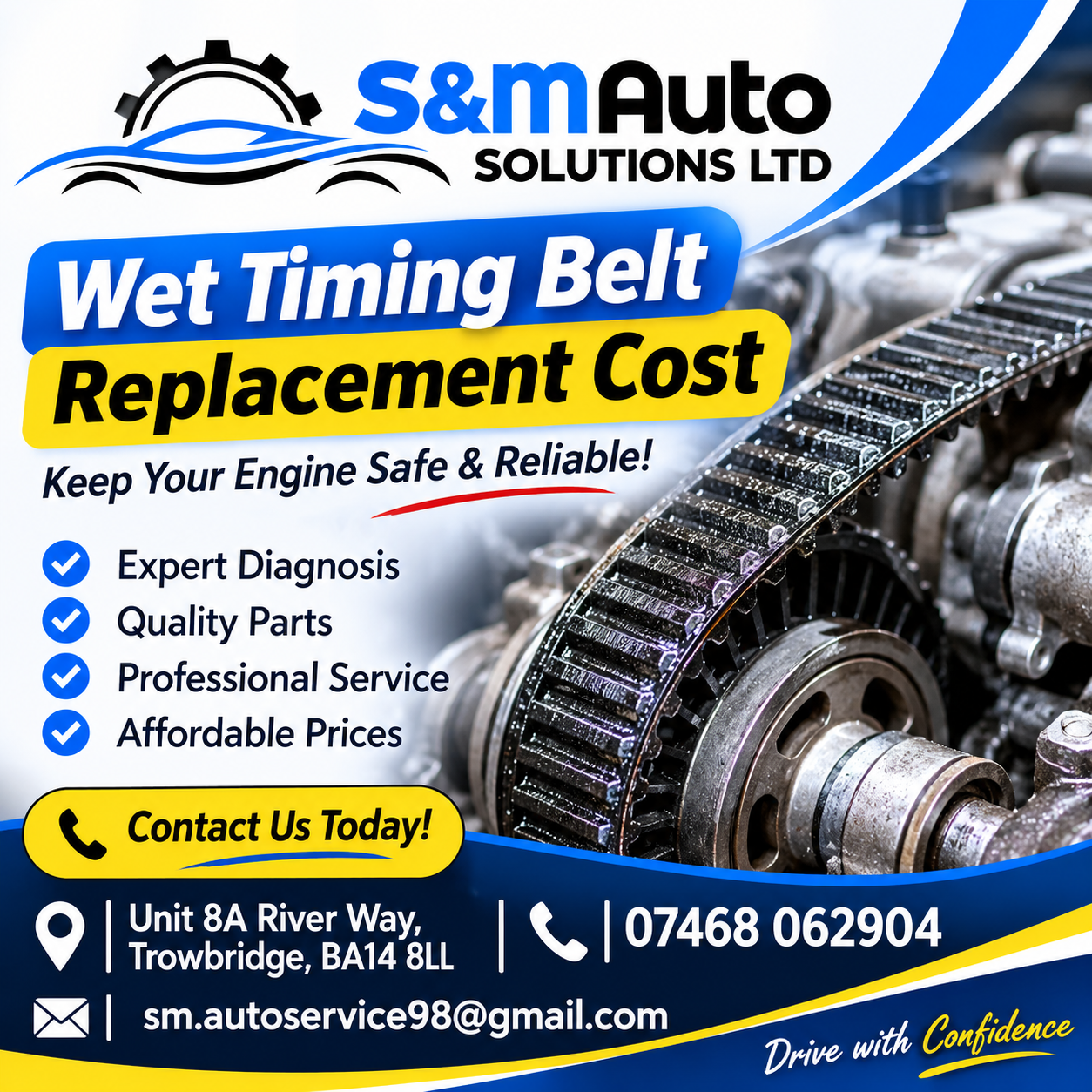
Wet Timing Belt Problems and Replacement Costs: Complete UK Guide 2026–2027

Modern vehicle engines are designed to deliver better fuel efficiency, improved performance and reduced emissions. However, achieving these goals often involves more advanced engine components that require careful maintenance. One example is the wet timing belt, a component used in several modern petrol engines to control the timing between the crankshaft and camshaft.
Unlike a traditional dry timing belt, a wet timing belt operates inside the engine and remains in contact with engine oil. Although this design can reduce friction and engine noise, it also introduces specific maintenance challenges. Oil quality, servicing intervals and driving conditions can all influence the belt’s lifespan.
Understanding the wet timing belt replacement cost is becoming increasingly important for UK motorists, particularly owners of vehicles fitted with engines that use belt-in-oil technology. As automotive maintenance develops between 2026 and 2027, drivers need reliable information about warning signs, replacement procedures and preventative maintenance.
This guide explores how wet timing belts work, what affects replacement expenses and how vehicle owners can make informed maintenance decisions.
1. What Is a Wet Timing Belt and Why Is It Important?
A wet timing belt is an engine timing component designed to operate while immersed in engine oil. Its primary function is to synchronise the rotation of the crankshaft and camshaft, ensuring that engine valves open and close at the correct moments during the combustion cycle.
This synchronisation is essential for smooth engine operation. If the timing belt becomes damaged or loses its ability to maintain accurate timing, the engine may experience serious mechanical problems.
Wet timing belts are commonly associated with certain modern petrol engines, including some Ford EcoBoost applications and other manufacturers’ belt-in-oil engine designs.
Key characteristics of wet timing belts include:
- They operate inside the engine rather than externally.
- They require engine oil that meets the manufacturer’s specifications.
- They are designed to reduce friction and mechanical noise.
- Their condition can be affected by oil contamination and incorrect servicing.
- Deterioration can introduce belt particles into the lubrication system.
One important challenge is that wet timing belt deterioration is not always visible during a routine external inspection. This makes following the correct maintenance schedule particularly important.
2. Wet Timing Belt Replacement Cost in the UK: What Influences the Price?
The cost of replacing a wet timing belt varies depending on the vehicle, engine design, labour requirements and additional components involved.
Unlike some conventional timing belt replacements, wet timing belt work can require more extensive procedures because the belt operates inside the engine. Mechanics may need to remove several components to access the timing system.
The overall wet timing belt replacement cost can depend on several factors.
Vehicle Make and Engine Design
Different manufacturers use different engine layouts and timing systems. Some engines are relatively straightforward to work on, while others require additional dismantling and specialist tools.
Vehicle age, engine capacity and accessibility can also influence labour time.

Labour Requirements
Labour is often a significant part of the overall replacement expense. The technician may need to:
- Remove engine covers and associated components.
- Drain the engine oil.
- Access the timing belt assembly.
- Remove the existing belt.
- Inspect related engine components.
- Install the replacement belt.
- Refill the engine with the correct oil.
- Check engine timing and operation.
The exact process depends on the manufacturer’s repair procedures.
Replacement Parts and Additional Components
The final invoice may include more than the belt itself. Depending on the engine’s condition and manufacturer recommendations, additional work may involve:
- Timing belt replacement components.
- Oil filter replacement.
- Manufacturer-approved engine oil.
- Seals and gaskets.
- Oil pump inspection or servicing.
- Cleaning of the lubrication system where necessary.
Obtaining an itemised quotation helps drivers understand which parts and labour operations are included.
3. Common Warning Signs and Challenges When Replacing a Wet Timing Belt
Recognising potential timing belt problems early can help prevent expensive engine damage.
Although some wet timing belts deteriorate without obvious symptoms, certain warning signs should encourage drivers to arrange a professional inspection.
Common Warning Signs
1. Engine warning lights
Dashboard warning lights may appear when engine timing or related systems are not operating correctly. Diagnostic testing can help identify possible faults.
2. Unusual engine noises
Rattling, knocking or other unusual sounds may indicate an engine-related problem. These symptoms should not automatically be attributed to the timing belt, as several components can produce similar noises.
3. Oil pressure problems
Deteriorating belt material can sometimes contaminate the lubrication system. Small belt particles may affect oil circulation or block the oil pickup strainer.
4. Poor engine performance
Incorrect engine timing can contribute to rough running, reduced power or starting difficulties.
5. Oil contamination
Changes in oil condition or visible debris may indicate a lubrication or component deterioration issue requiring investigation.

Why Professional Diagnosis Matters
A warning light or unusual engine noise does not necessarily confirm that a wet timing belt needs replacing. Accurate diagnosis requires consideration of the vehicle’s service history, engine specifications and diagnostic information.
When replacing wet timing belt components, technicians should follow the manufacturer’s procedures rather than relying on a general replacement method.
This is particularly important because using incorrect oil or unsuitable replacement components may contribute to further problems.
4. Automotive Maintenance Trends for 2026–2027
The automotive maintenance industry continues to change as manufacturers introduce more efficient engines, advanced diagnostic systems and new servicing technologies.
Between 2026 and 2027, several developments are particularly relevant to wet timing belt maintenance.
Preventative Maintenance Is Becoming More Important
Vehicle owners are increasingly recognising that preventative maintenance can help reduce the risk of unexpected mechanical failures.
Instead of waiting for visible symptoms, drivers are encouraged to follow manufacturer service schedules and investigate potential problems early.
Greater Awareness of Engine Oil Specifications
Wet timing belts depend heavily on compatible engine oil. Using an incorrect specification can accelerate deterioration in certain engines.
Drivers should check their vehicle handbook or manufacturer recommendations before selecting replacement oil.
Improved Diagnostic Technology
Modern garages increasingly use electronic diagnostic equipment to identify engine-related faults. Diagnostic tools can help technicians investigate warning lights, engine performance issues and timing-related problems.
However, electronic diagnostics should be combined with physical inspections and manufacturer-specific procedures.

More Detailed Maintenance Records
Digital service records and detailed maintenance histories are becoming increasingly useful when assessing vehicle condition.
Keeping records of oil changes, previous repairs and timing belt inspections can help technicians make better maintenance recommendations.
These developments highlight the importance of informed vehicle ownership rather than relying solely on mileage or general maintenance advice.
5. How to Maintain a Wet Timing Belt and Avoid Unnecessary Repairs
Although wet timing belts eventually require replacement, good maintenance practices can help protect the engine and reduce avoidable risks.
The following recommendations are useful for UK vehicle owners.
Follow manufacturer servicing intervals
Always check the recommended inspection and replacement schedule for the specific engine. Different vehicles can have different requirements.
Use the correct engine oil
Select oil that meets the exact manufacturer specification. Viscosity alone is not enough to establish compatibility.
Avoid delaying oil changes
Old or degraded engine oil can negatively affect lubrication and may contribute to premature deterioration in some belt-in-oil systems.
Investigate unusual symptoms
Do not ignore warning lights, abnormal engine noises or oil pressure warnings. Arrange an inspection as soon as possible.
Request a complete inspection
When booking a timing belt replacement, ask the technician to assess the lubrication system and related components where appropriate.
Keep service documentation
Maintain records of oil changes, repairs and inspections. This information helps establish an accurate maintenance history.
For motorists researching local servicing options, S&M Auto Service provides information about wet timing belt replacement and associated maintenance considerations through its website:

https://www.smautoservice.co.uk/wet-timing-belt-replacement-cost-trowbridge/
Its information is relevant to drivers looking into wet timing belt replacement Trowbridge and understanding the maintenance requirements of modern vehicles.
Conclusion
Wet timing belts are an important part of several modern engine designs, but their operation inside the engine oil system creates specific maintenance requirements. Oil quality, servicing history, engine design and driving conditions can all influence their durability.
Understanding replacement procedures and the factors affecting repair expenses allows motorists to make more informed decisions. The wet timing belt replacement cost should always be assessed according to the vehicle’s manufacturer specifications, the required labour and the condition of related engine components.
As automotive technology continues developing throughout 2026 and 2027, preventative maintenance, correct oil selection and professional inspections will remain essential for protecting engine performance.
For UK drivers, the most practical approach is simple: follow the recommended service schedule, investigate warning signs promptly and seek an accurate assessment before minor issues develop into major mechanical repairs.
Contact Us : https://www.smautoservice.co.uk/contact-us/
About Us : https://www.smautoservice.co.uk/about-us/
Website Link : https://www.smautoservice.co.uk/
INN-News.Net : https://www.inn-news.net/
Social Media : (Read More)
- https://xuzpost.com/https-www-smautoservice-the-ultimate-guide-to-mini-cooper-timing-chain-replacement/
- https://pencraftednews.com/https-www-smautoservice-understanding-mini-cooper-s-timing-chain-maintenance-lifespan/
- http://xuzpost.com/https-www-smautoservice-navigating-mini-cooper-s-timing-chain-replacement/
- https://www.smautoservice.co.uk/how-much-do-auto-service-advisors-make/
- https://www.smautoservice.co.uk/what-are-auto-detailing-services/
- https://www.smautoservice.co.uk/how-to-service-auto-air-conditioning/


