


The Essential Guide to Working With a Sheet Metal Fabricator
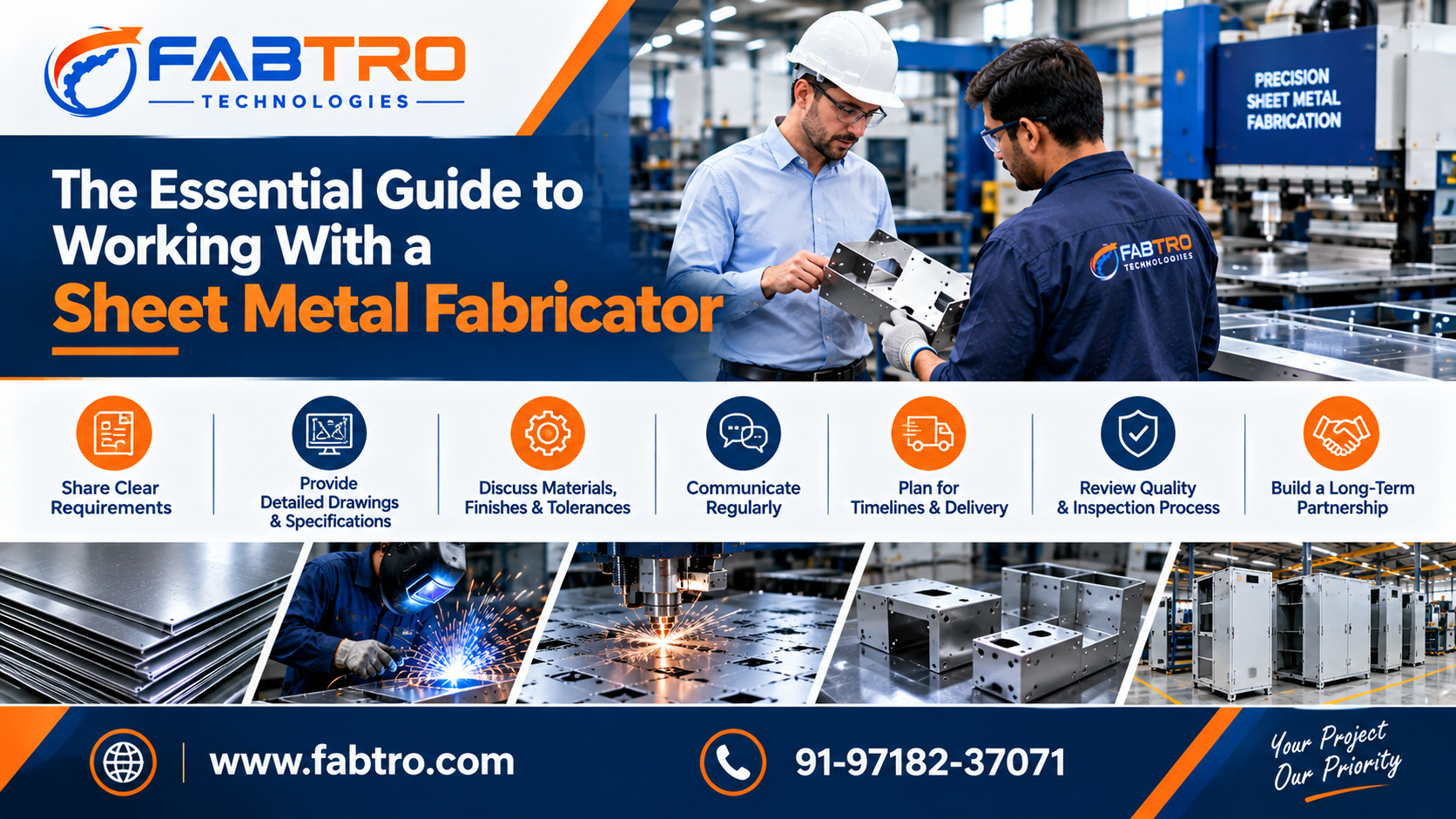
Working with a Sheet Metal Fabricator isn't simply about sending a drawing and waiting for finished parts. For procurement teams, the real work starts with specification clarity, sampling approval, purchase order accuracy, QC coordination, and realistic delivery planning.
A capable Sheet Metal Fabricator needs clear information from the buyer before production moves forward. Dimensions, quantities, material requirements, finishing expectations, tolerances where applicable, packaging instructions, and delivery requirements should be settled early. Unclear inputs create expensive problems later.
Close Technical Specifications Before Production Starts
Specification verification should happen before a production batch is released. Buyers should confirm the latest drawing revision and make sure old drawings aren't still circulating between procurement, production, or QC teams.
Most buyers understand that specification mismatch can cause rejection, yet drawing revisions are sometimes handled casually during sampling.
Businesses sourcing sheet metal fabrication in india should treat sample approval as a technical checkpoint rather than a formality.
Most shipment delays don't begin at the dispatch stage. They often begin because dimensions, revisions, or finishing requirements remain unclear during sampling and need correction later.
How a Sheet Metal Fabricator Should Manage Your Order
A Sheet Metal Fabricator should have a clear route from approved requirement to production, inspection, packing, and dispatch.
The buyer should understand how samples are approved, how the production batch is released, how QC inspection relates to the approved requirement, and how changes are communicated once an order is underway.
That's where purchase order accuracy matters. The PO quantity, drawing revision, agreed delivery requirement, and commercial understanding should all match before production starts.
When dealing with a sheet metal products manufacturer, procurement teams should avoid relying on verbal changes alone. Revised requirements need to reach the people actually planning and checking the order.
Ask Questions That Reveal How the Supplier Works
Price matters, but supplier evaluation needs to go further. Ask who confirms technical specifications, how rejected samples are handled, how complaints are recorded, and what happens if parts don't match the approved requirement.
Nobody tells you much about complaint handling when everything is going smoothly. A supplier who can't explain what happens after a complaint is raised may not have a clear process for resolving one.
Buyers comparing Sheet Metal Fabrication Manufacturers in India should also verify certificate validity rather than assuming a certification statement settles the entire supplier evaluation.
Fabtro Technologies is provided as ISO-certified. Buyers should still combine certification review with order-specific checks such as sampling approval, specification control, QC coordination, and purchase order accuracy.
Why Better Coordination Helps Procurement Teams
Good coordination reduces the number of assumptions moving between departments. Procurement knows what was ordered, production knows which revision to follow, and QC has a defined reference for inspection.
Working with Sheet Metal Fabrication Suppliers in India still doesn't remove every operational risk. Drawing changes, material availability, rejected samples, or production scheduling can affect lead time.
We've seen procurement schedules become unrealistic because an estimated production timeline is treated as a guaranteed date regardless of later changes.
The practical benefit of a controlled process isn't perfection. It's earlier visibility when something needs correction.
Plan MOQ, Packaging, and Freight Before Dispatch
Availability isn't only about whether a supplier can accept an order. Buyers should also understand MOQ, production scheduling, packing time, and the point at which freight planning begins.
Requirements placed through Sheet Metal Fabrication Wholesalers should be assessed against actual consumption and inventory needs. A larger MOQ may work for regular demand but can create unnecessary stock for slower-moving requirements.
Before dispatch, confirm finished quantity, packaging instructions, delivery address, freight responsibility, and any pending inspection requirement.
Packaging problems rarely become obvious inside the factory. They usually appear after stacking, loading, handling, or transportation. Transit damage can turn a technically acceptable production batch into a rejected delivery.
What Manufacturers Need From Buyers
Supplier performance also depends on buyer discipline. Slow sample approval, repeated drawing changes, unclear quantities, or incomplete POs can delay production even when shop-floor work is properly planned.
Companies buying through Sheet Metal Fabrication Wholesalers in India should confirm MOQ, delivery schedule, packing requirements, and required quantities before releasing the final order.
One mistake is approving a sample and then changing the specification without formally updating the order documentation. That creates a real risk of production following an outdated requirement.
There is an honest limitation here: urgent changes can't always be absorbed without affecting lead time. Sometimes delaying production briefly is less costly than producing a full batch against uncertain instructions.
What to Check Before Releasing the Purchase Order
Before approving the order, verify:
-
Latest drawing and revision status
-
Confirmed specifications
-
Sampling approval
-
Final order quantity and MOQ
-
Expected lead time
-
QC inspection requirements
-
Packaging instructions
-
Delivery location
-
Freight responsibility
-
Complaint-handling contact
Even experienced buyers sometimes focus heavily on unit price while giving less attention to dispatch and packaging details. That's risky because a low quoted price offers little advantage if the goods arrive late or damaged.
Final Thoughts
Working successfully with a Sheet Metal Fabricator depends on controlled information as much as fabrication itself. Buyers should close technical requirements early, document sampling decisions, verify purchase orders, understand QC checkpoints, and discuss packaging and dispatch before the final stage.
A good purchasing process won't eliminate every delay or production issue. It does make problems easier to identify, discuss, and resolve before they become expensive.
FAQs
1. What information should I give a Sheet Metal Fabricator before ordering?
Provide the latest drawing, dimensions, quantity, material requirement, finishing expectations, tolerances where applicable, packaging instructions, delivery details, and any agreed sampling requirement.
2. Why is sample approval important before bulk production?
It gives both sides a reference before the main batch begins. Sampling can add time initially, but correcting an approved sample is usually easier than correcting an entire production batch.
3. Should ISO certification be the main supplier selection criterion?
No. Certificate validity should be verified, but buyers should also assess specification control, sampling communication, QC coordination, PO accuracy, packaging, and complaint handling.
4. Is the lowest MOQ always better for procurement?
Not necessarily. A low MOQ can reduce inventory, but pricing or production efficiency may differ. The right quantity depends on consumption, storage space, purchasing frequency, and delivery planning.
5. What should buyers confirm before dispatch?
Confirm quantity, inspection status, packaging, delivery address, freight responsibility, and whether any technical or commercial point remains open before loading begins.

 Arabic
 French
 Spanish
 Portuguese
 Deutsch
 Turkish
 Dutch
Dutch
 Italiano
 Russian
 Romaian
 Portuguese (Brazil)
 Greek
Greek