


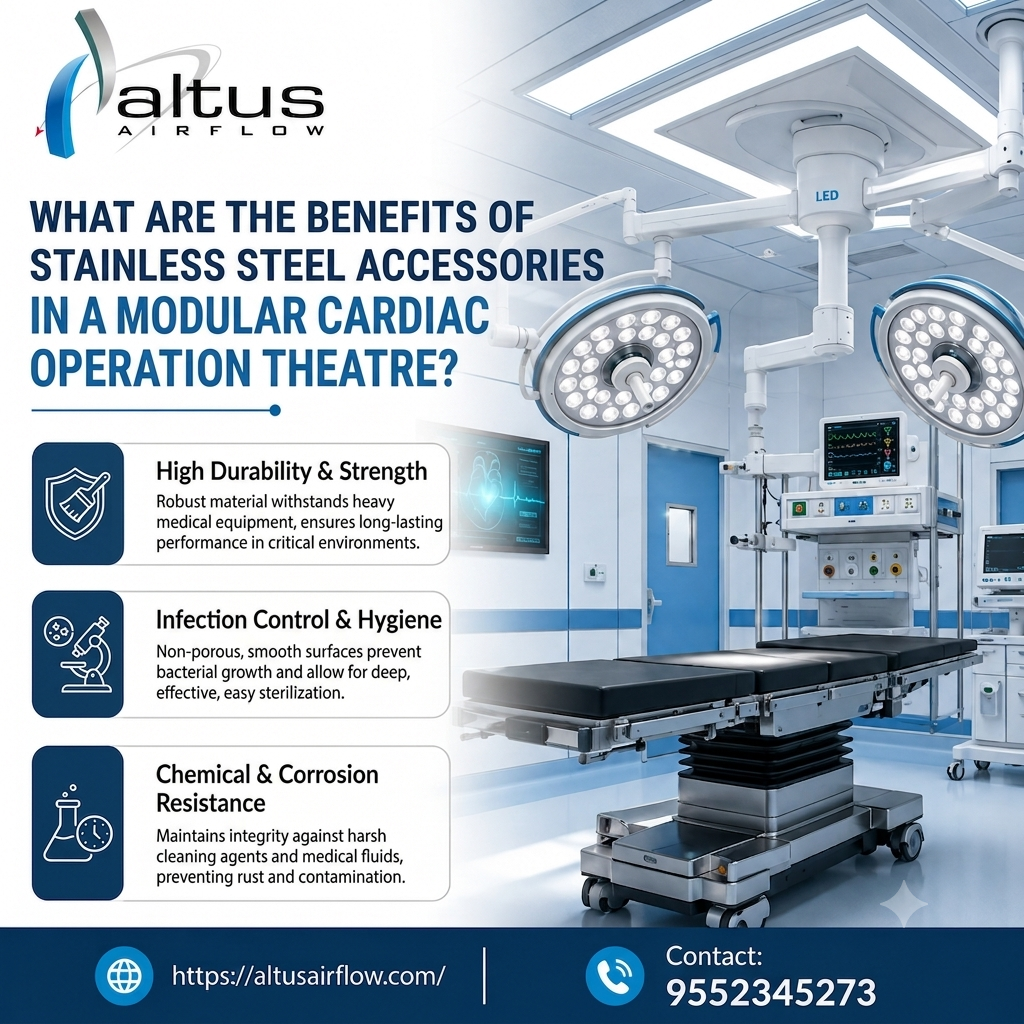
What Are the Benefits of Stainless Steel Accessories in a Modular Cardiac Operation Theatre?
Introduction
Altus Airflow focuses on developing controlled healthcare environments where hygiene, durability, workflow, and technical coordination are important considerations. In cardiac surgery areas, every component of the operating environment needs to support efficient clinical procedures and routine cleaning. A Modular Cardiac Operation Theatre may incorporate stainless steel accessories such as surgical cabinets, instrument tables, sinks, storage units, shelves, trolleys, and other fixtures. These accessories are selected because they can provide a combination of durability, cleanability, corrosion resistance, and compatibility with demanding healthcare environments.
Stainless steel accessories can also contribute to organized workflows by providing dedicated locations for instruments, supplies, equipment, and cleaning activities. Their smooth surfaces are generally easier to clean and maintain than many porous or difficult-to-clean materials. When properly designed and installed, stainless steel components can integrate with modular wall systems, flooring, HVAC arrangements, electrical services, and medical equipment layouts. Their dimensions, placement, joints, edges, and mounting arrangements should be considered during the planning stage to avoid unnecessary gaps or difficult-to-access areas. The final selection should be based on the operating theatre's functional requirements, applicable standards, cleaning protocols, and the overall project specification.
1. Improved Durability
Stainless steel accessories are known for their strength and durability. Operating theatres experience frequent movement of equipment, regular cleaning, and repeated use of storage and work surfaces.
Well-selected stainless steel fixtures can withstand these conditions for extended periods when properly maintained. Their durability makes them suitable for demanding areas where accessories are used repeatedly throughout the day.
2. Easy Cleaning and Maintenance
Cleaning is a critical part of operating theatre maintenance. Stainless steel generally provides smooth surfaces that can be cleaned using appropriate healthcare-approved cleaning procedures.
Accessories such as worktables, cabinets, sinks, shelves, and trolleys can therefore be designed to support routine cleaning. Smooth and accessible surfaces can also make it easier for housekeeping teams to inspect and maintain the surrounding area.
3. Corrosion Resistance
Healthcare environments involve frequent exposure to cleaning agents, moisture, and disinfecting procedures. Suitable grades of stainless steel offer good resistance to corrosion when selected and maintained correctly.
This characteristic can help accessories retain their functional condition over time. However, the correct stainless steel grade and appropriate cleaning chemicals should always be selected according to the project requirements and manufacturer's recommendations.
4. Hygienic Surface Characteristics
Stainless steel provides a non-porous surface that does not readily absorb liquids. This characteristic makes it useful for surfaces that need frequent cleaning.
In a Modular Cardiac Operation Theatre, stainless steel accessories can include work surfaces, sinks, cabinets, and storage fixtures. Their smooth construction can support cleaning practices and reduce the presence of hard-to-clean surface irregularities when appropriately designed.
5. Reduced Maintenance Requirements
Durable accessories can help reduce the frequency of repairs and replacements associated with everyday wear. Stainless steel fixtures can maintain their structural performance when they are properly installed and cared for.
Regular inspection is still necessary. Hinges, handles, joints, fasteners, wheels, and other moving or connecting components should be checked periodically to ensure that the complete accessory remains functional.
6. Better Resistance to Frequent Cleaning
Operating theatre accessories are exposed to repeated cleaning and disinfection. Materials used in these areas therefore need to tolerate appropriate cleaning procedures.
Stainless steel is commonly selected for healthcare accessories because it can withstand routine cleaning when the correct grade, surface finish, and cleaning methods are used. Avoiding unsuitable chemicals or abrasive methods is important for preserving the surface.
7. Support for Organized Workflow
The placement of accessories has a direct effect on workflow. Stainless steel cabinets, shelves, tables, and trolleys can provide designated spaces for instruments, consumables, equipment, and other materials.
Organized storage can help staff locate frequently used items efficiently. Accessory placement should be planned around surgical activities, staff movement, equipment positioning, and required clearances.
8. Compatibility With Modular Interiors
Stainless steel accessories can be integrated into modular operating theatre interiors. Cabinets and storage systems can be positioned alongside modular wall panels, while sinks and work surfaces can be coordinated with plumbing and drainage requirements.
During design, the dimensions and mounting arrangements of each accessory should be coordinated with wall construction and service locations. This reduces the need for modifications after installation.
9. Strong Work Surfaces
Instrument preparation and other support activities require stable work surfaces. Stainless steel tables and counters can provide a strong platform for suitable clinical tasks.
Their rigid construction can also help maintain stability when equipment or supplies are placed on the surface. The exact design should depend on the intended application and load requirements.
10. Suitable for Stainless Steel Cabinets
Storage cabinets can be an important part of operating theatre infrastructure. Stainless steel cabinets can provide enclosed storage while supporting cleaning and maintenance routines.
Cabinet interiors, handles, doors, hinges, and corners should be designed for accessibility. Properly planned storage can also reduce clutter around the operating area and support a more organized workflow.
11. Stainless Steel Sinks and Utility Areas
Sinks are frequently used in clinical support areas and require materials that can tolerate water exposure and regular cleaning. Stainless steel sinks can be integrated into suitable utility and washing areas.
Drainage, plumbing connections, splash protection, and surrounding surfaces should be coordinated during installation. Proper detailing can reduce difficult-to-clean gaps around the sink.
12. Mobile Trolleys and Equipment Support
Stainless steel trolleys can provide mobility for instruments, supplies, and selected equipment. Their movement should be considered when planning operating theatre circulation.
Trolleys with suitable wheels, handles, shelves, and locking mechanisms can be selected according to their intended purpose. Their dimensions should also be compatible with doorways, corridors, and working clearances.
13. Smooth and Accessible Design
The design of stainless steel accessories should minimize unnecessary crevices, sharp edges, exposed fasteners, and inaccessible spaces. These details can influence how easily staff can clean and inspect the accessories.
Rounded or appropriately finished edges can also improve usability. Design decisions should balance hygiene requirements, safety, functionality, and the intended clinical application.
14. Long-Term Value
Although stainless steel accessories can involve a higher initial investment than some alternative materials, their durability and maintenance characteristics can contribute to long-term value.
The overall lifecycle cost should consider purchase price, installation, cleaning, maintenance, repairs, replacement frequency, and expected service life. Selecting appropriate materials at the beginning can help support predictable maintenance requirements.
15. Resistance to Everyday Wear
Operating theatres are active environments. Doors open and close repeatedly, trolleys move across floors, and work surfaces are frequently used.
Stainless steel accessories can provide resistance to many forms of everyday wear when properly specified. Surface finish and material thickness should be selected according to the intended application rather than using the same specification for every accessory.
16. Better Integration With Equipment
Modern cardiac operating theatres contain a range of medical and support equipment. Stainless steel accessories can be designed around the dimensions and operational requirements of this equipment.
For example, equipment tables can incorporate appropriate working heights and clearances, while storage units can be positioned close to relevant clinical work areas. Coordination at the design stage helps prevent interference with equipment movement.
17. Support for Clean and Organized Storage
Storage areas should support efficient organization while avoiding unnecessary clutter. Stainless steel shelves and cabinets can provide dedicated spaces for frequently required supplies.
Adjustable shelving can also offer flexibility when storage requirements change. The internal configuration should be planned according to the types and quantities of materials that the facility expects to store.
18. Integration With Cleaning Protocols
Material selection should always be connected to the facility's cleaning and disinfection procedures. Stainless steel surfaces can be compatible with many routine healthcare cleaning practices when appropriate products are used.
Cleaning protocols should specify suitable agents, concentrations, contact times, and procedures. Following manufacturer recommendations helps protect the stainless steel finish and extend its service life.
19. Coordination With HVAC and Environmental Systems
Accessories should not obstruct airflow outlets, return air paths, monitoring devices, or other environmental control components. Their position should be reviewed during the design stage.
In a Modular Cardiac Operation Theatre, coordination between furniture, equipment, HVAC, lighting, medical gases, and electrical services is important for maintaining an efficient clinical layout. Proper planning helps avoid conflicts between accessories and technical systems.
20. Improved Space Utilization
Custom stainless steel accessories can be designed according to available room dimensions. This can help make efficient use of walls, corners, storage areas, and support zones.
Customized cabinets, counters, shelves, and workstations can be designed around specific workflow requirements. However, adequate access and maintenance clearances should always be maintained.
21. Easy Inspection and Replacement
Stainless steel accessories should be designed so that components requiring periodic inspection can be accessed without unnecessary disruption.
Replaceable handles, hinges, wheels, fittings, and other hardware can make maintenance more practical. Proper documentation of accessory specifications can also simplify future replacement.
22. Quality of Fabrication Matters
The benefits of stainless steel depend partly on fabrication quality. Poorly finished welds, uneven joints, exposed gaps, or unsuitable fasteners can create maintenance challenges.
Manufacturing quality should therefore be evaluated along with material grade, thickness, surface finish, edge treatment, and installation method. Factory inspection and site inspection can help verify that the accessories meet the approved specifications.
23. Proper Installation Is Essential
Even high-quality stainless steel accessories require correct installation. Cabinets, sinks, tables, shelves, and other fixtures must be securely mounted and properly aligned.
Installation should account for wall structure, flooring, plumbing, electrical services, equipment clearances, and cleaning access. Proper installation supports both safety and long-term performance.
24. Contribution to a Professional Clinical Environment
A coordinated set of stainless steel accessories can provide a clean, consistent, and functional appearance. Standardized finishes and properly aligned fixtures can also make the operating environment easier to organize.
While appearance is not the primary consideration, a well-planned environment can support clear organization and efficient use of clinical spaces.
25. Role of Project Planning and Specification
The selection of stainless steel accessories should be included in the overall operating theatre planning process. The project team should define the required accessories, dimensions, material grades, finishes, mounting details, utility connections, and maintenance requirements.
For a Modular Cardiac Operation Theatre, early coordination between clinical users, architects, engineers, equipment suppliers, and modular construction teams helps ensure that accessories fit the overall design rather than being added as an afterthought.
Conclusion
Stainless steel accessories can provide several practical benefits in a cardiac operating environment, including durability, cleanability, corrosion resistance, organized storage, and compatibility with frequent maintenance. Their performance depends on appropriate material selection, fabrication quality, installation, and cleaning practices. Altus Airflow can help coordinate the integration of accessories with modular construction, HVAC, electrical systems, utilities, and clinical workflow requirements.
A well-planned Altus Airflow project can incorporate stainless steel cabinets, sinks, tables, shelves, trolleys, and other accessories according to the facility's functional requirements. The final specification should consider the intended use, applicable requirements, material grade, surface finish, dimensions, and maintenance procedures to support reliable long-term operation.
Frequently Asked Questions
1. What are the benefits of stainless steel accessories in a Modular Cardiac Operation Theatre?
Stainless steel accessories in a Modular Cardiac Operation Theatre offer durability, easy cleaning, corrosion resistance, hygienic surface characteristics, and suitability for frequent use.
2. Are stainless steel accessories easy to clean?
Yes. Their smooth, non-porous surfaces can generally be cleaned using appropriate healthcare-approved cleaning procedures.
3. Can stainless steel accessories resist corrosion?
Suitable stainless steel grades provide good corrosion resistance, particularly when properly maintained and cleaned with compatible products.
4. What stainless steel accessories are commonly used?
Common options include cabinets, sinks, worktables, shelves, instrument tables, trolleys, counters, and storage units.
5. Can stainless steel furniture be customized?
Yes. Stainless steel cabinets, counters, tables, and storage systems can often be customized according to room dimensions and workflow requirements.
Read Our Previous Blog ---------------> What project management services are provided by a Modular IVF Lab Engineering Company?

 Arabic
 French
 Spanish
 Portuguese
 Deutsch
 Turkish
 Dutch
Dutch
 Italiano
 Russian
 Romaian
 Portuguese (Brazil)
 Greek
Greek