


Affordable Logistics Services in India: How Businesses Can Reduce Costs Without Creating Delivery Problems
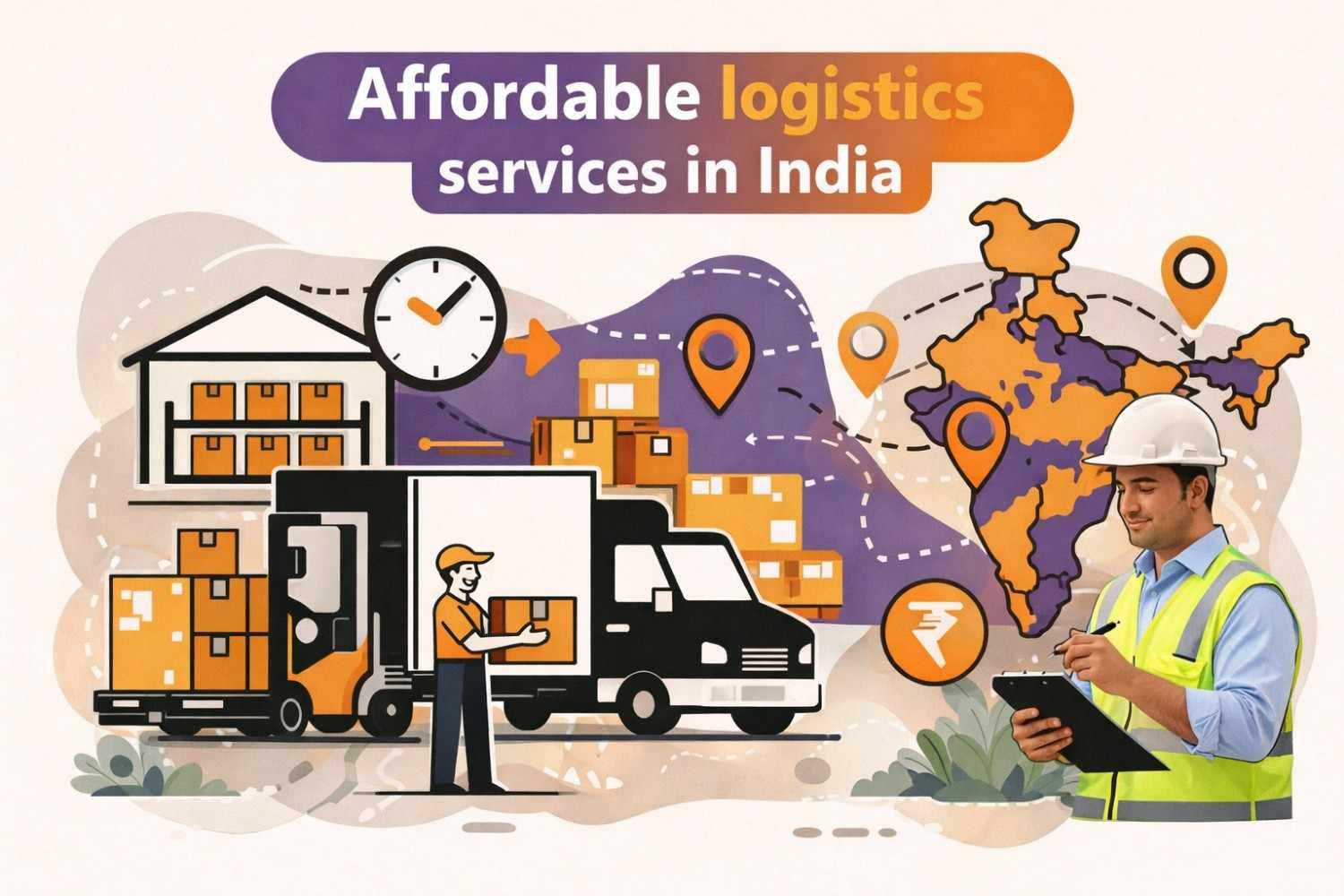
For most logistics businesses, cutting transportation costs sounds straightforward until someone has to deal with the consequences. A cheaper route may take longer. A lower freight quote may come with weaker tracking. A transport provider may offer an attractive rate for one lane but become expensive when volumes, delivery locations, or return shipments change.
This is why affordable logistics services in India should not be understood simply as the lowest transportation price. For logistics teams, affordability is about controlling the total cost of moving goods while still meeting the delivery requirements of customers and business partners.
In reality, this is where most businesses struggle. They compare quotations line by line, choose the lower number, and only later discover that delays, reattempts, poor coordination, or inconsistent service have created a much larger operational cost.
What Affordable Logistics Services in India Really Mean for Businesses
A logistics cost rarely comes from transportation alone. There are several smaller expenses sitting behind a shipment: pickup coordination, loading, warehousing, documentation, route planning, delivery attempts, handling, returns, and sometimes waiting time.
A business sending 500 shipments a month may not notice one failed delivery. But if failed attempts, address issues, delayed pickups, and inefficient routing happen repeatedly, the accumulated cost becomes significant.
This is why an affordable logistics model needs to look at the shipment cycle as a whole. A transporter charging slightly more per shipment may actually be cheaper if the service produces fewer exceptions and requires less manual intervention from the company's operations team.
Consider a distributor supplying retailers across multiple areas. Sending every consignment through the same transport model may appear convenient, but the economics can be very different from one destination to another. Full truckload movement might make sense on a high-volume lane, while smaller consignments may need a different arrangement. Trying to force both into one model can quietly increase logistics expenditure.
The practical question is not, "Who has the lowest rate?" It is, "What does this shipment actually cost us from pickup to successful delivery?"
Why the Cheapest Logistics Quote Can Become an Expensive Decision
Price comparison is useful, but it becomes misleading when businesses compare only the freight charge.
Suppose two logistics providers quote different rates for the same movement. One appears cheaper. But after a few weeks, the business notices that pickups are less predictable, delivery updates are inconsistent, and operations staff spend additional time following up on shipments.
Nothing dramatic has happened. There is no single large loss to point at. Yet the internal cost of managing the cheaper service has increased.
Honestly speaking, this is one of the least visible logistics expenses. People often calculate freight but forget the cost of people spending hours chasing shipment updates, resolving delivery exceptions, calling transporters, and coordinating reattempts.
A sensible cost evaluation should therefore consider factors such as:
-
Freight rate and applicable handling charges
-
Pickup and delivery reliability
-
Transit consistency
-
Shipment visibility and communication
-
Return or reattempt requirements
-
Route and vehicle utilisation
-
Internal manpower needed to manage exceptions
The objective is not to spend more. It is to spend where it prevents a larger operational problem.
Choosing a Trusted Logistics Partner for Businesses Requires More Than a Rate Card
A trusted logistics partner for businesses should fit the way a company actually moves goods. This sounds obvious, but many partnerships start with a generic quotation and only later reveal that the provider's operating model does not match the client's requirements.
A manufacturing business, for example, may care more about scheduled pickups and plant-to-distributor movement than rapid individual deliveries. An e-commerce operation may have the opposite priority, with a much larger number of smaller shipments and greater sensitivity to failed deliveries.
The right logistics relationship therefore begins with understanding shipment behaviour. Where do goods originate? How frequently are they dispatched? Which destinations create problems? Are deliveries time-sensitive? What happens when a consignee is unavailable? How are returns handled?
These questions are more useful than simply asking which provider offers the lowest per-kilometre rate.
There is also a practical relationship factor that is easy to overlook. When a shipment problem occurs, businesses need someone who can actually investigate it rather than simply provide a tracking number. A logistics partner becomes valuable when routine operations work quietly and exceptions receive attention quickly.
Pickup and Delivery Service Should Be Designed Around the Actual Shipment
A pickup and delivery service is often treated as a basic transportation activity. In practice, the pickup stage can determine whether the rest of the shipment moves smoothly.
If the pickup is delayed, the vehicle schedule may shift. If goods are not ready when the vehicle arrives, capacity is wasted. If documentation is incomplete, the shipment can sit at the origin point. These small operational gaps can affect the entire delivery chain.
For logistics teams, better coordination starts before the vehicle reaches the pickup location. Shipment readiness, pickup windows, packaging, quantity, documentation, and destination details should be clear in advance.
The same principle applies at delivery. A successful delivery is not simply a vehicle reaching an address. The shipment needs to reach the correct person or receiving point, within the expected window, with the required confirmation.
This becomes particularly important for businesses dealing with regular B2B movements. A missed delivery can affect store replenishment, production schedules, inventory availability, or another downstream activity.
The Best Logistics Services Are Not Identical for Every Business
There is a tendency to search for the "best logistics services" as though one provider or one transportation model can work equally well for every company.
That approach usually creates problems.
A small manufacturer shipping heavier consignments between industrial locations has a very different requirement from a retailer sending smaller parcels to multiple customers. A distributor with predictable weekly routes may benefit from scheduled transportation, while another business with irregular demand may need greater flexibility.
This is why logistics decisions should be based on shipment characteristics rather than reputation alone.
For businesses comparing logistics options, the more useful questions are practical ones. Does the provider handle the locations you regularly serve? Can it accommodate your shipment size and frequency? How are exceptions handled? Can the service scale during seasonal demand? Is there enough visibility for your operations team?
A provider that fits these requirements may deliver more value than one that simply advertises a lower base rate.
How Businesses Should Evaluate Logistics Costs Before Switching Providers
Switching logistics providers is not always the answer to high transportation costs. Sometimes the problem is internal.
Poor packaging can increase handling expenses. Unplanned dispatches can result in inefficient vehicle utilisation. Incorrect addresses can create delivery failures. Low shipment consolidation can make individual consignments unnecessarily expensive.
This is why businesses should examine their shipment data before making a provider decision. Look for recurring patterns rather than isolated incidents.
If a particular destination consistently generates delays, investigate the lane. If smaller shipments are expensive, examine consolidation opportunities. If delivery failures are concentrated in certain locations, find out whether the issue is address quality, delivery timing, or receiving arrangements.
A useful logistics review often reveals that the biggest saving is not achieved by negotiating another small discount. It comes from removing repeated operational waste.
What Will Change in Logistics in 2026
The logistics industry is becoming increasingly data-driven, but the practical value of technology depends on how it is used.
Businesses are using digital tools for shipment tracking, route planning, inventory visibility, demand forecasting, and transportation management. AI and analytics can help identify patterns that are difficult to spot manually, particularly when shipment volumes become large.
However, technology does not automatically fix an inefficient logistics process. A poorly planned operation with a tracking dashboard is still a poorly planned operation.
The more meaningful change is that logistics teams are gaining better access to operational information. Instead of asking where a shipment is after a problem occurs, businesses can increasingly analyse where delays happen repeatedly and why.
Another important shift is the need for flexible logistics networks. Businesses are dealing with changing customer expectations, multiple sales channels, shorter replenishment cycles, and more varied shipment profiles. A logistics setup that worked comfortably at one volume may become inefficient as the business expands.
That means logistics planning in 2026 is less about finding one permanent transportation arrangement and more about building an operating model that can adjust without creating unnecessary cost.
A Practical Way to Reduce Logistics Costs Without Hurting Service
Before changing providers or negotiating rates, businesses should understand where their logistics money is actually going.
Start with shipment-level data. Compare routes, shipment sizes, delivery performance, failed attempts, turnaround times, and recurring exceptions. Then separate unavoidable costs from costs created by poor planning or process gaps.
From there, businesses can test changes gradually. Consolidate compatible shipments, improve pickup scheduling, review problematic routes, and negotiate based on actual volume rather than assumptions.
Most importantly, measure the outcome after making a change. A cheaper freight invoice means little if delivery failures or internal coordination work increase afterward.
The goal should be a logistics operation where cost, speed, reliability, and control are considered together.
Conclusion
Affordable logistics is not about chasing the smallest number on a quotation. It is about understanding what the business is paying for and whether that spending produces a dependable movement of goods.
For logistics teams, the strongest cost improvements often come from better planning, suitable transportation choices, fewer failed movements, and closer attention to recurring operational problems.
A good logistics setup should make the movement of goods easier to manage, not create another layer of work for the business. That is the standard companies should use when evaluating logistics services in India: look beyond the freight rate, understand the complete shipment cost, and choose an operating model that can support the business as its requirements change.
FAQs
1. How can businesses reduce logistics costs in India?
Businesses can reduce logistics costs by analysing shipment patterns, improving vehicle utilisation, consolidating suitable consignments, reducing failed deliveries, and reviewing high-cost routes. Cost reduction should be measured against the complete delivery cycle rather than freight charges alone.
2. What should businesses look for in a logistics partner?
Businesses should examine service coverage, shipment handling capability, delivery consistency, tracking, exception management, scalability, and communication. The right partner should match the company's shipment profile rather than simply offering the lowest quotation.
3. Are affordable logistics services always cheaper?
Not necessarily. A lower transportation rate can become expensive when it results in delays, reattempts, poor shipment visibility, or additional administrative work. Total logistics cost provides a more useful comparison than the initial freight quote.
4. How can pickup and delivery operations be improved?
Better shipment readiness, accurate addresses, defined pickup windows, proper documentation, and proactive communication can reduce avoidable delays. Businesses should also identify locations where failed or delayed deliveries happen repeatedly.
5. How does technology help reduce logistics costs?
Technology can provide better shipment visibility, route analysis, inventory information, and performance data. Its value comes from helping teams identify recurring inefficiencies and make better operational decisions, rather than simply providing another dashboard.

 English
 Arabic
 French
 Spanish
 Portuguese
 Deutsch
 Turkish
 Dutch
Dutch
 Italiano
 Romaian
 Portuguese (Brazil)
 Greek
Greek