


Gum Disease Specialist in Lahore: What to Look For
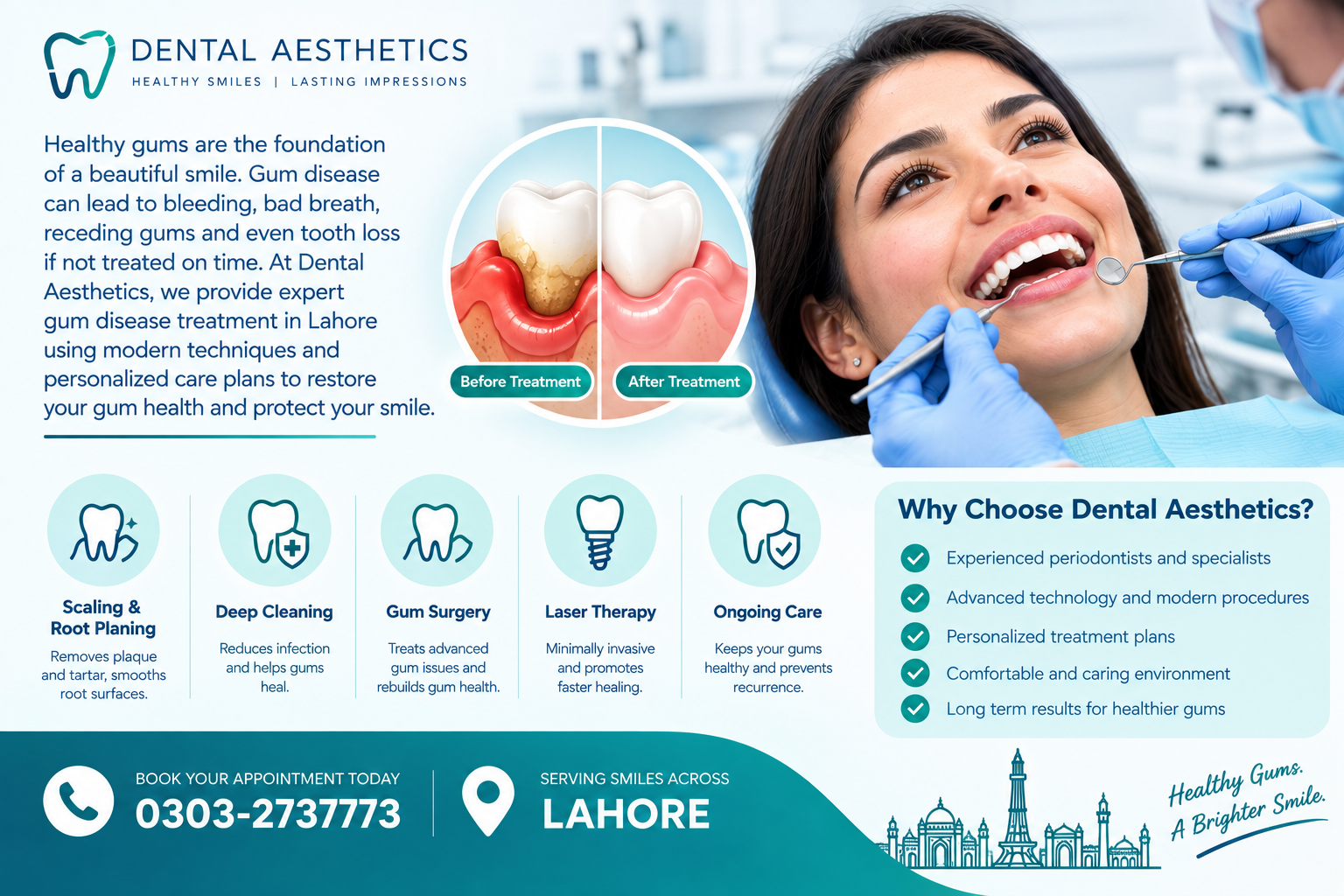
General Dentist vs. Gum Disease Specialist: What's the Difference?
A general dentist is trained to handle a broad range of oral health needs: fillings, cleanings, extractions, and routine check-ups. A gum disease specialist, often called a periodontist, has additional focused training in diagnosing and treating diseases of the gums, jawbone, and supporting structures of the teeth.
For mild cases of gingivitis, a skilled general dentist service can often provide excellent care. But once gum disease progresses to moderate or advanced periodontitis involving bone loss, deep pockets, or recurring infection the precision and specialized techniques of a periodontal-focused clinician become far more important.
Why Specialist Care Matters for Gum Health
Gums and the bone beneath them are unforgiving tissues once significant damage occurs, it's very difficult to fully rebuild. This makes accuracy in diagnosis and treatment planning critical from the very first visit. A specialist brings:
● Deeper diagnostic skill in reading pocket depths, bone loss patterns, and infection severity
● Familiarity with advanced procedures such as root planing, flap surgery, and grafting
● Better judgment on borderline cases knowing when non-surgical treatment will suffice versus when surgery is truly necessary
● A long-term management mindset, since periodontal disease requires ongoing monitoring, not a single visit
Qualities to Look for in a Gum Disease Specialist in Lahore
If you're searching for the right clinician, here's what should be on your checklist:
1. Proper Qualifications and Ongoing Training
Look for a dental professional with recognized credentials and a track record of specifically treating periodontal cases, not just general dentistry.
2. Modern Diagnostic Tools
Digital X-rays, periodontal charting, and — where available — laser-assisted diagnostic tools allow for far more precise treatment planning than guesswork.
3. A Range of Treatment Options
A good specialist won't push every patient toward surgery. They should be able to offer a spectrum of care from non-surgical deep cleaning to advanced surgical intervention — and recommend the least invasive option that will still be effective.
4. Clear Communication
You should leave your consultation understanding exactly what stage your gum disease is at, what your options are, and what the realistic outcome of treatment looks like.
5. A Structured Maintenance Plan
Because periodontal disease can return, a specialist worth choosing will set you up with a maintenance schedule — not just treat you once and send you away.
6. Comfort-Focused Approach
Anxiety about gum treatment is common. The right clinic will prioritize a calm environment, effective anesthesia, and clear explanations at every step.
What Happens During a Specialist Consultation at Dental Aesthetics
Our approach to gum disease specialist consultations is thorough by design:
1. Detailed history review — including any diabetes, smoking history, medications, or family history of gum disease, all of which affect treatment planning.
2. Full periodontal charting — measuring pocket depth at multiple points around every tooth to map exactly where disease is active.
3. Radiographic assessment — X-rays to evaluate bone levels that can't be seen or felt.
4. Risk factor discussion — identifying habits or conditions that may be accelerating your gum disease.
5. A personalized treatment roadmap — outlining stages of treatment, expected timelines, and maintenance needs going forward.
Common Conditions a Gum Specialist Treats
● Chronic and aggressive periodontitis
● Gum recession and root exposure
● Peri-implantitis (infection around dental implants)
● Gum abscesses and localized infections
● Bone loss requiring grafting
● Cases involving mobile or shifting teeth due to weakened gum support
● Cosmetic gum recontouring alongside disease management
Red Flags to Watch For When Choosing a Clinic
Not every clinic offering "gum treatment" provides the same quality of care. Be cautious of providers who:
● Recommend surgery immediately without a full non-surgical assessment first
● Don't take X-rays or measure pocket depths before treatment
● Offer no follow-up or maintenance plan
● Rush consultations without explaining your specific condition
Why Patients Choose Dental Aesthetics as Their Gum Disease Specialist in Lahore
At Dental Aesthetics, periodontal care isn't an afterthought — it's treated with the same seriousness as any other specialized dental discipline. Our team combines thorough diagnostics, a full range of non-surgical and surgical treatment options, and a genuine commitment to helping patients keep their natural teeth for life. We take time during consultations to explain findings in plain language, so you're making decisions about your gum health with full understanding, not just following instructions blindly.
Frequently Asked Questions
Q1: Do I need a specialist for mild gum bleeding, or is a general dentist enough?
For mild gingivitis, a general dentist can usually manage the condition well with a professional cleaning and improved home care. A specialist becomes more important if bleeding persists, pockets are detected, or bone loss is suspected.
Q2: How do I know if my gum disease has progressed beyond gingivitis?
Signs such as persistent bad breath, gum recession, loose teeth, or pus between teeth and gums suggest the disease may have advanced to periodontitis, which warrants a specialist evaluation.
Q3: Will a specialist always recommend surgery?
No. Most periodontal cases are managed with non-surgical treatments like deep cleaning first. Surgery is reserved for cases where non-surgical treatment hasn't resolved deep pockets or significant bone loss.
Q4: How often should I see a gum specialist after initial treatment?
Most patients recovering from periodontitis benefit from maintenance visits every three to four months, compared to the standard six-month check-up for patients with healthy gums.
Q5: Can a gum specialist help with receding gums even without active disease?
Yes. Gum recession can be assessed and, where appropriate, treated with grafting or other techniques regardless of whether active infection is present.
Q6: Is periodontal treatment covered under routine dental visits, or is it a separate service?
It's typically a distinct service requiring its own diagnostic workup, since it involves the structures supporting your teeth rather than the teeth themselves.
Final Thought
Your gums do more than frame your smile — they anchor every tooth in your mouth. Choosing a clinician who understands the nuances of periodontal disease, rather than treating it as a routine cleaning, can protect your teeth for decades to come. If you've been searching for a trustworthy gum disease specialist in Lahore, the team at Dental Aesthetics is ready to give your gums the focused, expert attention they deserve.

 English
 Arabic
 French
 Spanish
 Portuguese
 Deutsch
 Turkish
 Dutch
Dutch
 Russian
 Romaian
 Portuguese (Brazil)
 Greek
Greek