


Venous Leak in Men
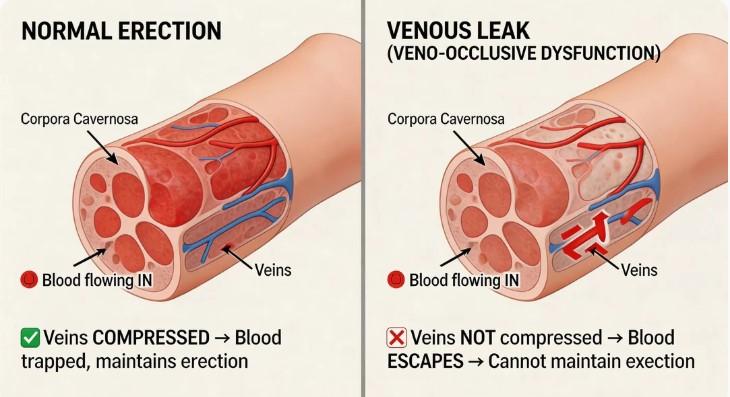
Venous leak is a term commonly used to describe a problem with maintaining an erection. A man may be able to develop an erection but find that it becomes soft too quickly or cannot remain firm enough for satisfactory sexual activity. In medical practice, this problem is generally discussed as erectile veno-occlusive dysfunction.
Although the name “venous leak” suggests that blood is literally leaking from a vein, the underlying problem is more accurately related to the way blood is trapped inside the penis during an erection.
Understanding the causes, symptoms, diagnostic process, and available treatments can help men seek appropriate medical care rather than relying on assumptions or unproven remedies.
What Is Venous Leak?
During a normal erection, increased blood flow enters the erectile tissues of the penis. As these tissues expand, they compress the veins that normally allow blood to leave the penis.
This process helps keep blood inside the erectile tissue and maintains firmness.
With veno-occlusive dysfunction, the penis may not adequately restrict the outflow of blood. As a result, an erection may be difficult to maintain.
A man with this problem may experience an erection initially but notice that it gradually becomes less firm, particularly when stimulation decreases.
It is important to understand that difficulties maintaining an erection can have many causes. Not every case of erection loss is caused by venous leak.
How Does a Normal Erection Work?
An erection involves several systems working together, including:
-
The brain and nervous system
-
Blood vessels
-
Erectile tissue
-
Hormones
-
Psychological and emotional factors
When a man becomes sexually aroused, nerve signals cause blood vessels supplying the penis to relax and widen. Blood enters the erectile chambers, causing them to expand.
As the erectile tissue becomes filled with blood, pressure within the penis increases and helps compress the veins responsible for drainage.
When this mechanism works properly, blood remains within the penis long enough to maintain an erection.
Problems affecting blood flow, nerve function, erectile tissue, hormones, medications, or psychological health can interfere with this process.
Common Symptoms of Venous Leak
Symptoms can vary considerably between individuals. Some men may have relatively mild erection-maintenance problems, while others may have significant difficulty maintaining firmness.
Possible symptoms include:
-
Getting an erection but losing it quickly
-
Difficulty keeping the penis firm during intercourse
-
An erection that becomes softer during sexual activity
-
Needing continuous stimulation to maintain firmness
-
Difficulty maintaining an erection when changing positions
-
Erections that are less firm than they used to be
-
Reduced sexual confidence because of repeated erection loss
Some men may still experience morning or spontaneous erections, while others may notice a reduction in them.
These symptoms alone cannot confirm venous leak. A proper medical evaluation is necessary to determine the underlying cause.
What Causes Venous Leak?
There is no single cause in every case. Conditions that affect the erectile tissue or blood vessels may contribute to erection-maintenance problems.
1. Age-Related Changes
As men get older, changes can occur in blood vessels, smooth muscle, connective tissue, and hormone levels.
These changes can make erections less firm or more difficult to maintain. However, erection problems should not automatically be considered an unavoidable part of aging.
2. Diabetes
Diabetes can affect blood vessels and nerves that are important for erectile function.
Poorly controlled blood sugar over time may contribute to vascular and neurological problems, increasing the likelihood of erectile dysfunction.
3. Cardiovascular Disease
Healthy blood vessels are essential for normal erections.
Conditions such as high blood pressure, atherosclerosis, and other cardiovascular problems can interfere with penile blood flow.
Because erectile dysfunction can sometimes occur alongside cardiovascular risk factors, persistent erection problems deserve proper medical assessment.
4. Penile Injury or Trauma
Previous trauma involving the pelvis, perineum, or penis may affect erectile tissue or blood vessels.
In some cases, structural changes following an injury can contribute to difficulties with maintaining an erection.
5. Pelvic or Prostate Surgery
Certain pelvic procedures may affect nerves, blood vessels, or tissues involved in erection.
Men who develop persistent erectile difficulties after pelvic or prostate surgery should discuss their symptoms with a qualified urologist.
6. Peyronie’s Disease
Peyronie’s disease causes scar tissue to develop within the penis and may result in curvature, discomfort, or changes in erection quality.
In some men, structural changes associated with the condition can contribute to erectile difficulties.
7. Neurological Conditions
The nervous system plays an important role in sexual arousal and erection.
Conditions affecting the nerves or spinal cord may therefore contribute to erectile dysfunction.
8. Hormonal Problems
Testosterone and other hormones can influence sexual desire and erectile function.
Low testosterone does not automatically mean that a man has venous leak, but hormonal problems can contribute to erectile symptoms and should be considered during an appropriate evaluation.
9. Medications
Certain medications may contribute to erectile dysfunction.
Depending on the medication and the individual's health, possible contributors can include some treatments for high blood pressure, depression, and other medical conditions.
Men should not stop prescribed medication without speaking with their doctor.
Is Venous Leak the Same as Erectile Dysfunction?
Not exactly.
Erectile dysfunction (ED) is a broad medical condition involving difficulty getting or maintaining an erection sufficient for sexual activity.
Venous leakage, or suspected veno-occlusive dysfunction, refers to one possible mechanism contributing to erection-maintenance difficulties.
ED can result from:
-
Reduced blood flow
-
Nerve problems
-
Hormonal factors
-
Psychological factors
-
Medication side effects
-
Diabetes
-
Cardiovascular disease
-
Structural abnormalities
-
A combination of several factors
For this reason, a doctor should identify the underlying cause rather than assuming that every case of ED represents venous leak.
Can Anxiety Cause an Erection to Disappear?
Yes. Psychological factors can significantly affect erections.
Performance anxiety, relationship difficulties, stress, depression, fear of failure, and previous negative sexual experiences may interfere with sexual arousal and erection maintenance.
Psychological and physical factors can also occur together.
For example, a man may initially experience an erection problem because of a physical condition and later develop anxiety about losing his erection. That anxiety may then make the problem worse.
This is one reason a complete evaluation is often more useful than focusing on a single suspected cause.
How Is Venous Leak Diagnosed?
Diagnosis begins with a detailed medical and sexual history.
A doctor may ask about:
-
When the erection problem started
-
Whether erections can be achieved normally
-
How long erections can usually be maintained
-
Morning or spontaneous erections
-
Sexual desire
-
Existing medical conditions
-
Previous injuries or surgeries
-
Medications and supplements
-
Smoking and alcohol use
-
Psychological or relationship factors
A physical examination may also be performed.
Penile Doppler Ultrasound
When a vascular cause is suspected, a penile duplex Doppler ultrasound may be used to evaluate blood flow within the penis.
The examination can provide information about arterial inflow and the mechanisms involved in maintaining an erection.
In many cases, the test is performed after medication is used to produce an erection under medical supervision.
Interpretation requires clinical expertise because blood-flow measurements can be influenced by several factors. A diagnosis should not be made from a single number without considering the overall clinical picture.
Blood Tests
Blood testing does not directly diagnose venous leak.
However, laboratory tests may help identify medical conditions that can contribute to erectile dysfunction. Depending on the patient's symptoms and medical history, a doctor may consider tests related to:
-
Blood glucose
-
HbA1c
-
Cholesterol
-
Testosterone
-
Other hormones when indicated
Can Venous Leak Be Cured?
The answer depends on the underlying cause.
If erection problems are related to a treatable medical condition, addressing that condition may improve sexual function.
For structural or persistent vascular problems, treatment focuses on improving erectile function rather than promising a guaranteed permanent cure.
The appropriate approach varies from person to person.
Treatment Options for Venous Leak and Erectile Dysfunction
Lifestyle Changes
Healthy lifestyle habits can support vascular and sexual health.
Helpful measures may include:
-
Regular physical activity
-
Maintaining a healthy weight
-
Eating a balanced diet
-
Avoiding smoking
-
Limiting excessive alcohol consumption
-
Managing diabetes
-
Controlling blood pressure
-
Managing cholesterol
-
Getting adequate sleep
-
Reducing chronic stress
Lifestyle improvements may not correct every case of veno-occlusive dysfunction, but they can improve overall health and may support erectile function.
Oral Erectile Dysfunction Medicines
Medications such as sildenafil, tadalafil, vardenafil, and avanafil are commonly used for erectile dysfunction.
These medicines increase blood flow to the penis in response to sexual stimulation.
They can be effective for many men with ED, although they do not necessarily repair a structural veno-occlusive problem.
These medicines are not suitable for everyone. For example, certain combinations with nitrate medications can cause dangerous drops in blood pressure.
A doctor should determine whether these medications are appropriate.
Vacuum Erection Devices
A vacuum erection device uses negative pressure to draw blood into the penis.
A constriction ring can then help maintain the erection by limiting blood outflow.
This approach may be useful for some men who cannot use or do not respond adequately to oral medication.
Constriction Rings
A medically appropriate constriction ring may help some men maintain an erection.
These devices should be used according to medical guidance, particularly regarding the duration of use, because prolonged restriction of blood flow can cause injury.
Penile Injections
Intracavernosal injections involve placing medication directly into the erectile tissue.
They can produce erections even when oral medications are ineffective.
Because incorrect dosing or technique can cause complications, injections should only be used under appropriate medical supervision and instruction.
Penile Implants
For men with severe, persistent erectile dysfunction who do not achieve satisfactory results with less invasive treatments, a penile prosthesis may be considered.
A penile implant is a surgically placed device designed to provide controlled rigidity when an erection is desired.
This is a significant medical procedure and requires consultation with an experienced urologist.
Shockwave Therapy
Low-intensity shockwave therapy has been investigated for erectile dysfunction, particularly vascular-related ED.
Research continues to evaluate which patients may benefit and how treatment should be delivered.
It should not be promoted as a guaranteed method of repairing venous leak.
PRP and Regenerative Treatments
Platelet-rich plasma and other regenerative approaches have received attention in sexual medicine.
However, evidence remains variable, and these treatments should be discussed carefully with a qualified healthcare professional.
Patients should be cautious about clinics that promise guaranteed permanent results.
Can Exercise Help?
Regular exercise can support cardiovascular health and may benefit erectile function.
Activities such as:
-
Walking
-
Jogging
-
Cycling in moderation
-
Swimming
-
Strength training
can contribute to better overall vascular health.
Exercise is not a guaranteed treatment for structural veno-occlusive dysfunction, but it can be an important part of a broader approach to erectile health.
Can Diet Improve Erectile Function?
A balanced diet supports cardiovascular health, which is closely connected with erectile function.
A healthy eating pattern can emphasize:
-
Vegetables
-
Fruits
-
Whole grains
-
Legumes
-
Nuts and seeds
-
Fish and other nutritious protein sources
-
Healthy unsaturated fats
At the same time, limiting excessive processed foods, added sugars, and unhealthy fats may support better metabolic health.
Diet alone should not be presented as a guaranteed cure for venous leak.
Does Venous Leak Affect Fertility?
Venous leak itself does not necessarily mean that a man is infertile.
Fertility primarily depends on factors such as sperm production, sperm quality, ejaculation, reproductive anatomy, and the ability to have intercourse.
However, severe erectile dysfunction can make sexual intercourse difficult and may therefore indirectly affect the ability to conceive.
If fertility is a concern, a doctor can evaluate both erectile function and reproductive health.
Does Venous Leak Reduce Sexual Desire?
Venous leak primarily concerns erection maintenance rather than sexual desire.
A man can have normal sexual interest while experiencing difficulty maintaining an erection.
However, repeated erection problems can lead to frustration, embarrassment, anxiety, or reduced confidence, which may subsequently affect sexual desire.
Hormonal, psychological, relationship, and medical factors should therefore be considered when libido decreases.
Can Morning Erections Rule Out Venous Leak?
Not necessarily.
Morning erections can provide useful information about erectile function, but their presence or absence alone cannot confirm or rule out a specific vascular condition.
Erection quality can naturally vary depending on sleep, stress, hormones, medications, age, and general health.
A proper evaluation is more reliable than using morning erections as a self-diagnostic test.
When Should You See a Doctor?
Consider speaking with a doctor or urologist if erection problems:
-
Continue for several weeks or months
-
Occur repeatedly
-
Are getting worse
-
Affect your relationship or confidence
-
Develop after surgery or injury
-
Occur alongside diabetes or cardiovascular risk factors
-
Are associated with penile curvature or pain
-
Do not improve with previously effective treatments
Persistent erectile dysfunction deserves attention because it can sometimes be an early indicator of underlying vascular or metabolic problems.
Frequently Asked Questions
What is the main symptom of venous leak?
The most commonly described symptom is difficulty maintaining an erection. A man may achieve an erection but lose firmness before or during sexual activity.
Is venous leak a real medical condition?
The term “venous leak” is commonly used to describe impaired veno-occlusive function. However, erection loss can have multiple causes, so proper assessment is important before attributing symptoms to a venous problem.
Can medication treat venous leak?
ED medications can improve erections in many men, but they do not necessarily correct an underlying structural veno-occlusive problem.
Can lifestyle changes help?
Healthy lifestyle habits can improve cardiovascular and metabolic health and may support erectile function. They are beneficial but are not guaranteed to correct every underlying cause.
Is venous leak permanent?
Not necessarily. The outlook depends on the underlying cause, overall health, severity, and response to treatment.
Can young men experience erection-maintenance problems?
Yes. Younger men can experience erectile difficulties because of anxiety, medications, medical conditions, hormonal issues, vascular problems, or other factors.
Which doctor treats venous leak?
A urologist, particularly one experienced in men's sexual health or erectile dysfunction, can evaluate persistent erection-maintenance problems and recommend appropriate testing.
Final Thoughts
Venous leak is commonly used to describe difficulty maintaining an erection because the normal mechanism that keeps blood inside the erectile tissue may not work effectively. However, erection loss is not always caused by a vascular problem.
Diabetes, cardiovascular disease, medications, hormonal changes, nerve problems, penile conditions, psychological factors, and lifestyle can all contribute to erectile dysfunction.
The most important step is obtaining an accurate diagnosis rather than assuming that venous leak is the cause. Depending on the underlying problem, treatment may include lifestyle changes, oral medications, vacuum devices, injections, counseling, or surgical options such as penile implants.
If erection problems are persistent or affecting sexual wellbeing, consultation with a qualified urologist can help identify the cause and determine an appropriate treatment plan.
This article is for general educational purposes and does not replace an examination or individualized medical advice from a qualified healthcare professional.

 English
 Arabic
 French
 Spanish
 Portuguese
 Deutsch
 Turkish
 Dutch
Dutch
 Russian
 Romaian
 Portuguese (Brazil)
 Greek
Greek