


Live Bee Removal Services in Fort Worth, TX: Safe Solutions for Homes and Businesses
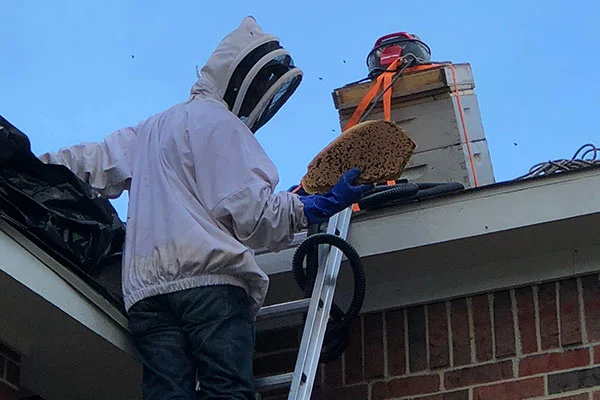
When bees establish a colony around a Fort Worth property, live removal may be an option when the colony can be safely accessed and relocated. Live Bee Removal Services in Fort Worth, TX generally involve identifying the colony, locating the queen and comb when possible, carefully removing the bees from the structure, and moving the colony to a suitable location. However, live removal is not practical in every situation. Texas A&M AgriLife Extension notes that extracting a colony from a building can take more time and may not always be feasible. The first step is therefore a careful inspection rather than disturbing the bees.
What Makes Live Bee Removal Different?
Live bee removal focuses on moving an established honey bee colony instead of simply eliminating the insects. The process can involve locating the colony, accessing the nesting area, removing bees and comb, and placing the colony into appropriate equipment for relocation.
That sounds straightforward until the colony is inside a wall, roof cavity, chimney, soffit, or another difficult location.
Bees can enter through surprisingly small openings and build their nest deeper inside a structure. The opening where workers are visible may only be the entrance, not the actual location of the colony.
This is why an inspection matters. A person standing outside may see hundreds of bees entering one gap while the colony itself remains hidden from view.
Texas A&M AgriLife Extension provides guidance on honey bees in buildings and explains that structural colonies can require specialized removal work.
For property owners, the goal should be to understand the complete situation before deciding whether relocation is realistic.
When Live Bee Removal Services in Fort Worth, TX Make Sense?
Live extraction can be considered when several conditions are favorable.
The colony needs to be identifiable, reasonably accessible, and suitable for removal without creating unnecessary risks to people or causing excessive structural damage. The species also matters because not every stinging insect encountered around a property is a honey bee.
A professional assessment can help answer these questions:
Texas A&M AgriLife Extension notes that live extraction can take longer and is not practical in every circumstance.
That means homeowners should be cautious about anyone promising that every colony can be removed alive regardless of where it is located.
A Realistic Removal Story: The Entrance Was Only the Beginning
One of the most useful lessons from structural bee removal is that the visible entrance can tell only part of the story.
Imagine a homeowner notices bees flying through a small opening below the roofline. The bees appear to disappear into the structure one after another. From the ground, it is tempting to assume the nest sits immediately behind the hole.
But the colony may extend deeper into the cavity.
A removal professional may first need to determine the direction of bee traffic and assess the surrounding structure. If the colony is accessible, the work may involve opening a carefully selected section of the building to reach the comb.
This is where the difference between removing bees and removing a colony becomes important.
Taking away the visible workers does not necessarily resolve the situation. If comb and honey remain inside the cavity, the former nesting area can continue to create problems.
The lesson is simple: a successful live removal addresses the colony, not just the bees flying around the entrance.
That principle applies to both residential and commercial properties.
How the Relocation Process Can Protect the Property?
A careful relocation plan considers two things at the same time: the bees and the building.
For the property, the work should minimize unnecessary disturbance. For the colony, the process should be planned around safe handling and appropriate relocation.
The exact procedure depends on the colony's location and condition. A professional may need to access a wall cavity, roof area, soffit, shed, or another enclosed space.
The nesting material can also be important. Honey bee colonies may contain comb, honey, brood, and other materials that need to be managed as part of the removal.
Once the colony and nesting material have been addressed, the former entrance can be repaired or sealed when appropriate.
This sequence matters.
Sealing an active entrance before the colony is removed can cause bees inside the structure to search for another exit. Texas A&M AgriLife Extension specifically discusses this risk when dealing with colonies inside buildings.
The best approach is therefore to treat removal, cleanup, and exclusion as connected parts of the same project.
What Humane Bee Relocation in Fort Worth, TX Can and Cannot Do?
The phrase “humane relocation” can sound simple, but responsible relocation has practical limits.
Humane Bee Relocation in Fort Worth, TX is most realistic when the colony can be accessed and safely transferred. Some colonies are located behind difficult structural barriers, making extraction complicated or potentially damaging to the building.
There is also a difference between relocating a swarm and extracting an established colony.
A swarm may temporarily cluster on a tree branch, fence, vehicle, or exterior surface. An established colony has already selected a nesting location and built its structure there.
These situations should not automatically receive the same treatment.
Property owners should ask the removal professional what type of bee activity is present and why a particular approach is recommended.
A useful comparison is:
Temporary swarm: The bees may be clustered outside while searching for a permanent nesting location.
Established colony: Bees have created a nest and may be using a structural cavity.
Foraging activity: Bees are visiting flowers, plants, water, or other resources without necessarily nesting on the property.
Understanding which situation exists can prevent unnecessary intervention.
How Homeowners and Businesses Can Prepare for Removal?
Property owners do not need to diagnose the entire problem themselves. A few observations can make an inspection more useful.
If bees are active around the property, watch from a safe distance and record where they appear to enter and leave. Avoid opening walls, climbing onto roofs, spraying chemicals, or attempting to physically remove the colony.
For homes, parents should keep children and pets away from concentrated activity.
For businesses, managers can temporarily redirect employees, customers, delivery workers, or contractors away from the affected area.
Before an inspection, property owners can note:
-
The exact location of bee activity.
-
The opening bees appear to use.
-
How long the activity has been noticed.
-
Whether bees are entering a structure.
-
Whether activity changes during different parts of the day.
-
Whether there has been recent construction or exterior damage.
These details do not replace an inspection, but they can help establish a clearer picture of what is happening.
For Texas property owners, the Texas Apiary Inspection Service also provides information about hive removal resources.
What Should You Ask Before Choosing a Removal Provider?
A property owner considering live extraction should ask practical questions before work begins.
The first question is whether the provider has identified the colony as honey bees. The next is whether live extraction is actually appropriate for the location.
It is also reasonable to ask how the professional plans to access the colony, what happens to the comb, whether the building will require repairs, and what steps will follow the removal.
A provider should be able to explain the process in plain language.
Be cautious of guarantees that ignore the condition of the colony or structure. A professional removal plan should recognize that every building and colony can present different challenges.
The objective is not simply to promise relocation. It is to determine whether relocation can be performed safely and responsibly in the specific circumstances.
Preventing Bees From Returning to the Same Location
After a colony has been removed, property owners should look at the reason bees were able to enter the structure in the first place.
Possible access points can include gaps around soffits, damaged siding, roofline openings, vents, utility penetrations, chimneys, and other protected spaces.
However, sealing should occur at the appropriate stage. If bees remain inside the structure, closing their entrance can force them to search for another exit.
Once the colony has been properly handled, repairing the former access point can become an important part of preventing another colony from using the same cavity.
This is particularly useful for older homes, commercial buildings, detached garages, sheds, and other structures with aging exterior materials.
Prevention should focus on unwanted nesting opportunities rather than attempting to eliminate every bee that visits the property.
Conclusion
Live Bee Removal Services in Fort Worth, TX can provide an alternative to simply eliminating an established honey bee colony when live extraction is practical and safe. The process begins with identifying the bees, locating the colony, assessing access, and determining whether relocation is suitable for the property.
The most important lesson is that live removal involves more than moving visible bees. A complete solution may require careful access to the nesting area, management of comb and other materials, appropriate relocation, and repair of the former entry point.
For homeowners and businesses, the safest first step is to keep people away from concentrated bee activity and arrange an informed inspection. When the circumstances support it, careful relocation can address the colony while also protecting the building from unnecessary disruption.

 English
 Arabic
 French
 Spanish
 Deutsch
 Turkish
 Dutch
Dutch
 Italiano
 Russian
 Romaian
 Portuguese (Brazil)
 Greek
Greek