


5 Places to Visit in Makkah During Umrah
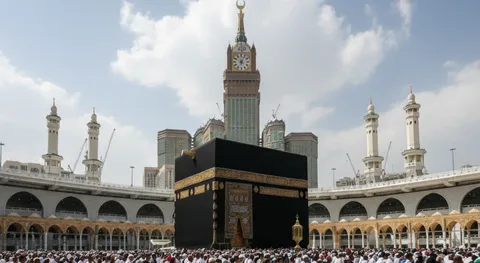
5 Places to Visit in Makkah During Umrah
Makkah is the holiest city in Islam, and it holds far more history than most pilgrims realize. Alongside the Kaaba, the city carries centuries of stories worth exploring during your Umrah trip. Muslim tradition holds that Makkah's story began when Hajar searched desperately for water for her son Ismail, and Allah answered her with the spring of Zamzam beneath his feet. That ever-flowing spring drew people to settle there, and over time the settlement grew into the city of Makkah. It is also the birthplace of Prophet Muhammad (peace be upon him) and the city where he began preaching Islam.
Millions of Muslims travel to Makkah every year to perform Umrah, and for centuries it has been a lifelong priority for believers everywhere. The city has witnessed countless pivotal moments in Islamic history, and today it's also one of the most developed cities in the region. Note that only Muslims holding an Umrah or tourist visa may enter Makkah; non-Muslims are not permitted.
Here are five meaningful places worth visiting in Makkah during your Umrah trip, easy to fit in whether you're staying on 4 Star Umrah Packages or something more premium.
1. Jannat al-Mu'alla: Makkah's Historic Cemetery
Jannat al-Mu'alla is the oldest cemetery in Makkah, sitting just north of Masjid al-Haram near the Mosque of the Jinn. It is the resting place of the Prophet's wife Khadijah (may Allah be pleased with her), along with his mother, grandfather, and several other ancestors. Because so many companions and notable early Muslims are buried here, the site holds deep significance for pilgrims. Tradition holds that it dates back to the time of Prophet Ibrahim and Ismail (peace be upon them).
The cemetery grew substantially over the centuries and today covers a wide area, enclosed by a white perimeter wall. Visitors are not permitted past the wall, so most pilgrims pay their respects from a distance. It remains open to visitors year-round.
The site once had domes and structures built over notable graves, but these were removed in 1925 on the order of the Saudi government, the same year the Jannat al-Baqi cemetery in Madinah was similarly cleared. With no headstones or markers left today, most visitors simply stand outside the wall in quiet reflection.
2. The Site of the Battle of Badr
The Battle of Badr was fought between the early Muslims and the Quraysh of Makkah, and it marked a defining turning point in early Islamic history. With Allah's help, a small, poorly equipped Muslim force of about 313 defeated an army of roughly 1,300. The victory gave the Muslim community renewed confidence and stability going forward.
Badr is both the name of the town and the site of the battle, which took place on the 17th of Ramadan in the 2nd year after Hijrah. The battle is referenced directly in the Quran, and because of its historical weight, many pilgrims make a point of visiting the site during their trip.
3. Makkah Mall
For a break from walking and rituals, Makkah Mall sits close to Masjid al-Haram and offers a more modern side of the city. Spread across two floors with well over 200 stores, it covers clothing for men, women, and children, electronics, restaurants, and cafes, along with local and international brands.
Plan for at least two hours if you want to look around properly. Children can enjoy the play area, and the mall also has a cinema with modern screens for families who want a change of pace during their trip. It's a convenient stop for families staying nearby on affordable 3-Star Umrah Packages who want a break between rituals.
4. Masjid Aisha (Al-Tan'im)
Masjid Aisha, also known as Al-Tan'im Mosque, is well known as the place where Aisha (may Allah be pleased with her), the wife of the Prophet (peace be upon him), entered the state of Ihram to perform Umrah after having been unable to earlier due to menstruation. It also serves as a Miqat, a designated point where pilgrims formally enter Ihram.
The mosque has proper washroom facilities for pilgrims, and because of its role as a Miqat, it's usually surrounded by vendors selling Ihram clothing and other essentials. Pilgrims heading out for Hajj or Umrah often begin their journey here. It's worth remembering that anyone crossing the Miqat boundary must already be in the state of Ihram; crossing without it requires a penalty.
5. Cave of Thawr (Ghar Thawr)
This well-known cave sits in Jabal Thawr, in the lower part of Makkah, and it carries deep religious significance for Muslims. Tradition holds that the Prophet Muhammad (peace be upon him) and Abu Bakr (may Allah be pleased with him) hid here for three days and three nights while being pursued by the Quraysh. It's also said that a spider wove a web across the entrance, leading the search parties to pass by without looking inside.
Final Words
These historic and spiritual sites add real depth to a journey that's already rich in meaning. From the Kaaba itself to the hills of Safa and Marwah, every part of Umrah carries history worth understanding. For a fuller experience in 2026, it's worth booking a package that includes time for both worship and these historical visits.
There are more places to explore in Makkah beyond these five, so it's worth asking your Umrah package provider about adding visits to your itinerary. If you'd rather stay right by the Haram with more comfort built in, 5 Star Umrah Packages put you closest to the action with the shortest walk back after a long day of sightseeing and worship.

 English
 French
 Spanish
 Portuguese
 Deutsch
 Turkish
 Dutch
Dutch
 Italiano
 Russian
 Romaian
 Portuguese (Brazil)
 Greek
Greek