


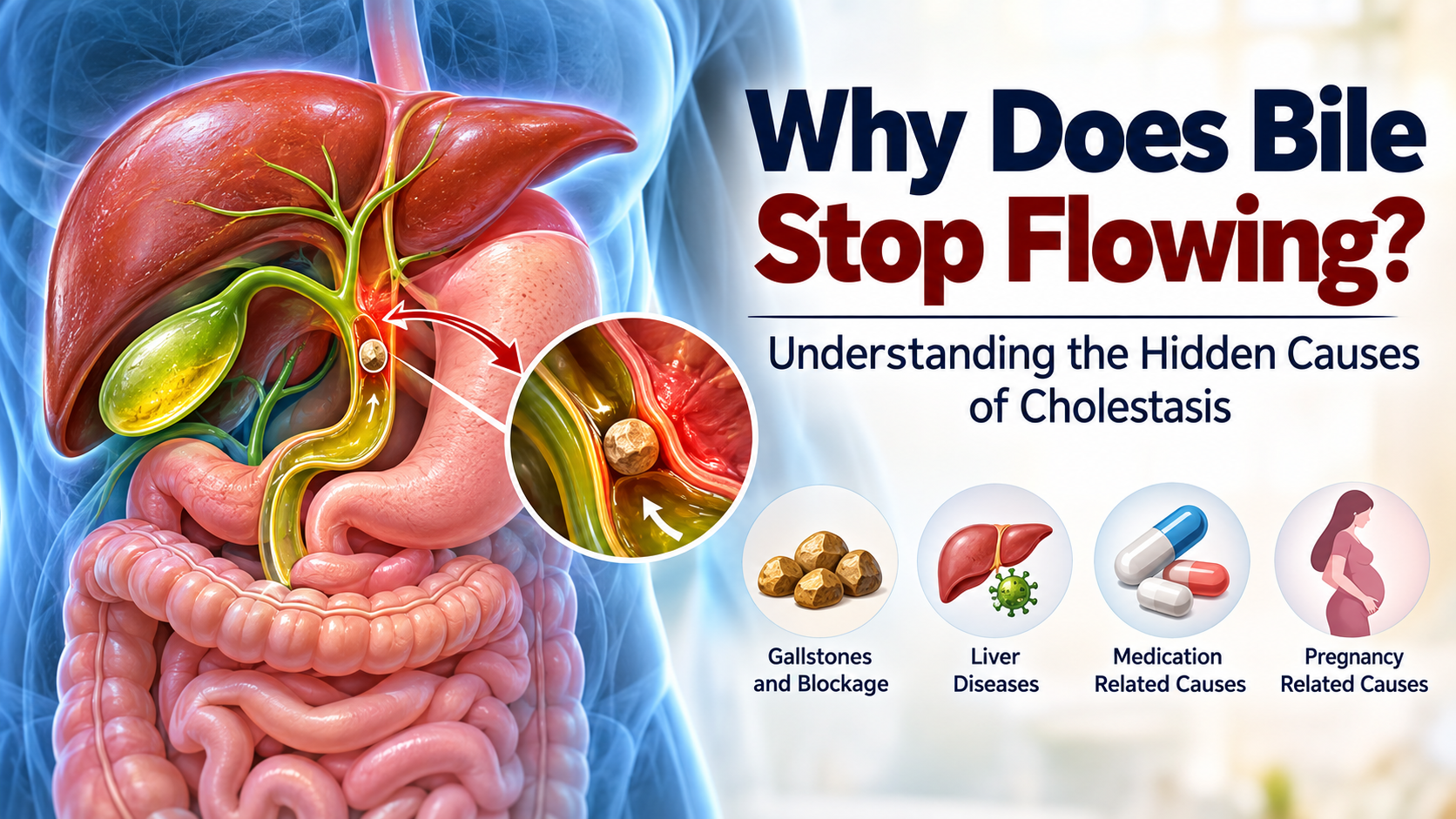
Why Does Bile Stop Flowing? Understanding the Hidden Causes of Cholestasis
Introduction
Have you ever wondered what happens when the body's natural digestive "drainage system" becomes blocked? Bile flow is essential for digestion and liver health, but when bile cannot move normally from the liver to the intestine, a condition called cholestasis can develop.
Cholestasis can occur because of a blockage in the bile ducts or because the liver cells are unable to produce or transport bile properly. Some causes are temporary and treatable, while others may be linked to serious liver or bile duct diseases.
Learn why bile stops flowing, hidden causes of cholestasis, symptoms, diagnosis and treatment, with guidance from the best liver transplant surgeon in india.
Recognizing the symptoms early can make a significant difference. In this article, we will explore why bile stops flowing, the hidden causes of cholestasis, warning signs, diagnostic tests, treatment options, and when specialist care may be necessary.
Table of Contents
| Sr # | Headings |
|---|---|
| 1 | What Is Cholestasis? |
| 2 | Why Is Bile Flow Important? |
| 3 | How Does Bile Normally Flow? |
| 4 | What Causes Bile to Stop Flowing? |
| 5 | Gallstones and Bile Duct Blockage |
| 6 | Liver Diseases That Can Cause Cholestasis |
| 7 | Medication-Related Cholestasis |
| 8 | Autoimmune and Genetic Causes |
| 9 | Cholestasis During Pregnancy |
| 10 | Symptoms of Bile Flow Problems |
| 11 | How Is Cholestasis Diagnosed? |
| 12 | Treatment Options for Cholestasis |
| 13 | Can Cholestasis Lead to Liver Failure? |
| 14 | When Should You See a Liver Specialist? |
| 15 | Conclusion and FAQs |
1. What Is Cholestasis?
Cholestasis means reduced or stopped flow of bile. Bile is produced by the liver and normally travels through small bile channels into larger bile ducts before reaching the intestine.
When this flow is interrupted, bile components can accumulate inside the liver and eventually enter the bloodstream.
Think of the bile ducts as a network of plumbing pipes. If a pipe becomes blocked, damaged, narrowed, or compressed, the fluid cannot move normally. Similarly, when the bile drainage system is affected, bile can build up inside the liver.
Types of Cholestasis
-
Intrahepatic cholestasis: The problem occurs within the liver.
-
Extrahepatic cholestasis: The problem involves the larger bile ducts outside the liver.
The distinction is important because the underlying causes and treatments can be very different.
2. Why Is Bile Flow Important?
Bile is more than a digestive fluid. It performs several important functions.
The liver produces bile containing substances such as bile acids, cholesterol, bilirubin, and other compounds. Bile travels into the intestine, where bile acids help the body digest and absorb dietary fats.
Bile also helps eliminate certain waste products from the body, including bilirubin.
What Can Happen When Bile Cannot Flow Properly?
-
Poor digestion and absorption of fats
-
Accumulation of bilirubin
-
Jaundice
-
Dark urine
-
Pale or clay-colored stools
-
Itching
-
Abnormal liver blood tests
-
Deficiencies of fat-soluble vitamins in prolonged cases
Therefore, cholestasis should not simply be viewed as a digestive problem. It can be a sign of an underlying liver or bile duct disorder.
3. How Does Bile Normally Flow?
Understanding normal bile flow makes cholestasis easier to understand.
Bile is produced by liver cells called hepatocytes. Tiny channels collect bile from these cells and gradually connect into larger ducts.
Eventually, bile travels through the major bile ducts toward the intestine.
The gallbladder stores and concentrates bile between meals. After eating, particularly after consuming fatty foods, the gallbladder can release bile into the intestine.
If everything works properly, bile moves through this system smoothly.
But what happens if something blocks the pathway?
The pressure inside the bile drainage system can increase, and bile components can accumulate. Depending on the cause and duration, this may lead to inflammation and liver injury.
4. What Causes Bile to Stop Flowing?
There is no single cause of cholestasis. The underlying problem may originate inside the liver, within the bile ducts, or outside them.
Common Causes Include
Gallstones: A stone can move from the gallbladder into a bile duct and obstruct bile flow.
Bile duct narrowing: Scarring or inflammation can cause a duct to become narrower.
Tumors: Tumors involving the pancreas, bile ducts, gallbladder, or nearby structures can interfere with bile drainage.
Liver diseases: Hepatitis, cirrhosis, autoimmune liver diseases, and other conditions can interfere with bile production or transport.
Medications: Certain medicines can cause drug-induced liver injury and cholestasis.
Autoimmune diseases: Conditions such as primary biliary cholangitis and primary sclerosing cholangitis can affect bile ducts.
Pregnancy: Hormonal changes during pregnancy can occasionally cause intrahepatic cholestasis of pregnancy.
Genetic disorders: Some inherited conditions affect the proteins responsible for transporting bile components.
Finding the actual cause is crucial because treating the underlying problem is usually the key to restoring bile flow.
5. Gallstones and Bile Duct Blockage
Gallstones are one of the recognizable causes of obstructed bile flow.
A stone may remain inside the gallbladder without causing significant symptoms. However, if it enters and blocks a bile duct, it can cause obstructive cholestasis.
Possible Symptoms
-
Sudden or recurring upper abdominal pain
-
Nausea or vomiting
-
Jaundice
-
Dark urine
-
Pale stools
-
Fever, especially if infection develops
A blocked bile duct can sometimes lead to acute cholangitis, a potentially serious infection of the bile ducts.
This is why unexplained jaundice accompanied by fever, chills, or significant abdominal pain requires prompt medical assessment.
Treatment may involve removing the obstructing stone, often through an endoscopic procedure, depending on its location and the patient's condition.
6. Liver Diseases That Can Cause Cholestasis
Cholestasis can also develop without a physical blockage.
Several liver diseases can interfere with the formation or movement of bile.
Hepatitis
Viral hepatitis and other forms of liver inflammation can affect the liver's ability to process and transport bile.
Cirrhosis
Advanced liver scarring can disrupt the normal structure of liver tissue and interfere with bile movement.
Primary Biliary Cholangitis
Primary biliary cholangitis, or PBC, is an autoimmune disease in which the body's immune system attacks small bile ducts inside the liver.
Over time, persistent bile duct injury can contribute to progressive liver damage.
Primary Sclerosing Cholangitis
Primary sclerosing cholangitis, or PSC, causes inflammation and scarring of bile ducts. This can create areas of narrowing that interfere with bile drainage.
Other Liver Conditions
Certain genetic, metabolic, inflammatory, and drug-related liver diseases can also produce a cholestatic pattern of liver injury.
The important point is that cholestasis is a finding rather than a single disease. Doctors need to determine what is causing it.
7. Medication-Related Cholestasis
Could a medicine you take affect bile flow?
Yes. Certain prescription medicines, over-the-counter medications, and other substances can cause liver injury. In some cases, the injury has a cholestatic pattern.
Risk Can Depend On
-
The specific medication
-
Dose
-
Duration of treatment
-
Individual susceptibility
-
Other liver conditions
-
Interactions with other medicines
If cholestasis develops after starting a medication, doctors may review the medication history and determine whether a drug could be responsible.
Never stop an important prescription medicine on your own. Your doctor should decide whether a medication needs to be changed or discontinued.
8. Autoimmune and Genetic Causes
Some less obvious causes of cholestasis involve the immune system or inherited changes.
In autoimmune cholestatic diseases, the immune system can mistakenly damage bile ducts. These diseases may develop gradually, sometimes before obvious symptoms appear.
Genetic conditions can also interfere with the proteins responsible for transporting bile acids and other substances through liver cells.
When Are These Causes Considered?
These causes may be particularly important when:
-
Cholestasis occurs at a young age
-
There is a family history of liver disease
-
Standard investigations do not identify a clear obstruction
-
Cholestasis keeps returning
-
Liver tests remain abnormal without an obvious explanation
Specialized blood tests, imaging, genetic testing, or sometimes a liver biopsy may be considered based on the clinical situation.
9. Cholestasis During Pregnancy
Pregnancy can cause a specific condition called intrahepatic cholestasis of pregnancy (ICP).
One of its characteristic symptoms is intense itching, often without a visible rash. It may be particularly noticeable on the palms and soles.
Other Symptoms May Include
-
Dark urine
-
Pale stools
-
Jaundice in some cases
-
Abnormal liver tests
Because ICP can have implications for pregnancy, women experiencing significant unexplained itching should discuss it with their obstetrician or healthcare provider.
The condition is different from other forms of cholestasis, and management requires appropriate maternal and fetal monitoring.
10. Symptoms of Bile Flow Problems
Cholestasis can sometimes develop with few obvious symptoms, especially in its early stages.
However, common warning signs include:
Jaundice
The skin and whites of the eyes may become yellow because bilirubin accumulates in the blood.
Itchy Skin
Persistent itching can occur when bile-related substances accumulate in the bloodstream.
Dark Urine
Excess bilirubin can cause urine to become darker than usual.
Pale or Clay-Colored Stools
When bile does not reach the intestine normally, stool may lose its typical brown color.
Abdominal Discomfort
Pain, particularly in the upper right abdomen, may occur depending on the underlying cause.
Fatigue
Underlying liver disease can contribute to tiredness and reduced energy.
Digestive Problems
Reduced bile delivery to the intestine may interfere with fat digestion and absorption.
If several of these symptoms occur together, particularly jaundice with abdominal pain or fever, medical evaluation should not be delayed.
11. How Is Cholestasis Diagnosed?
Doctors usually combine symptoms, medical history, blood tests, and imaging to determine why bile flow is impaired.
Liver Function Tests
Blood tests can measure substances such as:
-
Bilirubin
-
Alkaline phosphatase (ALP)
-
Gamma-glutamyl transferase (GGT)
-
AST
-
ALT
A particular pattern of abnormal results can suggest cholestatic liver injury.
Ultrasound
An abdominal ultrasound can help identify gallstones, bile duct enlargement, gallbladder problems, or other structural abnormalities.
MRCP
Magnetic resonance cholangiopancreatography is a specialized MRI technique that provides detailed images of the bile ducts.
ERCP
Endoscopic retrograde cholangiopancreatography can be used in selected situations to diagnose and treat certain bile duct problems.
Additional Testing
Depending on the suspected cause, doctors may recommend autoimmune blood tests, viral tests, genetic evaluation, or a liver biopsy.
The goal is not merely to confirm cholestasis. The real goal is to identify why bile is not flowing properly.
12. Treatment Options for Cholestasis
Treatment depends entirely on the underlying cause.
If a gallstone blocks a bile duct, removing the obstruction may restore bile flow.
If a medication is responsible, a doctor may adjust or change the treatment.
For autoimmune or inflammatory bile duct diseases, specific medical treatments may be considered.
If a tumor causes bile duct obstruction, treatment may involve a combination of procedures, surgery, chemotherapy, radiation, or other cancer-directed therapies depending on the diagnosis.
Doctors may also manage symptoms such as itching and nutritional deficiencies.
When Is Liver Transplantation Considered?
In advanced liver disease, treatment becomes more complex. When the liver has suffered irreversible damage and develops advanced liver failure, liver transplantation may become an important treatment consideration.
Patients needing complex transplant evaluation should seek care from an experienced multidisciplinary transplant team. People searching online for the best liver transplant surgeon in India should consider qualifications, transplant experience, hospital infrastructure, multidisciplinary support, available outcome information, and the patient's individual medical needs rather than relying only on online labels.
13. Can Cholestasis Lead to Liver Failure?
Not every case of cholestasis leads to liver failure.
Some causes are temporary and resolve after the underlying problem is treated. For example, removing a bile duct obstruction may restore normal drainage.
However, long-standing cholestasis can contribute to progressive liver injury.
Persistent bile accumulation may cause inflammation and damage to liver cells. Over time, certain chronic cholestatic diseases can progress to fibrosis and cirrhosis.
Possible Complications of Advanced Cirrhosis
-
Ascites
-
Variceal bleeding
-
Hepatic encephalopathy
-
Jaundice
-
Liver failure
At that stage, specialists may evaluate whether liver transplantation is appropriate.
This is why persistent abnormalities should not be ignored simply because symptoms are mild.
14. When Should You See a Liver Specialist?
You should consider medical evaluation if you experience:
-
Unexplained yellowing of the eyes or skin
-
Persistent itching without an obvious skin condition
-
Repeatedly abnormal liver tests
-
Dark urine with pale stools
-
Recurrent upper abdominal pain
-
Unexplained bile duct enlargement on imaging
-
A history of recurrent gallstones
-
Known autoimmune or chronic liver disease
-
Persistent unexplained jaundice
When Is Urgent Medical Attention Needed?
Urgent medical attention is especially important when jaundice occurs with fever, chills, severe abdominal pain, confusion, or significant vomiting, as these symptoms may indicate a serious complication.
Early evaluation can sometimes identify a treatable obstruction before substantial liver damage develops.
Conclusion
Bile does not stop flowing for just one reason. Gallstones, bile duct narrowing, liver disease, medications, autoimmune conditions, pregnancy-related changes, tumors, and genetic disorders can all interfere with normal bile movement.
The most important step is finding the underlying cause. Early diagnosis can allow doctors to treat an obstruction, control inflammation, manage an underlying disease, or prevent further liver damage.
If cholestasis occurs alongside chronic liver disease or progressive liver dysfunction, specialist evaluation becomes particularly important. In advanced cases, a transplant team can determine whether liver transplantation should be considered.
Frequently Asked Questions
1. What happens when bile stops flowing?
When bile flow is reduced or blocked, bile and bilirubin can accumulate in the liver and bloodstream. This may cause jaundice, itching, dark urine, pale stools, and abnormal liver tests.
2. What is the most common cause of bile duct blockage?
Gallstones are a common cause of bile duct obstruction. A stone can move from the gallbladder into a bile duct and prevent bile from reaching the intestine.
3. Can cholestasis go away on its own?
It depends on the cause. Some temporary forms may resolve after the underlying trigger disappears or is treated, while chronic conditions require ongoing medical management.
4. Is cholestasis dangerous?
Cholestasis can range from a temporary and treatable condition to a sign of significant liver or bile duct disease. Persistent or severe cholestasis requires medical evaluation to identify its cause.
5. When is a liver transplant considered for cholestasis?
A liver transplant is not required for every case of cholestasis. It may be considered when an underlying chronic liver disease progresses to advanced, irreversible liver failure or develops serious complications despite appropriate treatment.

 English
 Arabic
 French
 Spanish
 Portuguese
 Deutsch
 Turkish
 Dutch
Dutch
 Italiano
 Russian
 Portuguese (Brazil)
 Greek
Greek