


How Does Chendiao Fully Automatic Angle Cutting Band Saw Machine Keep Miter Precision
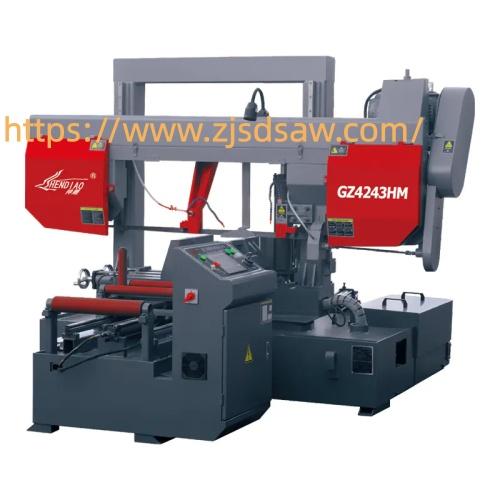
Fully Automatic Angle Cutting Band Saw Machine accuracy depends on several mechanical and operational elements that operators can monitor daily. Proper attention to these elements helps keep miter results consistent across batches.
The rigidity of the main frame plays a central role. A solid dual column structure resists flex during the swivel motion so the blade path stays true to the set incline. Any play in the columns or cross members allows small deflections that grow noticeable on wider sections. Operators should inspect the column surfaces and locking bolts at the start of each week and tighten them to the torque values listed in the service guide.
Calibration of the swivel mechanism needs regular verification. After any heavy load or relocation use a digital protractor or precision square to confirm the displayed degree matches the actual blade plane. Small offsets of even half a degree compound over the length of a structural member and produce fit up problems later in assembly. Reset the zero point whenever the reading drifts and lock the swivel securely before starting a production run.
Clamping force must hold the workpiece firmly without distorting it. Uneven pressure allows the material to shift slightly as the blade engages altering the final slant. Adjust the hydraulic or mechanical clamps so contact is even across the full width of the stock. For thin wall tube or soft alloys reduce pressure just enough to prevent crush marks while still eliminating movement.
Blade support through the guides influences tracking. Guides that sit too far from the work or have worn inserts permit lateral movement that compounds over the cut length. Position the guide arms as close as practical to the workpiece and replace any carbide or bearing inserts that show grooves or play. Correct support keeps the blade rigid so each tooth follows the intended plane.
Material support on the infeed and outfeed tables prevents sagging. Roller tables or fixed rests at the correct height keep long pieces level so gravity does not change the effective angle. Check that the table surface remains parallel to the blade plane and that any extension arms are locked firmly. Sagging of only a few millimeters at the far end can shift the measured incline by a noticeable amount.
Control system resolution and feedback loops determine how closely the programmed value is followed. Actuators with fine incremental control reduce overshoot when the head rotates to a new setting. Verify that the position sensors remain clean and that the control panel displays match physical measurements after every major program change.
Vibration from unbalanced components or loose fasteners transmits into the blade and creates small deviations. Periodic tightening of drive pulleys motor mounts and frame joints keeps the system quiet. Replace any worn belts or couplings that introduce rhythmic movement. A smooth running unit produces cleaner edges and more predictable geometry.
Thermal expansion can affect long runs. Allow the unit to reach operating temperature before critical jobs and monitor coolant temperature to limit heat buildup in the frame. Large temperature swings cause differential growth between the columns and the swivel head that alters the blade orientation. Consistent ambient conditions and steady coolant flow reduce this variable.
Operator technique also counts. Loading the stock squarely against the reference fence and confirming the zero point before starting each program avoids cumulative error. A short checklist posted near the control panel reminds every user of the sequence frame check swivel verification clamp pressure guide spacing and table level. Training new staff on this routine takes only a few minutes yet prevents many common problems.
Chendiao designs its systems with accessible adjustment points for the swivel lock guide arms and table height so these checks remain straightforward. Following the steps above helps maintain consistent geometry through repeated cycles and supports reliable fit up in downstream assembly.
A brief daily routine of visual inspection protractor verification and clamp pressure test supports repeatable results across different workpiece sizes. Over weeks of steady use the difference becomes clear. Units that receive regular attention deliver cleaner edges and fewer rejected pieces. The small investment of time each shift returns lower rework costs and smoother production flow.
Shops that need equipment designed around these accuracy factors can review the current range at https://www.zjsdsaw.com/product/ and match capacity to their typical workpiece sizes.

 English
 Arabic
 Spanish
 Portuguese
 Deutsch
 Turkish
 Dutch
Dutch
 Italiano
 Russian
 Romaian
 Portuguese (Brazil)
 Greek
Greek