


What Does Burial Insurance Actually Cost Illinois Families Right Now?
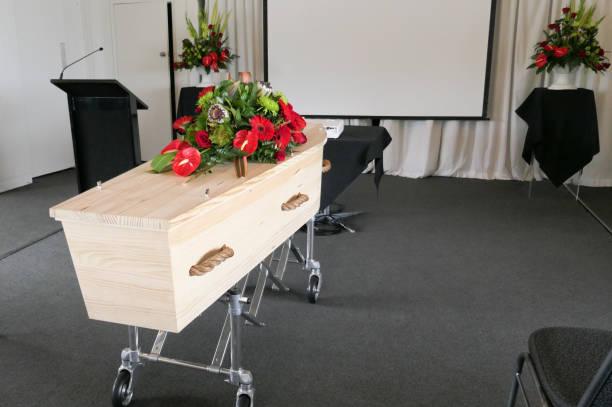
Funeral costs have gotten out of hand. If you've priced one out recently in Tazewell County, you already know that. A basic service with a casket and burial plot can run $9,000 to $12,000 these days, sometimes more depending on the cemetery. That's why so many folks around here are looking into burial insurance Morton IL agents and families alike have been asking about more this year. It's not complicated coverage, but it's also not something you want to buy blind, so let's get into what actually matters.
Why Final Expense Coverage Even Exists
Life insurance used to be the go-to for covering funeral costs. The problem is, a lot of people over 60 either don't qualify for a traditional policy or get quoted premiums that make no sense for the coverage. Burial insurance — also called final expense insurance — fills that gap. Smaller death benefit, usually $5,000 to $25,000. Simplified underwriting. No massive medical exam most of the time. It was built for exactly this situation: someone who wants to make sure their family isn't scrambling for cash the week of a funeral.
Who Actually Buys This Stuff
Mostly people between 50 and 85. Some younger, some older, but that's the sweet spot. A lot of them already have a mortgage paid off, kids grown, maybe a little retirement savings — but not enough sitting around to hand a spouse $10,000 in cash on short notice. I talked to a woman in East Peoria last spring who put it plainly: she wasn't worried about herself. She was worried her husband would have to pull from their emergency fund the same week he was grieving. That's the real reason people buy this. Not fear. Practicality.
Morton-Specific Pricing, More Or Less
Rates here track pretty close to state averages, with small variation depending on the carrier and your age at application. A 65-year-old in good health might pay somewhere between $35 and $70 a month for a $10,000 policy. Someone with diabetes or a heart condition could pay more, or get steered toward a graded policy — more on that below. It's not one price fits all, and honestly anyone who quotes you a flat number without asking a single health question probably isn't giving you a real number.
Level, Graded, Or Guaranteed — Pick Wrong And You'll Regret It
This is where people mess up. There are three basic types.
-
Level benefit: full payout from day one, for applicants who qualify medically
-
Graded benefit: partial payout in the first two or three years, full after that — usually for folks with moderate health issues
-
Guaranteed issue: no health questions at all, but waiting periods and higher premiums
Most people who apply healthy enough get approved for level. But if you've had a recent cancer diagnosis or a couple of hospitalizations, don't be shocked if you land in graded territory. It's not a scam, it's just how the risk math works.

The Application Actually Takes Fifteen Minutes
People assume this is a whole ordeal. It's not. Most applications are done over the phone or online, and it's a handful of health questions — heart disease, cancer history, tobacco use, that sort of thing. No blood draw, no doctor visit required for simplified issue plans. I've seen people get approved the same day. Some carriers even issue a decision within minutes if the health questions come back clean.
Where Families Get Burned
Two things trip people up constantly. First, buying way more coverage than needed and paying for it monthly for twenty years, when a $7,000 policy would've covered the actual funeral cost plus a little cushion. Second — and this one's sneaky — not reading the graded period fine print. If you pass away within the first two years on a graded policy from anything other than an accident, your beneficiary might only get back premiums paid plus a small percentage, not the full death benefit. Ask about this directly before you sign anything.
What Coverage Amount Actually Makes Sense
Start with the real number. Call a couple of funeral homes in the area, ask for a basic package price, then add maybe $1,500 to $2,000 for extras — flowers, a headstone, the reception afterward. For most families that lands somewhere around $10,000 to $15,000. You don't need $50,000 in burial insurance unless you're planning to leave behind debt or a legacy gift too, and at that point you're really talking about a different kind of policy altogether.
A Quick Word On Working With Someone Local
You can absolutely buy this online through a national carrier's website, and plenty of people do. But there's something to be said for sitting across from someone who knows Morton, knows the local funeral homes, and can walk you through the graded-versus-level decision without rushing you. StAK Insurance Solutions has had that conversation with a lot of local families, and it usually comes down to matching the policy to the person, not just picking whatever's cheapest on a comparison site.
Conclusion
None of this is glamorous stuff to think about, and I get why people put it off. But the families who've already dealt with a funeral without coverage in place will tell you — it adds a layer of stress nobody needs during an already hard week. A modest policy, priced appropriately for your health and age, can help take that concern off the table. It doesn't have to be complicated. Get a few quotes, ask the graded-period question, and pick coverage that actually matches your needs and budget. If you're also researching Medigap Peoria IL, take the time to understand how Medicare Supplement coverage works and how it fits alongside your broader healthcare and financial planning.
FAQs
How much does burial insurance cost in Morton, IL?
Most healthy applicants between 60 and 75 pay somewhere between $30 and $80 a month for $10,000 in coverage, though age and health history shift that range quite a bit.
Can I get burial insurance with a pre-existing condition?
Usually yes, through a graded or guaranteed issue policy, though the payout structure and waiting periods differ from a standard level policy.
Is burial insurance the same as life insurance?
Not exactly. It's a smaller, simplified version of whole life insurance built specifically to cover funeral and final expenses rather than income replacement.
How fast can a policy be approved?
Simplified issue applications are often approved within a day, sometimes within minutes, since there's no medical exam required.

 Arabic
 French
 Spanish
 Portuguese
 Deutsch
 Turkish
 Dutch
Dutch
 Italiano
 Russian
 Romaian
 Portuguese (Brazil)
 Greek
Greek