


How Accurate Are Online IQ Tests? What Can Change Your Results
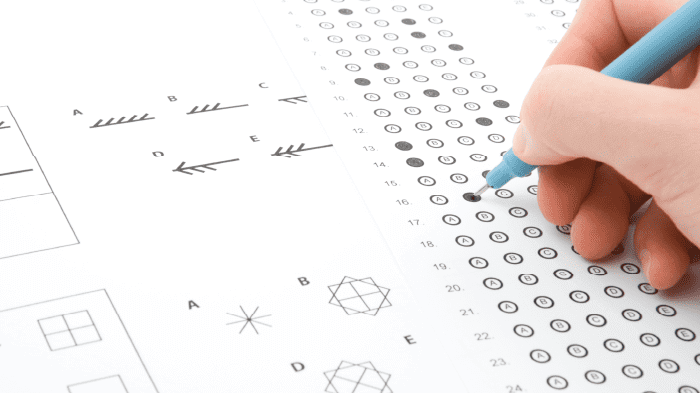
Online IQ tests offer a convenient way to explore reasoning, problem-solving, memory, and other cognitive abilities. Instead of scheduling an appointment or visiting a testing center, people can complete an assessment from home and receive a score within minutes. This accessibility has made online IQ tests increasingly popular among students, professionals, and people who are simply curious about their cognitive performance.
However, an online IQ score can be influenced by many factors. This raises an important question: how accurate are online IQ tests, and what can cause your results to change?
The answer depends on the quality of the test and the circumstances in which it is taken. A carefully designed assessment may provide useful information about certain cognitive skills, while a casual online quiz may have limited scientific value. Even with a well-designed test, factors such as fatigue, distractions, familiarity, timing, and testing conditions can affect performance.
Understanding these influences can help you interpret an online IQ score more realistically.
What Is an IQ Test?
An IQ test is designed to measure selected aspects of cognitive ability. Depending on the assessment, these may include logical reasoning, numerical reasoning, visual problem solving, verbal comprehension, working memory, and processing speed.
The resulting score is generally interpreted in relation to a reference population. This means that an IQ score is not simply a percentage of questions answered correctly. The scoring system and comparison group play an important role in determining what the final number means.
Professional intelligence assessments are developed using standardized procedures and extensive research. Online tests vary widely in how closely they follow these principles.
As a result, two tests that both advertise themselves as IQ tests may produce scores that are not directly comparable.
How Accurate Are Online IQ Tests?
The accuracy of online IQ tests depends on several factors.
A well-developed online assessment may provide a useful estimate of performance on the cognitive abilities it measures. However, many free internet quizzes do not provide enough information about their reliability, validity, standardization, or scoring methods to support strong conclusions.
A test that produces an IQ score is not automatically a scientifically validated IQ assessment.
When evaluating how accurate are online iq tests consider whether the creators explain how the questions were developed, how the test was evaluated, and how the scoring system was established.
The more transparent the assessment is about its methodology and limitations, the easier it is to judge how much confidence to place in the result.
Test Quality Can Change Your Results
The first factor to consider is the quality of the test itself.
A carefully designed assessment should contain questions that are relevant to the cognitive abilities being measured. It should have an appropriate range of difficulty and a scoring system based on suitable data.
A poorly designed test may contain ambiguous questions, repetitive tasks, or problems that depend heavily on specific knowledge rather than general reasoning.
The number of questions can also matter. A very short assessment may be more sensitive to guessing and random variation. Getting one additional question correct could significantly affect the final score.
However, simply making a test longer does not guarantee accuracy. Good measurement depends on appropriate test construction, not just the number of questions.
Your Sleep and Energy Levels
Your physical condition can influence how well you perform.
If you take an online IQ test after getting very little sleep, you may find it harder to concentrate, process information, and respond quickly. A well-rested person may approach the same questions with greater focus.
Fatigue can be particularly relevant when a test contains timed tasks. Even if you understand a problem, tiredness may cause you to take longer to solve it.
This does not mean that taking a test while tired automatically invalidates the result. It simply means that the score reflects your performance under those particular conditions.
For a more consistent result, take the assessment when you are reasonably rested and alert.
Stress and Anxiety
Your emotional state can also influence test performance.
Some people experience anxiety when they know that their performance is being measured. This can make it difficult to concentrate, especially when questions are timed.
Worrying about the score itself can become a distraction. Instead of focusing entirely on the problem, a person may think about whether they are answering quickly enough or what the final result will say about them.
A calmer testing environment can make it easier to concentrate on the questions.
It is important to remember that an online IQ score represents performance during a particular testing session. It does not necessarily capture every aspect of a person's cognitive abilities under every circumstance.
Distractions at Home
One of the biggest differences between online and supervised testing is the environment.
An online test can be taken almost anywhere. While this is convenient, it also means that users may face distractions that would be minimized in a controlled testing environment.
Phone notifications, conversations, television, background noise, pets, household activities, and interruptions can all break concentration.
Even a short interruption can be inconvenient during a timed assessment.
If you want your online result to be as consistent as possible, choose a quiet location and turn off unnecessary notifications before beginning.
Time Limits Can Affect Scores
Many online IQ tests use time limits. The intention is often to measure not only whether you can solve a problem but also how efficiently you can do so.
However, time pressure can influence different people in different ways.
Someone who works carefully may answer fewer questions within a fixed period even if they understand the material. Another person may work quickly but make more mistakes.
Your performance can also vary depending on how familiar you are with the question format.
If the assessment places substantial emphasis on speed, your final score may reflect both reasoning ability and performance under time pressure.
Familiarity With Test Formats
Previous experience with IQ-style questions can influence results.
Online tests frequently use patterns, sequences, analogies, matrices, and other recurring formats. Someone who has completed many similar assessments may recognize these structures more quickly.
For example, a person who has practiced numerical sequences may immediately look for common relationships between numbers. Someone encountering such questions for the first time may spend more time determining what type of pattern is involved.
This is known as a practice effect.
As a result, repeated exposure can sometimes improve performance without representing an equivalent change in general intelligence.
Taking Multiple Tests
Taking several IQ tests can produce a wide range of scores.
This is not necessarily evidence that your intelligence is changing rapidly. Different assessments may measure different abilities and use different scoring systems.
One test might emphasize visual reasoning, while another focuses more heavily on numerical or verbal problems. They may also use different reference populations.
Your performance can also change because of practice. After completing several assessments, you may become more familiar with common question types.
Rather than searching for the highest score, it is more useful to evaluate the quality and methodology of the assessment.
Guessing Can Affect Short Tests
Guessing is another factor that can influence online IQ results.
If an assessment contains only a small number of questions, a few lucky guesses may have a relatively large effect on the final score.
This is one reason why a very short quiz should not necessarily be treated as a precise measurement of general intelligence.
A longer, carefully constructed assessment can provide more opportunities to observe performance across different types of tasks. However, length alone does not guarantee validity.
Language and Cultural Factors
Language can also affect performance, particularly when an assessment contains verbal questions.
A person taking a test in a language that is not their strongest language may have difficulty understanding certain words or instructions. This could affect their performance even when the underlying reasoning task is within their abilities.
Some questions may also depend on cultural knowledge or conventions.
For this reason, it is important to consider whether the test was designed and standardized for the population using it.
Technology Can Affect the Experience
Technical factors can also influence online test performance.
A slow internet connection, unfamiliar interface, small screen, or poorly designed website can make an assessment harder to complete.
If questions are displayed poorly or navigation is confusing, the test may measure a person's ability to deal with the website rather than purely their reasoning skills.
A reliable assessment should provide clear instructions and an interface that does not unnecessarily interfere with the testing process.
How to Get a More Consistent Result
If you want to take an online IQ test, several steps can help reduce avoidable influences.
Take the assessment when you are rested and focused. Choose a quiet location and remove unnecessary distractions. Make sure your device and internet connection are working properly.
Read the instructions carefully and complete the test without outside assistance if the assessment is intended to measure independent performance.
Avoid taking several similar tests immediately afterward. Familiarity with the question formats can influence subsequent scores.
Most importantly, choose an assessment that provides information about its methodology, standardization, and limitations.
Should You Trust an Online IQ Score?
An online IQ score can be useful, but the level of confidence you should place in it depends on the assessment.
For entertainment and personal curiosity, an online test can be an enjoyable way to explore reasoning challenges.
For a more meaningful estimate, look for an assessment with transparent development, appropriate standardization, and evidence supporting its scoring system.
If you require a formal cognitive assessment for an educational, psychological, clinical, or other important purpose, an online quiz should not automatically be considered a substitute for standardized professional testing.
Final Thoughts
So, how accurate are online IQ tests? The answer depends on both the quality of the test and the conditions under which you take it.
Your result can be influenced by sleep, fatigue, stress, distractions, time pressure, previous experience, guessing, language, technology, and the design of the assessment itself.
This does not mean that every online IQ score is meaningless. A carefully developed test can provide useful information about certain cognitive abilities. However, a single online score should not be treated as a complete or permanent measurement of intelligence.
The best approach is to look beyond the number. Consider how the test was created, whether it has been standardized, what abilities it measures, and what conditions surrounded your testing session.
An IQ score is most useful when understood as one piece of information about performance rather than a definitive statement about a person's intelligence or potential.

 Arabic
 French
 Spanish
 Portuguese
 Deutsch
 Turkish
 Dutch
Dutch
 Italiano
 Russian
 Romaian
 Portuguese (Brazil)
 Greek
Greek