


Home Elevator vs Stair Lift: Understanding the Right Accessibility Solution
Creating a safer and more accessible home can make everyday life easier for people with mobility challenges, older adults, and families planning for long-term accessibility. When a home has multiple levels, stairs can become difficult or unsafe to navigate. Two popular solutions are a home elevator and a stair lift. Understanding the differences between these options can help homeowners determine which type of accessibility improvement fits their home, lifestyle, and mobility needs.
Understanding Home Elevators
A home elevator is a vertical transportation system designed to move people between different floors. Unlike traditional elevators found in commercial buildings, residential elevators are designed specifically for private homes and can be installed in a variety of configurations.
Home elevators can provide convenient access for people who use wheelchairs, walkers, or other mobility equipment. Depending on the design, an elevator may also have enough space for another person to accompany the passenger.
One major advantage of a home elevator is its versatility. It can provide access between multiple levels and may also make it easier to transport groceries, laundry, luggage, or other household items. For homeowners planning to remain in their property for many years, an elevator can become a valuable long-term accessibility feature.
However, installing an elevator generally requires more planning and space than installing a stair lift. Construction requirements, shaft placement, electrical work, and other installation considerations can affect the overall project.
Understanding Stair Lifts
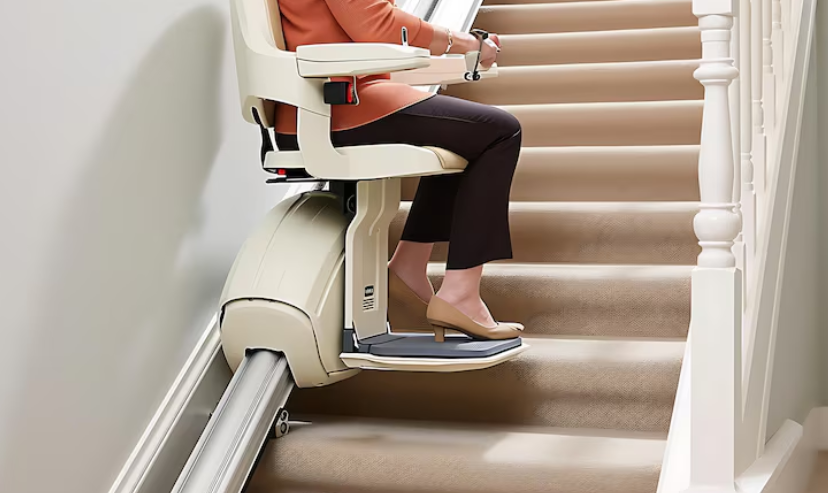
Stairlifts are mobility devices designed to transport a person up and down a staircase while seated. A motorized chair travels along a rail that follows the stairs, allowing the user to avoid climbing steps.
Stairlifts are available for many different staircase configurations. Straight staircases can often accommodate a relatively straightforward installation, while curved or multi-level staircases may require a more customized system.
One of the biggest benefits of stairlifts is that they can provide direct assistance without requiring major changes to the structure of the home. For people who can comfortably sit, transfer onto the chair, and remain seated during the ride, a stair lift can offer a practical way to regain access to upper or lower floors.
Stairlifts may also be suitable for homeowners who do not need wheelchair-sized transportation between floors. The compact design can preserve much of the existing staircase area for other household members.
Home Elevator vs Stair Lift: Key Differences
When comparing a home elevator vs stair lift, the first consideration is the user's mobility level. Someone who uses a wheelchair may require the additional space and accessibility features of an elevator. Someone who can transfer to a seated lift and has adequate upper-body stability may find a stair lift more appropriate.
Space is another important consideration. A stair lift generally follows the existing staircase, while a home elevator requires dedicated vertical space and appropriate structural planning.
The two systems can also differ significantly in installation requirements. Stairlifts often require installation along the staircase without extensive remodeling. A home elevator may involve more substantial construction depending on the elevator type and the home's layout.
Another difference is the number of people or items that can be transported. A stair lift typically carries one seated passenger, while some residential elevators can accommodate a passenger using a wheelchair along with another person. Elevators can also make transporting household items between floors easier.
Choosing Based on Mobility Needs
Mobility needs should be at the center of the decision. A person who has difficulty walking but can comfortably sit may benefit from a stair lift. It can eliminate the need to climb stairs while allowing the individual to continue using different levels of the home.
For someone who uses a wheelchair, a walker, or other larger mobility equipment, a home elevator may offer greater flexibility. The ability to move vertically without transferring from a wheelchair can be especially important.
Safety should also be considered. Both solutions can reduce the need to physically climb stairs, but users should select equipment that matches their abilities and home environment. Professional assessment can help determine whether the staircase, available space, and user's mobility needs are compatible with a particular system.
Space and Home Layout
Every home has a different layout, so there is no universal solution. A staircase with a simple configuration may be well suited for a stair lift. A home with multiple floors may benefit from a vertical transportation solution that provides access to several levels.
Homeowners should also think about how the space will be used in the future. A staircase may be relatively narrow, making certain equipment unsuitable. Other homes may have closets, unused spaces, garages, or other areas that could potentially accommodate an elevator installation.
Planning ahead is particularly useful when accessibility needs are expected to change over time. A solution that works today may need to accommodate greater mobility limitations in the future.
Comfort and Convenience
Comfort is another factor worth considering. Stair lifts typically feature a seat, armrests, footrests, and controls designed to make traveling along the staircase easier. The user remains seated throughout the journey.
A home elevator provides a different experience because passengers stand or remain in their mobility equipment inside an enclosed or partially enclosed cabin. This can be especially convenient when moving between floors with a wheelchair or carrying items.
Homeowners should think about how frequently different floors are used. If an individual primarily needs assistance getting to one bedroom or bathroom upstairs, a stair lift may address that specific need. If several rooms and levels need to remain accessible, an elevator may offer broader functionality.
Installation and Maintenance Considerations
Both home elevators and stairlifts require professional installation and periodic maintenance. Before choosing either option, homeowners should consider the structure of the home, electrical requirements, available space, staircase design, and expected frequency of use.
Stairlifts generally involve a rail installed along the stairs and a powered chair that travels along the rail. Depending on the system, the installation process can vary.
Home elevators involve more components and may require additional construction. The installation process can therefore be more involved, particularly when the home was not originally designed with an elevator.
Regular maintenance is important for both systems. Batteries, mechanical components, safety sensors, controls, and moving parts should be inspected according to the manufacturer's recommendations.
Cost Considerations
Cost is another major factor in the home elevator vs stair lift decision. The final price of either system depends on the home, equipment, installation requirements, configuration, and customization.
A stair lift may have a lower overall installation cost because it generally uses the existing staircase. However, curved staircases and customized configurations can increase expenses.
A residential elevator can require a larger investment because of construction, equipment, electrical work, and structural considerations. However, it may provide accessibility across multiple floors and potentially offer additional convenience for the household.
Instead of choosing based only on the initial price, homeowners should consider long-term usefulness, maintenance, installation requirements, and how well the solution meets their current and future needs.
Making the Right Accessibility Choice
There is no single answer that applies to every household. The decision between a home elevator and stairlifts depends on mobility requirements, home design, available space, budget, and long-term plans.
A stair lift may be a practical option when the primary goal is helping one person travel safely along an existing staircase. A home elevator may be more suitable when wheelchair accessibility, multiple floors, or transporting people and items are important priorities.
Homeowners should evaluate the staircase and overall property before selecting equipment. Professional installation specialists can also help identify practical options based on the home's configuration.
Ultimately, accessibility improvements should make the home easier to navigate while supporting independence and everyday comfort. By carefully comparing a home elevator vs stair lift, homeowners can focus on the features that matter most to their household and select a solution designed around their specific needs.

 English
 Arabic
 French
 Portuguese
 Deutsch
 Turkish
 Dutch
Dutch
 Italiano
 Russian
 Romaian
 Portuguese (Brazil)
 Greek
Greek