


Choosing Besan for Namkeen Manufacturing | Health Mark
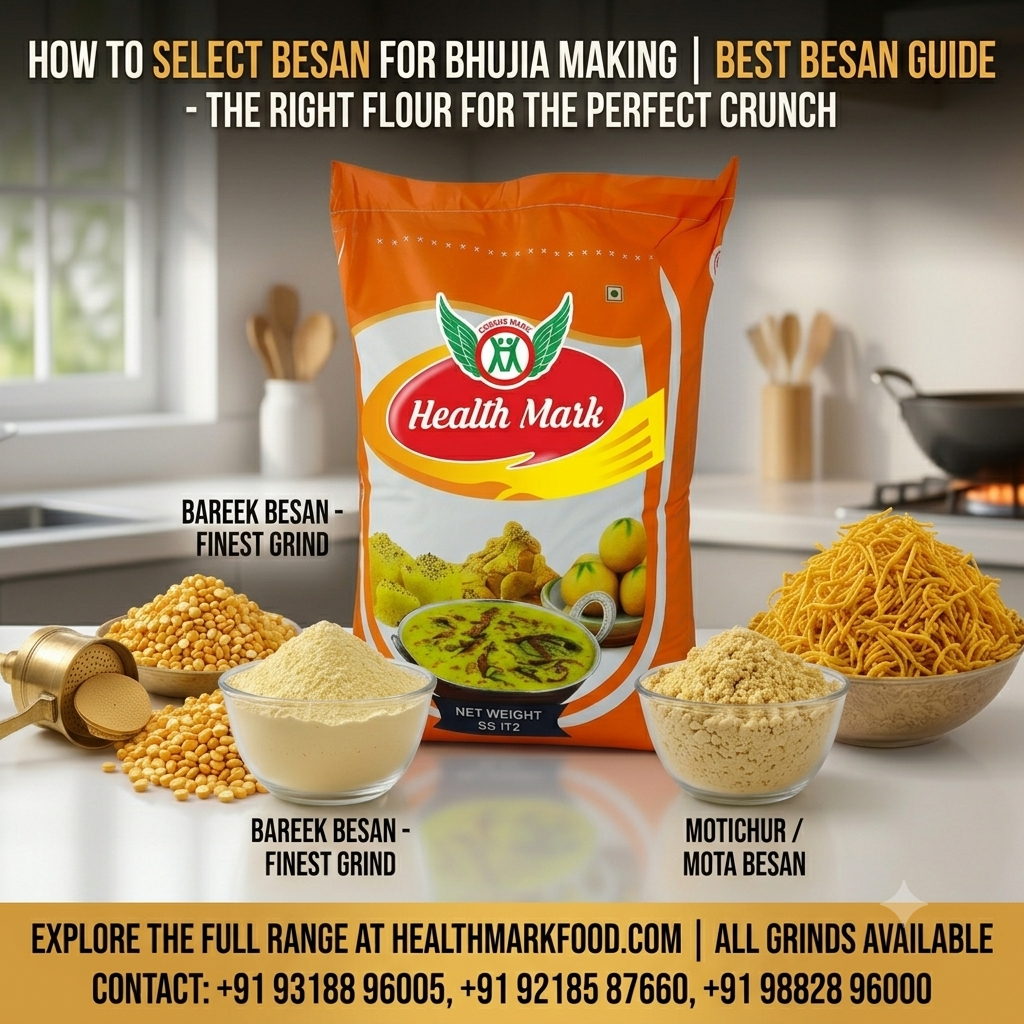
Namkeen manufacturing requires careful selection of ingredients because even small differences in raw materials can affect the final product. Texture, taste, appearance, crispiness, and consistency all depend on the quality of ingredients used during production.
Among these ingredients, besan plays an important role in several popular Indian snacks, including sev, bhujia, gathiya, boondi, and different types of mixtures. Choosing the right flour is therefore an important decision for manufacturers looking to maintain consistent product quality.
Rather than selecting a product based only on price, manufacturers should consider factors such as raw material quality, grinding consistency, moisture, packaging, storage, and supply reliability.
Understand the Requirements of Your Namkeen
The first step in choosing besan is understanding the type of namkeen being manufactured.
Different products may require different flour characteristics. For example, sev may require a particular texture to achieve the desired shape and crispness, while gathiya may need a different consistency depending on the recipe and manufacturing process.
Before placing an order, manufacturers should identify the texture, binding ability, and frying characteristics required for their specific product.
This makes it easier to select a suitable grade instead of using the same flour for every application.
Texture and Grinding Consistency Matter
The grinding quality of besan can influence how it behaves during mixing, extrusion, shaping, and frying.
A consistent grind helps manufacturers maintain more predictable results from one production batch to another. Uneven particles can affect batter or dough consistency and may create differences in the final appearance of the snack.
For this reason, premium quality Besan should have a consistent texture appropriate for its intended application.
Manufacturers should also discuss their exact requirements with suppliers before purchasing larger quantities.
Check the Quality of Raw Materials
The quality of the raw material is an important starting point for producing good besan.
Since besan is made from gram or chana dal, the quality and condition of the raw material can influence its colour, aroma, texture, and overall performance.
Food businesses should work with suppliers who provide clear product information and maintain consistent sourcing and processing practices.
Instead of relying only on the label best Besan, manufacturers should evaluate actual product performance through samples and regular quality checks.
Moisture Can Affect Manufacturing Performance
Moisture is another important consideration when selecting flour for commercial production.
Excess moisture can affect storage stability and may also influence how the flour behaves during mixing and frying. Properly packaged and stored flour helps maintain more consistent characteristics.
Manufacturers purchasing bulk Besan should pay particular attention to packaging, transportation conditions, warehouse storage, and handling practices.
The flour should be stored in a clean, dry environment away from direct moisture and excessive humidity.
Packaging and Storage Should Not Be Ignored
Good packaging protects the product during transportation and storage.
For commercial buyers, packaging should be suitable for the quantity being purchased and should help protect the flour from moisture and contamination.
Before ordering large quantities, businesses should check the available pack sizes and understand how the product should be stored after delivery.
A reliable supplier should also provide clear information about batch details, product specifications, and storage requirements.
Consistency Is Important for Namkeen Manufacturers
Commercial namkeen production depends heavily on consistency.
Customers expect the same snack to have a similar taste, texture, colour, and appearance every time they purchase it. Changes in flour quality between batches can make this difficult.
This is why manufacturers should evaluate suppliers based on their ability to maintain consistent product quality over time.
A supplier offering a competitive best Besan price may not necessarily provide the best overall value if the product quality changes frequently.
Quality consistency and dependable supply should be considered alongside cost.
Compare Suppliers Beyond Price
Price is naturally an important factor for any manufacturing business. However, selecting flour solely because it has the lowest price can create problems later.
Manufacturers should compare:
-
Product quality
-
Grinding consistency
-
Raw material quality
-
Packaging
-
Minimum order quantity
-
Supply capacity
-
Delivery reliability
-
Product specifications
-
Customer support
-
Long-term availability
This broader comparison helps businesses identify the right supplier for their production requirements.
For manufacturers purchasing regularly, a stable supply relationship can be more useful than constantly changing suppliers for small price differences.
Why Bulk Purchasing Requires Extra Planning
Buying bulk Besan can be practical for businesses with regular production requirements, but storage capacity should be considered before placing an order.
Large quantities should be stored in appropriate conditions to protect the flour from moisture, heat, pests, and contamination.
Manufacturers should also maintain proper stock rotation so that older inventory is used appropriately rather than remaining unused for extended periods.
Bulk purchasing works best when the purchase quantity matches actual production demand and available storage facilities.
Choosing a Reliable Besan Supplier
A dependable supplier can make ingredient procurement easier for namkeen manufacturers.
A good Best Besan Seller should be able to communicate product specifications clearly, maintain consistent quality, provide appropriate packaging, and support regular supply requirements.
Manufacturers should ideally request a sample before committing to a large order. Testing the sample in the actual production process can provide a better understanding of its performance.
This is particularly important because flour that works well for one namkeen recipe may not produce exactly the same result in another application.
Health Mark Besan for Food Businesses
Health Mark offers besan for household and commercial food applications. Its products can be considered by businesses looking for a consistent flour option for Indian recipes and snack preparation.
For manufacturers evaluating suppliers, the focus should remain on product suitability, consistency, packaging, supply requirements, and overall value.
Businesses interested in Health Mark products can explore the company website:
For product enquiries and bulk requirements:
09318896005
9218587660
9882896000
How to Evaluate a Besan Sample
Before placing a large commercial order, manufacturers can conduct a basic product evaluation.
The sample can be checked for colour, aroma, texture, mixing behaviour, and performance during the actual namkeen production process.
Manufacturers can compare the final product for crispness, appearance, taste, oil absorption, and consistency.
Keeping records of sample testing can also make future purchasing decisions easier.
This practical approach is more reliable than selecting a top Besan product purely because of promotional claims.
Why Long-Term Supplier Relationships Matter
Namkeen manufacturers often need ingredients throughout the year. A reliable supplier relationship can simplify procurement and reduce uncertainty around availability.
Once a suitable product has been tested and approved, maintaining consistent specifications across future orders can help manufacturers maintain their own product quality.
This is especially useful for businesses selling packaged namkeen under established brands, where customers expect a consistent experience with every purchase.
Final Thoughts
Choosing Besan for Namkeen Manufacturing requires more than comparing prices. Manufacturers should consider texture, raw material quality, grinding consistency, moisture, packaging, storage, supply capacity, and performance during actual production.
The right flour should suit the specific namkeen being produced and deliver consistent results across batches. Businesses should also test samples and evaluate suppliers before committing to regular or bulk purchases.
Whether a manufacturer is a small food business or an established namkeen producer, selecting a reliable supplier and maintaining consistent ingredient quality can support better production outcomes.
For businesses searching for best besan india options, the most useful approach is to compare measurable quality factors and actual product performance rather than relying only on marketing claims.

 English
 Arabic
 French
 Spanish
 Portuguese
 Deutsch
 Turkish
 Dutch
Dutch
 Italiano
 Russian
 Romaian
 Greek
Greek