


How to Find Quality Used Apple iPhones at Better Prices
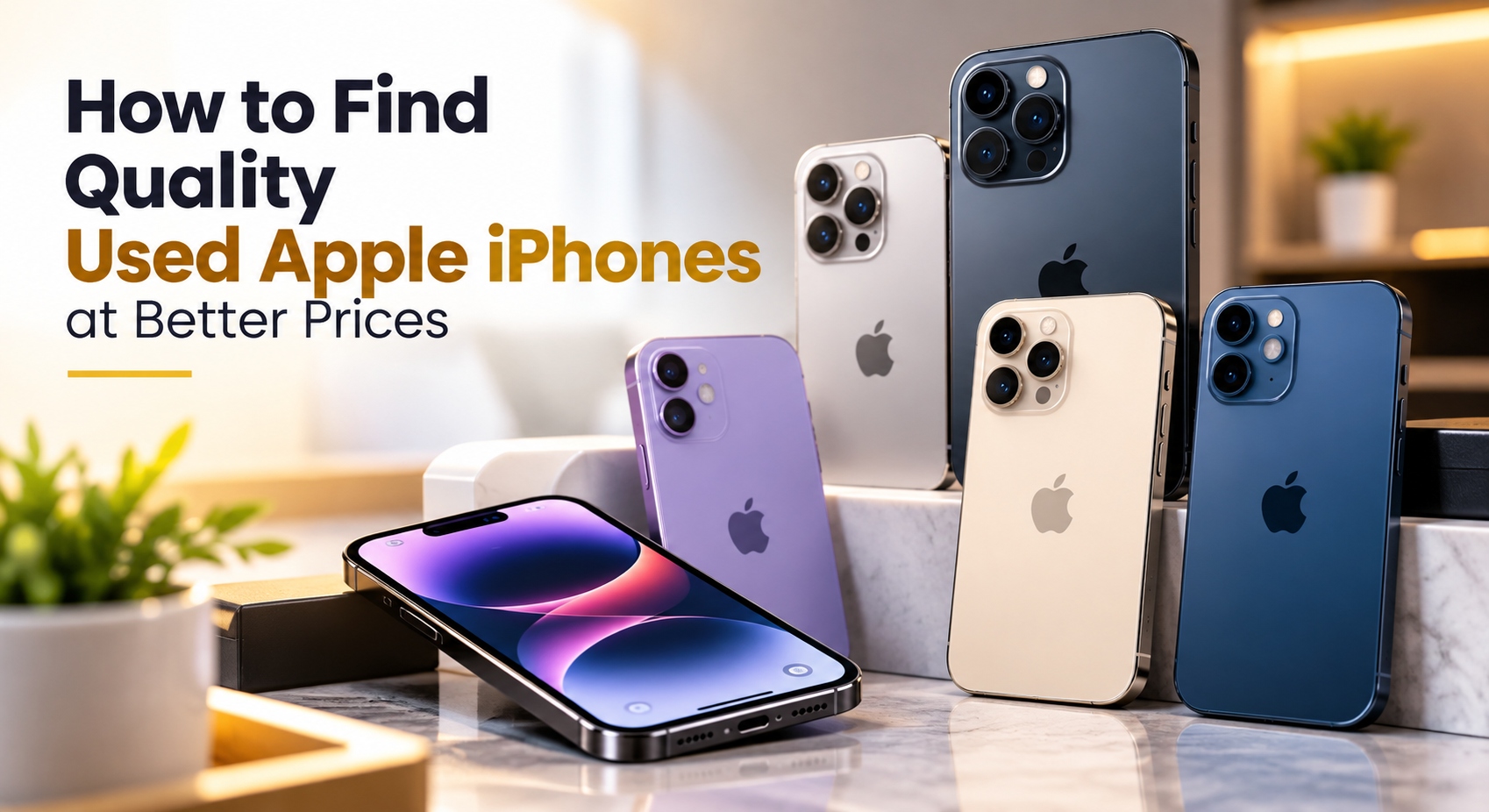
Buying a used Apple iPhone can be an excellent way to access premium technology without paying the full price of a new device. However, finding a quality used iPhone at a better price requires more than simply choosing the cheapest listing. Buyers need to consider the device's condition, battery health, storage capacity, model year, warranty, and overall reliability before making a purchase.
With the right approach, it is possible to find a used iPhone that offers strong performance and good value for money. This guide explains the important factors to consider when searching for a quality used Apple iPhone at a competitive price.
NOTE :- Many buyers had considered Used Apple iPhones in France because they had offered Apple technology at reduced prices. Pre-owned devices had been available in different models and storage capacities. Customers had compared condition and pricing before purchasing. Those looking for reliable options had contacted GLP Wireless for more information.
Understand Your Requirements Before Buying
The first step is to decide what you actually need from the iPhone. Apple offers several generations and models, each with different features, performance levels, camera capabilities, and storage options. A recent model may provide better long-term software support, while an older model can offer significant savings.
Consider how you plan to use the phone. If you mainly need it for calls, messaging, social media, browsing, and photography, an older iPhone may be sufficient. If you use demanding applications, play games, or need advanced camera features, choosing a newer model may be more appropriate.
Setting a budget before searching can also prevent unnecessary spending and make it easier to compare different options.
Check the Physical Condition Carefully
The physical condition of a used iPhone can reveal how well it was maintained. Inspect the display for scratches, cracks, dead pixels, discoloration, or touch-response problems. Examine the frame and back panel for dents, major scratches, or signs of previous repairs.
The condition of the charging port, speakers, microphones, and buttons should also be checked. Face ID or Touch ID should function properly depending on the model.
Minor cosmetic marks are normal on many pre-owned devices and may help you negotiate a better price. However, significant physical damage can indicate previous accidents or potentially expensive repairs.
Examine Battery Health
Battery health is one of the most important factors when purchasing a used iPhone. Over time, lithium-ion batteries naturally lose their ability to hold a charge.
On compatible iPhones, battery information can generally be viewed through the Battery Health settings. A device with stronger battery capacity can provide better everyday usability and reduce the likelihood of needing an immediate battery replacement.
If the battery has significantly degraded, consider the replacement cost when calculating the actual value of the phone. A cheaper iPhone may not be a bargain if it requires immediate repairs or battery replacement.
Verify the IMEI and Device Status
Before completing a purchase, verify the phone's IMEI or serial information and ensure that the device is legitimate. Buyers should check whether the phone is reported as lost or stolen and whether it has any restrictions that could prevent normal use.
It is also important to confirm that the previous owner's Apple Account has been completely removed from the device. Activation Lock can prevent a new owner from properly setting up an iPhone.
Never rely solely on photographs or verbal assurances. Whenever possible, inspect the device personally and verify its status before making payment.
Compare Storage and Model Options
Storage capacity can have a significant effect on the price of a used iPhone. A model with higher storage may cost more initially, but it can be useful for people who store large numbers of photos, videos, applications, and documents.
At the same time, buyers should avoid paying extra for storage they do not need. Comparing different storage variants of the same model can reveal opportunities to save money.
It is also useful to compare one generation against another. Sometimes a slightly older iPhone with good battery health and excellent condition can offer better value than a newer model with extensive wear.
Buy From a Reliable Seller
The seller is just as important as the phone itself. Reputable sellers generally provide clearer information about device condition, testing, returns, warranties, and product history.
When buying online, look for detailed product descriptions, genuine photographs, transparent policies, and customer reviews. Be cautious about listings that offer prices far below the typical market range without providing a reasonable explanation.
A trustworthy seller should be willing to answer questions about the phone's condition and provide relevant details before purchase.
Look for Warranty and Return Protection
A warranty can provide additional confidence when purchasing a pre-owned iPhone. Even a carefully inspected used device can develop an issue after purchase, so warranty coverage can reduce potential repair expenses.
Buyers should also understand the seller's return or replacement policy. Check how many days are available for returns, what conditions apply, and whether the buyer is responsible for shipping or other costs.
These policies should be considered when comparing prices because a slightly more expensive device with meaningful protection may provide greater overall value.
Compare Prices Before Making a Decision
Avoid buying the first attractive deal you find. Compare prices across multiple sellers and marketplaces for the same iPhone model, storage capacity, and condition.
When comparing prices, consider more than the advertised amount. Include factors such as battery health, warranty, accessories, condition, repair history, and return protection.
A phone priced slightly higher may ultimately be cheaper to own if it has a healthier battery, better condition, and warranty coverage.
Test the iPhone Before Payment
If you are buying locally, test as many functions as possible before completing the transaction. Check the camera, display, touchscreen, speakers, microphone, Wi-Fi, Bluetooth, cellular connectivity, charging, buttons, and biometric authentication.
Make a test call and connect the phone to a reliable Wi-Fi network. Test both front and rear cameras and check whether the flash works correctly.
Taking a few minutes to test the device can help identify problems that may not be visible from the outside.
Make a Smart Purchase Decision
Finding a quality used Apple iPhone at a better price is mainly about balancing price, condition, performance, and reliability. The lowest-priced device is not always the best value. A carefully inspected iPhone with good battery health, verified ownership status, suitable storage, and reasonable warranty protection can provide a much better ownership experience.
Before purchasing, research the model, compare multiple offers, inspect the device carefully, verify its status, and understand the seller's policies. With these steps, buyers can reduce the risk of unexpected expenses while getting the benefits of Apple's technology at a more accessible price.
For More Insightful Articles Related To This Topic, Feel Free To Visit: https://mingolive.com/

 English
 Arabic
 Spanish
 Portuguese
 Deutsch
 Turkish
 Dutch
Dutch
 Italiano
 Russian
 Romaian
 Portuguese (Brazil)
 Greek
Greek