


How Wide Do Stairs Need to Be for a Stairlift? A Guide to Home Accessibility Solutions
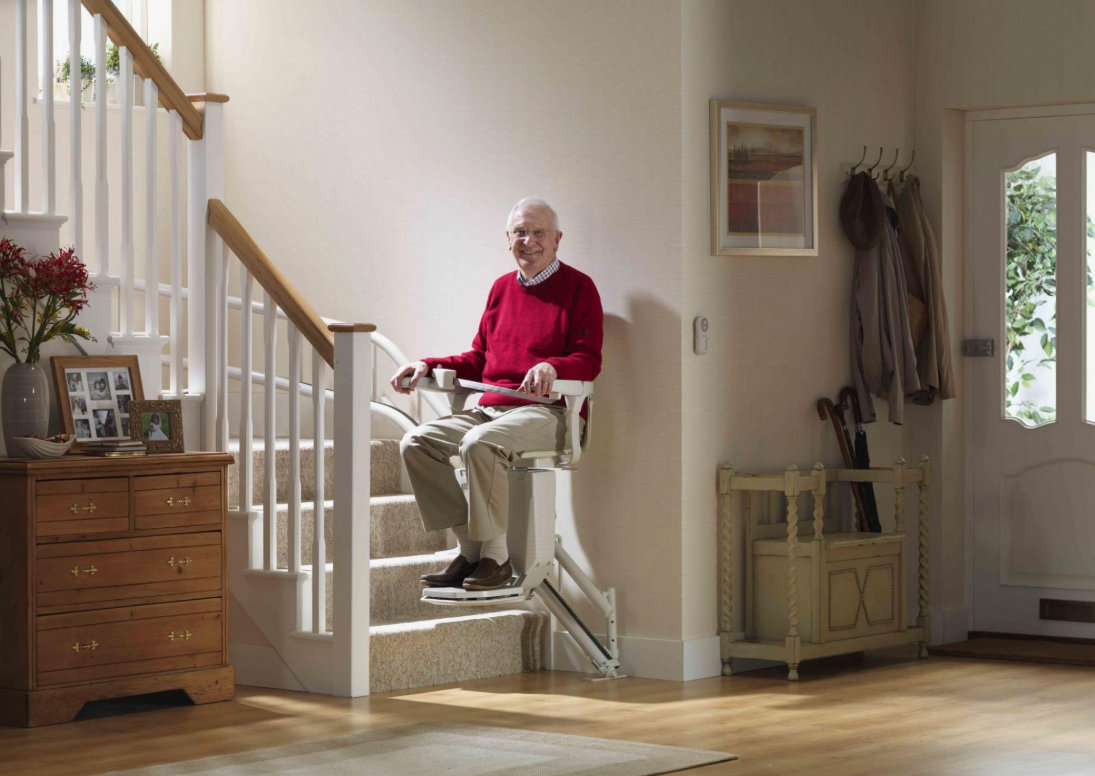
For many homeowners, a stairlift can make a major difference in everyday comfort, independence, and safety. But before installing one, an important question often comes up: How wide do stairs need to be for a stairlift? The answer depends on the stairlift model, staircase design, available clearance, and the way the lift is installed.
A stairlift is designed to travel along the stairs while leaving enough room for the user and other people who may need to use the staircase. Fortunately, many staircases can accommodate a stairlift, even when they appear relatively narrow. Understanding the basic requirements can help homeowners determine whether a stairlift is a practical option and explore other home accessibility solutions when needed.
Understanding Stairlift Width Requirements
There is no single stair width that applies to every stairlift. Different manufacturers and models have different dimensions and installation requirements. A straight stairlift may require less space than a more complex curved model, while the position of the rail and seat can also affect the amount of usable space.
In general, many standard stairlifts can be installed on staircases that are approximately 30 inches wide or slightly wider, but this should never be treated as a universal minimum. The actual requirements need to be confirmed by measuring the staircase and checking the specifications of the specific lift.
The most important measurement is not simply the total width of the stairs. Installers also need to consider the distance between walls, handrails, newel posts, doors, and other objects that may affect the stairlift's path.
Why Stair Width Matters
A stairlift needs enough space to operate safely and comfortably. If the staircase is too narrow, the lift may interfere with walls or other fixtures. There also needs to be enough room for a person to sit securely on the seat.
At the same time, homeowners should consider whether other people will still be able to use the stairs when the lift is installed. In many homes, the stairlift does not occupy the entire staircase. However, the remaining walking space can vary depending on the stairlift's design and how close it is positioned to the wall.
This is why a professional assessment is valuable. Instead of relying on a general measurement, an installer can evaluate the entire staircase and determine which equipment may work best.
Straight vs. Curved Staircases
The type of staircase also affects stairlift installation.
A straight stairlift is generally installed on a staircase that runs directly from one floor to another without turns or intermediate landings. Because the rail follows a simple path, these systems are often more straightforward to install.
A curved stairlift is designed for staircases with bends, turns, curves, or multiple sections. These lifts require a rail specifically designed for the individual staircase. As a result, the installation process is more customized.
Curved staircases can sometimes be challenging, but their unusual shape does not automatically mean that a stairlift is impossible. A professional assessment can determine whether a customized system can safely follow the staircase.
What Should Be Measured?
Before choosing a stairlift, several parts of the staircase should be evaluated. These may include:
- Total stair width
- Tread depth
- Staircase length
- Ceiling height
- Landing dimensions
- Handrail position
- Wall clearance
- Door locations
- Obstacles near the top and bottom of the stairs
- Available space for the seat and footrest
The user's height, mobility needs, and preferred seating position can also influence the choice of equipment.
For example, someone who needs additional room to transfer onto the stairlift may require a different configuration from someone who can easily sit down and stand up without assistance.
Does a Stairlift Make Stairs Too Narrow?
This is a common concern. Homeowners may worry that installing a stairlift will prevent family members, visitors, or caregivers from using the stairs.
A well-planned installation should take existing traffic into account. When the lift is parked correctly, it may fold against the wall or staircase to create additional walking space. Some models also feature folding seats, arms, and footrests.
However, the amount of remaining space depends on the staircase and the specific equipment. A narrow staircase requires particularly careful planning.
A professional installer can demonstrate how the stairlift will sit on the stairs and explain how much clearance will remain.
Other Home Accessibility Solutions
A stairlift is only one option for improving accessibility. Depending on the layout and needs of the household, other home accessibility solutions may also be useful.
For example, handrails can provide additional support along hallways, bathrooms, and staircases. Grab bars can make bathrooms safer, particularly around showers and toilets. Improved lighting can also help reduce the risk of trips and falls.
For homes with larger accessibility challenges, a residential elevator or vertical platform lift may provide another solution. These options can be especially useful when a person needs to move between multiple floors with mobility equipment.
Ramps are another common accessibility improvement. They can provide easier access through entrances where steps create a barrier. Threshold ramps may also help with smaller changes in floor height.
The right solution depends on the person's mobility, the home's layout, available space, and budget.
Consider the Space at the Top and Bottom
Stair width is important, but the areas surrounding the staircase are equally significant. A stairlift needs a suitable location for the user to get on and off safely.
At the bottom of the stairs, there may need to be enough room for the user to turn or move away from the staircase. At the top, the landing should provide sufficient space to exit the lift safely.
Doors can also create problems. If a door opens directly onto the staircase, its position may need to be considered before installation.
These details are easy to overlook when homeowners focus only on stair width.
Safety Should Be the Priority
A stairlift should be selected based on safety and individual needs rather than simply choosing the smallest model that fits the staircase.
Features such as swivel seats, safety belts, adjustable footrests, obstruction sensors, and easy-to-use controls can make the equipment more practical for everyday use. Battery backup can also be valuable because it allows many stairlifts to continue operating during a power interruption.
The user should be able to operate the controls comfortably and transfer on and off the lift as safely as possible.
Getting a Professional Assessment
If you are unsure whether your stairs are wide enough, the best approach is to have the staircase professionally assessed. Measurements can be taken at different points, and the installer can identify obstacles that may not be obvious.
A professional can also compare different stairlift designs and explain whether a straight, curved, or compact model is appropriate.
Rather than asking only, "How wide do stairs need to be for a stairlift?", it is better to consider the entire staircase and the user's needs. Width is just one part of a successful installation.
Making Your Home Easier to Navigate
Accessibility improvements can help people remain comfortable and independent in their own homes. A stairlift may eliminate one of the biggest barriers in a multi-level house, while other modifications can improve safety throughout the property.
Whether you need a stairlift, improved bathroom access, additional handrails, a ramp, or another accessibility modification, planning ahead can make the home more convenient and easier to navigate.
Ultimately, there is no universal staircase width that guarantees a stairlift will fit. Many standard staircases can accommodate a lift, but the exact requirements depend on the equipment and the home's individual design. A professional evaluation is the safest way to determine what will work.
With the right combination of equipment and home accessibility solutions, homeowners can create a safer, more comfortable environment while making it easier for people with mobility challenges to move confidently between different areas of the home.

 English
 Arabic
 French
 Spanish
 Portuguese
 Turkish
 Dutch
Dutch
 Italiano
 Russian
 Romaian
 Portuguese (Brazil)
 Greek
Greek