


Common Problems That May Be Missed During an In-Water Inspection
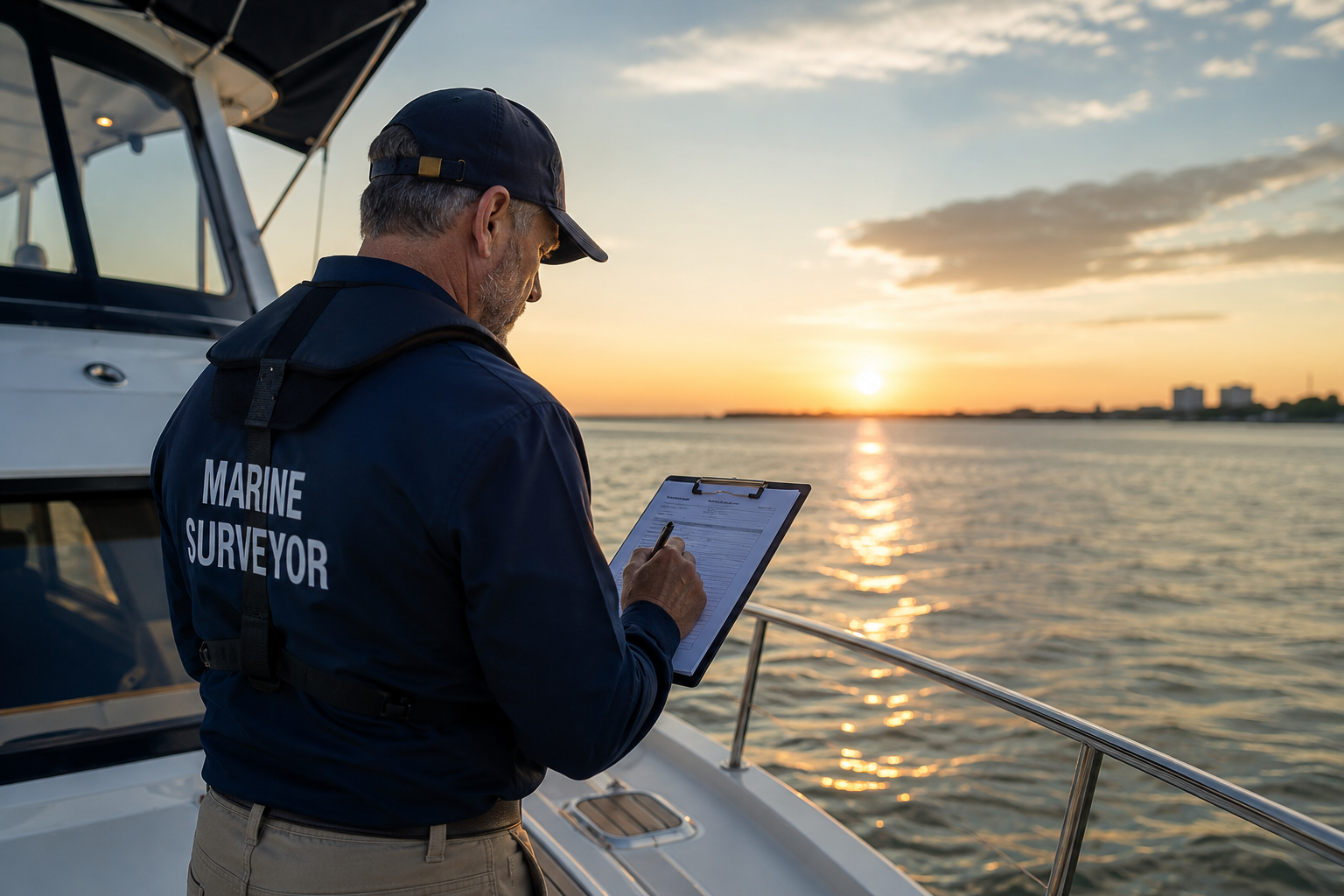
An in-water boat inspection can reveal a great deal about a vessel, but it also has natural limitations. The waterline separates the inspector from portions of the hull and underwater equipment, making some areas difficult to see or reach.
For owners and prospective buyers, this distinction matters. A boat can look well maintained from the dock while still having damage, deterioration, or underwater hardware problems that are not readily visible. Understanding these limitations can help determine when a more detailed examination is appropriate.
Why In-Water Inspections Have Limits
An inspection performed while a boat is afloat provides access to many important areas, including the deck, interior, machinery spaces, electrical systems, and other accessible components.
However, underwater visibility can be affected by:
- Water clarity
- Marine growth
- Poor lighting
- Vessel draft
- Hull design
- Limited physical access
- Turbidity or weather conditions
These factors can make it difficult to evaluate the entire underwater portion of a vessel.
An in-water inspection can therefore provide useful information without necessarily providing a complete view of every submerged component.
Hull Damage Below the Waterline
One of the most important areas that can be difficult to assess is the underwater hull.
A grounding, collision, or contact with an underwater object can produce damage that is not obvious from above the waterline. Depending on the force involved, the hull may experience deformation, cracking, coating damage, or other structural concerns.
Some damage may also occur in locations that are difficult to see while the boat remains afloat.
When there is a history of grounding or impact, direct access to the hull can become particularly important.
Propeller Damage
Propellers operate underwater and can be difficult to examine properly from the surface.
An impact with an object can cause bending, distortion, cracking, or other damage. Even relatively minor propeller damage can sometimes be associated with vibration or changes in propulsion performance.
Marine growth can make the condition even harder to evaluate during an in-water inspection.
A closer examination may be warranted when a vessel has experienced an impact or when unusual vibration has developed.
Shaft and Strut Problems
The propeller shaft and supporting struts are also located beneath the water.
These components can be affected by impacts, alignment problems, corrosion, or other mechanical conditions. Some problems may not be obvious during a general inspection while the vessel is afloat.
An inspection of the underwater areas can provide better access to these components and help document their visible condition.
If a concern is identified, additional mechanical or alignment testing may be appropriate.
Rudder and Steering Components
Rudders and associated hardware can also suffer damage that is difficult to identify from the dock.
A grounding or collision may affect the rudder, stock, bearings, or surrounding structure. Signs may include deformation, unusual movement, leakage, or changes in steering behavior.
While an in-water inspection may reveal some symptoms, direct access can make it easier to examine the components themselves.
Through-Hull Fittings
Through-hull fittings are another area that deserves attention.
Seacocks, valves, strainers, drains, transducers, and similar components are exposed to the marine environment and may experience corrosion or deterioration over time.
Marine growth can obscure these fittings, while restricted access can make close examination difficult.
Because these components are associated with openings through the hull, their condition can be particularly relevant to vessel watertight integrity.
Marine Growth Can Hide Defects
Marine growth is common on boats that remain in the water for extended periods.
Barnacles, algae, and other organisms can cover the hull and underwater hardware. A layer of growth may conceal coating deterioration, impact marks, small cracks, corrosion, or previous repairs.
The presence of marine growth does not necessarily indicate a serious problem, but it can limit what an inspector can reliably see.
Cleaning the hull during a haul-out can provide a clearer surface for examination.
Coating Problems
The condition of the underwater coating system may also be difficult to evaluate accurately while the boat is afloat.
Paint failure, blistering, peeling, cracking, or localized deterioration may indicate areas that deserve closer attention. On older boats, repeated coating applications can also make it difficult to understand the condition of the underlying surface.
Direct access allows the inspector to examine these areas more closely and determine whether further investigation is appropriate.
Previous Repairs May Be Difficult to Identify
A vessel can accumulate repairs throughout its service life.
Some underwater repairs may be difficult to recognize while the boat remains in the water. Previous patches, structural modifications, coating work, or repaired impact areas may become more apparent when the hull is fully accessible.
Repair records and older photographs can provide valuable context when evaluating these conditions.
A previous repair is not necessarily a defect, but understanding what was repaired and why can be important when assessing the vessel's history.
What About Structural Deterioration?
Structural deterioration can sometimes develop gradually.
Depending on the construction material, a vessel may experience corrosion, wastage, cracking, or other forms of deterioration below the waterline. Some conditions can be difficult to identify without direct access or additional testing.
For metal vessels, thickness measurement or other non-destructive testing may sometimes be appropriate when material loss is suspected.
The need for additional testing depends on the vessel, its construction, age, operating history, and the specific condition observed.
When Should a Boat Be Hauled Out?
An in-water inspection may be sufficient for some purposes, but a haul-out can be worth considering when important underwater conditions cannot be evaluated adequately.
Situations that may justify a closer examination include:
- Recent grounding
- Collision or underwater impact
- Unusual vibration
- Steering problems
- Suspected hull damage
- Heavy marine growth
- Significant corrosion concerns
- An older vessel with limited inspection history
- A pre-purchase inspection requiring broader access
- Questions about underwater hardware
The inspection method should match the questions that need to be answered.
Creating a More Complete Picture
An in-water inspection remains useful because many important vessel systems can be examined while the boat is afloat. However, it should be understood as one part of an overall condition assessment.
The underwater hull, running gear, fittings, and other submerged components may contain information that cannot be evaluated reliably from above the waterline.
When those areas are important to the inspection objective, a haul-out can provide direct access and better visibility.
Ultimately, the goal of a boat inspection is not simply to identify what can be seen easily. It is to understand which parts of the vessel have been examined, which areas remain inaccessible, and whether additional inspection is needed to address the vessel's condition with greater confidence.

 English
 Arabic
 French
 Spanish
 Portuguese
 Turkish
 Dutch
Dutch
 Italiano
 Russian
 Romaian
 Portuguese (Brazil)
 Greek
Greek