


Influencers Gone Wild: When Viral Fame Goes Too Far
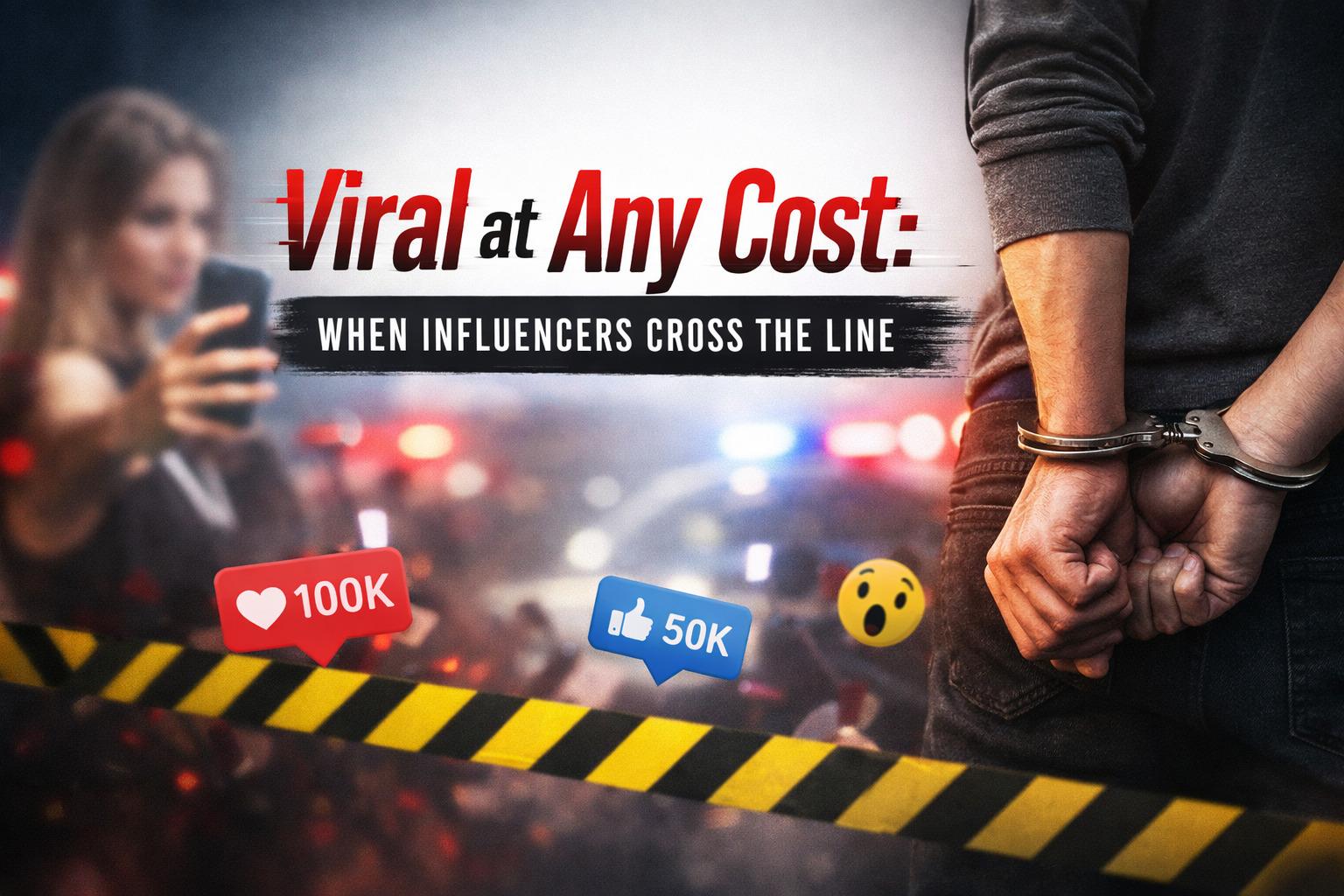
Social media has completely changed the way people become famous. A creator can start with a smartphone, build an audience, and reach millions of people without traditional media or entertainment companies. But the same platforms that create opportunities can also encourage creators to push boundaries. This has led to a growing internet trend often described as influencers gone wild.
The phrase refers to creators whose content becomes increasingly controversial, extreme, reckless, or unexpected in the pursuit of attention. Sometimes the controversy happens accidentally. In other cases, creators deliberately create shocking moments because they know that outrage, surprise, and strong emotions can generate clicks, comments, shares, and followers.
The bigger question is not simply why influencers behave this way. It is why audiences continue to reward extreme content with attention.
What Does “Influencers Gone Wild” Mean?
Influencers gone wild is an informal expression used to describe social media creators who cross conventional boundaries in their content or public behavior.
This can include outrageous stunts, controversial statements, dangerous challenges, confrontational livestreams, public disputes, provocative marketing campaigns, or other actions designed to generate attention.
Not every controversial influencer is intentionally trying to cause trouble. Some creators simply make poor decisions in front of a large audience. Others may believe that taking risks is necessary to compete in an increasingly crowded creator economy.
The important distinction is between ordinary controversial content and behavior that creates meaningful consequences for the creator, their audience, other people, or the platforms hosting the content.
Why Are Influencers Taking Bigger Risks?
The creator economy is highly competitive. Thousands of people publish videos, livestreams, photographs, podcasts, and short-form posts every day.
A creator who publishes ordinary content may struggle to receive attention when competing against thousands of other accounts. A controversial moment, however, can immediately attract discussion.
The Pressure to Stay Relevant
Social platforms reward engagement. Likes, comments, shares, watch time, and other interactions can influence how widely content is distributed.
This creates an incentive for creators to understand what their audiences respond to.
A creator may start with harmless entertainment but gradually experiment with more dramatic content after discovering that controversy generates higher engagement.
Over time, this can create an escalation cycle:
ordinary content → attention → controversy → more attention → higher expectations → increasingly extreme content
That cycle helps explain why some influencers continue taking bigger risks.
The Role of Viral Content
Virality is unpredictable, but certain types of content consistently attract strong reactions.
People naturally pay attention to surprising events, arguments, unusual challenges, emotional moments, and unexpected behavior. Social media makes it possible for these moments to spread globally within hours.
A creator does not necessarily need millions of followers to become viral. One short video can be reposted by larger accounts, discussed on forums, covered by websites, and eventually reach an audience far beyond the creator's original community.
This creates both an opportunity and a risk.
A viral moment can bring new followers and business opportunities. However, it can also permanently associate a creator's name with a controversial incident.
Bonnie Blue and the Economics of Shock Value
Bonnie Blue became an example frequently discussed in conversations about extreme online attention. Her controversial stunts and claims generated significant discussion across social platforms and media.
Her story demonstrates how provocative content can become part of a creator's identity. Once an audience begins expecting increasingly controversial material, maintaining attention can become difficult without producing something even more dramatic.
The broader lesson is about the economics of attention.
For creators whose income depends heavily on subscriptions, advertising, sponsorships, or audience engagement, attention has direct financial value. That can make controversial content tempting.
However, platforms also have rules, advertisers have brand-safety concerns, and audiences can change their opinions quickly.
Johnny Somali and When Online Content Meets the Real World
Another example often discussed in relation to influencers gone wild is Johnny Somali, whose livestreams and public confrontations attracted significant controversy.
His case illustrates an important difference between online entertainment and real-world behavior.
A creator can edit or delete a post, but actions that happen in public can involve other people, businesses, authorities, and legal systems. Recording an interaction does not automatically make everything that happens during that interaction acceptable.
The controversy surrounding Johnny Somali also demonstrates how international content creation can create additional complications. A creator traveling abroad is subject to the laws and social expectations of the country they are visiting.
For influencers, the audience may be global, but the consequences of an action can be very local.
IShowSpeed and the Challenges of IRL Streaming
Livestreaming has created a new form of influencer entertainment. Instead of recording a video, editing it, and publishing it later, creators can broadcast events as they happen.
This makes content feel spontaneous and authentic.
However, live content also reduces the opportunity to reconsider a decision before millions of people see it.
Large creators can attract crowds when they appear in public, turning an ordinary livestream into a potentially difficult situation involving traffic, security, fans, and bystanders.
The popularity of creators such as IShowSpeed demonstrates the enormous reach of livestreaming, while controversies surrounding livestream behavior show why creators need to consider what can happen outside the screen.
The Problem With “Do Anything for Views”
One of the biggest problems in influencer culture is the idea that any attention is good attention.
That is not necessarily true.
A creator can receive millions of views while simultaneously damaging their reputation.
A controversial video might produce:
- Millions of impressions
- Rapid follower growth
- Increased media coverage
- Higher short-term engagement
But it can also result in:
- Platform restrictions
- Lost sponsorships
- Public criticism
- Legal problems
- Loss of audience trust
- Long-term reputational damage
The difference between positive publicity and negative publicity is especially important for creators who want long-term careers.
When Audiences Become Part of the Problem
Influencer culture is not created by creators alone.
Audiences play an important role.
When controversial content receives enormous numbers of views, creators receive a signal that the strategy is working. If viewers repeatedly reward increasingly extreme behavior, the creator may have little financial incentive to return to ordinary content.
This creates a feedback loop.
The audience wants something surprising.
The creator produces something more extreme.
The content becomes viral.
The audience expects something even bigger.
The creator escalates again.
This cycle can eventually turn a creator's entire brand into a competition for attention.
Algorithms and the Attention Economy
Algorithms are not simply designed to promote controversial content. They generally attempt to recommend content that keeps users engaged.
However, controversy can naturally generate strong engagement.
An ordinary post may receive a few likes and disappear from a user's feed. A controversial post can generate arguments in the comments, reaction videos, reposts, and discussions across multiple platforms.
From the perspective of the attention economy, controversy can therefore become extremely powerful.
This does not mean every viral controversy is manufactured. Some events happen naturally. But creators increasingly understand how online attention works and may design content around those dynamics.
The Difference Between Risky Content and Harmful Content
Not every unusual influencer is behaving irresponsibly.
Comedy, stunts, extreme sports, challenges, travel, and experimental entertainment can all involve risk without necessarily being harmful.
The important question is what happens when the pursuit of entertainment affects other people.
There is a meaningful difference between performing a controlled stunt with appropriate safety precautions and encouraging dangerous behavior simply because it generates views.
Similarly, there is a difference between discussing a controversial topic and deliberately harassing people to create a viral confrontation.
Responsible creators need to understand that the size of their audience increases the potential consequences of their actions.
The Hidden Cost of Constant Virality
Going viral sounds like the ultimate goal for many creators, but constant attention can create its own problems.
A creator who becomes famous because of one controversial incident may feel pressure to reproduce that level of attention.
That can make normal content feel unsuccessful.
A video receiving 100,000 views may feel like a failure after a previous video received 10 million. This can encourage creators to chase increasingly dramatic ideas.
The result is an unhealthy relationship with performance metrics.
Views become validation.
Followers become a measurement of personal success.
Engagement becomes the definition of relevance.
This can make it difficult for creators to step away from the attention cycle.
How Influencers Can Build Sustainable Careers
Creators do not need controversy to build a successful online presence.
Long-term growth can come from useful information, entertainment, storytelling, expertise, community building, and consistent communication.
Creators who want sustainable careers can focus on several principles.
Create Content With Long-Term Value
Content that remains useful after the initial trend disappears can continue attracting viewers for months or years.
Tutorials, educational videos, reviews, interviews, documentaries, and entertaining stories can all build lasting audiences.
Understand Platform Rules
Every major social platform has its own policies.
Creators should understand the rules governing dangerous activities, harassment, misinformation, adult content, copyright, advertising, and other restricted areas.
A viral post is not worth much if it results in the loss of an important account.
Protect Other People
Influencers should remember that not everyone appearing in their content has agreed to become part of their entertainment.
Filming strangers, provoking people, interrupting businesses, or creating public disturbances can have consequences beyond social media.
Think Beyond One Viral Moment
A creator should consider how a post will look six months or five years later.
Internet content can be copied, archived, downloaded, and reposted long after the original creator deletes it.
A decision made for five minutes of attention can therefore affect a person's reputation for years.
What Brands Can Learn From Influencers Gone Wild
The trend also matters to businesses.
Companies increasingly work with creators because influencers can provide direct access to highly engaged audiences. However, brands also face risks when partnering with controversial personalities.
A creator's behavior can become associated with the brand sponsoring them.
Businesses should therefore examine more than follower counts. They can consider audience quality, engagement patterns, previous controversies, content style, brand compatibility, and the creator's history of following platform rules.
A large audience does not automatically mean a suitable partnership.
The Future of Influencer Culture
Influencer culture is unlikely to disappear.
If anything, creators are becoming more important in entertainment, marketing, education, news, and online communities.
What will change is the relationship between creators, audiences, platforms, and brands.
Audiences are becoming more familiar with engagement tactics. Platforms are continuously changing their moderation systems. Advertisers are paying closer attention to brand safety. Creators themselves are learning that short-term virality does not always translate into long-term success.
The next generation of influencers may therefore focus more heavily on building communities rather than simply collecting views.
Conclusion
The phenomenon of influencers gone wild is ultimately about more than a few controversial creators. It reflects a broader transformation in how attention is created and monetized online.
Creators compete in an environment where millions of pieces of content are published every day. In that environment, controversy can provide a shortcut to visibility.
But attention has a cost.
A creator may gain millions of views while losing audience trust, sponsorship opportunities, platform access, or even facing legal consequences. The most sustainable influencer careers are therefore unlikely to depend entirely on shock value.
Viral fame can arrive overnight, but building a lasting reputation requires consistency, responsibility, and genuine value.
The internet rewards attention, but creators still have a choice about what kind of attention they want to build their careers around.

 English
 Arabic
 French
 Portuguese
 Deutsch
 Turkish
 Dutch
Dutch
 Italiano
 Russian
 Romaian
 Portuguese (Brazil)
 Greek
Greek